


Clashes erupted yesterday as environmental activists tried to observe a meeting at the Environmental Protection Administration (EPA) to review the Central Taiwan Science Park’s Phase-3 zone development.
Scores of environmental activists first protested by pounding on the windows of the conference room where the meeting was being held, accusing the agency of trying to settle the dispute in secret. When some of the activists tried to break through a police cordon, they were blocked and several were carried away by police officers.
Democratic Progressive Party Legislator Tien Chiu-chin (田秋堇) spoke in support of the environmentalists and asked the meeting’s chairman, Lee Ching-chang (李俊璋) of National Chang Kung University, to let the protesters observe the session.
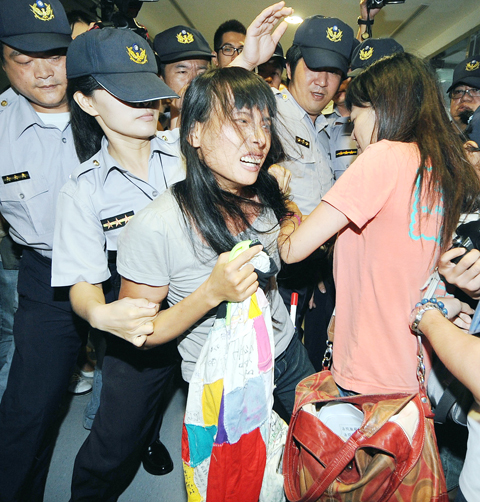
PHOTO: LIAO CHEN-HUEI, TAIPEI TIMES
“The Environmental Protection Administration should not be a tool used by the Executive Yuan to hide its shame,” Tien said. “It [not letting the activists enter] will only make people despise the environmental impact assessment system.”
In January, the Supreme Administrative Court ruled against the EPA’s Environmental Impact Assessment (EIA) review of development of the science park’s Phase-3 zone in Houli Township (后里), Taichung County. The EPA had approved the plans.
The Taipei High Administrative Court ruled last month that construction work at the park’s Phase-4 zone in Erlin Township (二林), Changhua County, had to be stopped until further EIAs were conducted and approved.
The EPA and National Science Council, the agencies that oversee development at the nation’s science parks, appealed the cases to the Supreme Administrative Court on Monday. While agreeing to stop work on the infrastructure of the two sites, they said they would not shut down companies that had already begun production or were building their plants at Houli.
Lee intially turned down Tien’s request, although he later allowed some of the activists to enter the meeting room and give their opinions. A representative from Houli’s Gongguan Village (公館) knelt down and begged the EPA to stop operations at the Central Taiwan Science Park.
The protesters said that any development at Cising Farm (七星農場) in the Phase-3 zone should stop immediately. The EPA should order AU Optronics (友達光電) and Sunner Solar (旭能光電) — two companies in the Phase-3 zone — to stop operations and any construction there. If the companies refuse, the EPA should fine them NT$1.5 million a day each, the activists said. The developer of the Phase-3 zone should also have to redo the environmental impact assessment, they said.
Meanwhile, Cabinet officials said allowing AU Optronics and Sunner Solar to continue their operations was “legally defensible.”
Minister Without Portfolio Kao Su-po (高思博) told a press conference the government “had not distorted the rulings,” but had made its decision to allow the companies to proceed “in accordance with the text of the Taipei High Administrative Court.”
The court ruled development work in Phase-3 and Phase-4 must be suspended, but “the ruling did not extend to firms operating in the park, neither did it mention if their operations should be suspended,” Kao said.
When asked if the ruling demanded the Central Taiwan Science Park Development Office stop issuing planning permission, Kao said that the ruling prohibited the office from issuing new planning permission, but “did not have retroactive effect on the operational licenses that had already been issued to the two firms.”
Deputy Minister of Justice Wu Chen-huan (吳陳鐶) told the press conference that the decision to allow the two firms to continue operations was legally sound.
“If the Supreme Administrative Court disagrees, it can force a halt to the operations of the two firms,” he said. “Officials will not be held responsible [for allowing the firms to continue operations].”
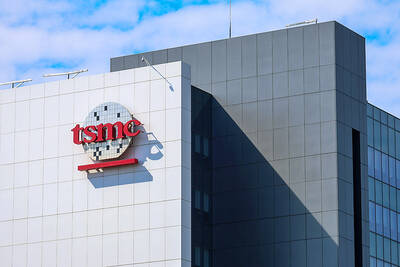
Taiwan Semiconductor Manufacturing Co (TSMC, 台積電), the world’s largest foundry service provider, yesterday said that global semiconductor revenue is projected to hit US$1.5 trillion in 2030, after the figure exceeds US$1 trillion this year, as artificial intelligence (AI) demand boosts consumption of token and compute power. “We are still at the beginning of the AI revolution, but we already see a significant impact across the whole semiconductor ecosystem,” TSMC deputy cochief operating officer Kevin Zhang (張曉強) said at the company’s annual technology symposium in Hsinchu City. “It is fair to say that in the past decade, smartphones and other mobile devices were
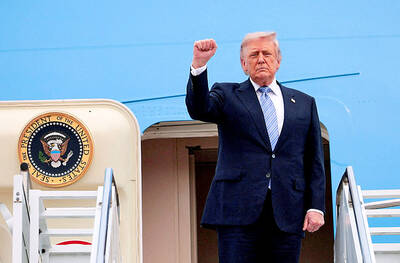
US-CHINA SUMMIT: MOFA welcomed US reassurance of no change in its Taiwan policy; Trump said he did not comment when Xi talked of opposing independence US President Donald Trump yesterday said he has not made a decision on whether to move forward with a major arms package for Taiwan after hearing concerns about it from Chinese President Xi Jinping (習近平). Trump’s comments on Taiwan came as he flew back to Washington after wrapping up critical talks in which both leaders said important progress was made in stabilizing US-China relations even as deep differences persist between the world’s two biggest powers on Iran and Taiwan. “I will make a determination,” Trump said, adding: “I’ll be making decisions. But, you know, I think the last thing we need right

TAIWAN ISSUE: US treasury secretary Scott Bessent said on the first day of meetings that ‘it wouldn’t be a US-China summit without the Taiwan issue coming up’ There were no surprises on the first day of the summit between US President Donald Trump and Chinese President Xi Jinping (習近平), the Mainland Affairs Council (MAC) said yesterday, as the government reiterated that cross-strait stability is crucial to the Asia-Pacific region, as well as the world. As the two presidents met for a highly anticipated summit yesterday, Chinese state media reported that Xi warned Trump that missteps regarding Taiwan could push their two countries into “conflict.” Trump arrived in China with accolades for his host, calling Xi a “great leader” and “friend,” and extending an invitation to visit the White House
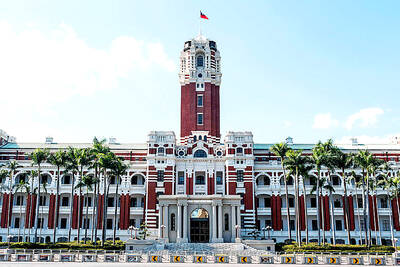
SECURITY: Taipei presses the US for arms supplies, saying the arms sales are not only a reflection of the US security commitment to Taiwan but also serve as a mutual deterrent against regional threats Taiwan is committed to preserving the cross-strait “status quo” and contributing to regional peace and stability, the Presidential Office said yesterday. “It is an undeniable fact that the Republic of China is a sovereign and independent democratic nation,” Presidential Office spokeswoman Karen Kuo (郭雅慧) reiterated, adding that Beijing has no right to claim sovereignty over Taiwan. The statements came after US President Donald Trump warned against Taiwanese independence. Trump wrapped up a state visit to Beijing on Friday, during which Chinese President Xi Jinping (習近平) had pressed him not to support Taiwan. Taiwan depends heavily on US security backing to deter China from carrying


 RSS
RSS