


Asian markets got off to a subdued start to the week yesterday as investors fretted about Greece’s debt crisis and largely overlooked better-than-expected Japanese economic growth in the latest quarter.
Activity in the region was muted with most markets closed for the Lunar New Year holiday.
Investors focused on European moves to tackle Greece’s sovereign debt woes, with EU finance ministers to meet yesterday and today in Brussels.
“There’s a bit of nervousness ahead of this meeting of the EU tonight where it’s expected they will come up with some further rhetoric about the Greece and Portugal situation,” IG Markets analyst Ben Potter in Sydney said.
The euro dropped to US$1.3601 in Tokyo afternoon trading from US$1.3629 in New York late on Friday, while edging up to ¥122.65 from ¥122.61.
The US dollar rose to ¥91.17 from ¥89.96.
The European currency has been hit hard by worries that other European countries such as Portugal, Ireland, Italy, and Spain could suffer fiscal problems similar to Greece.
On Friday, EU heads of state and government promised coordinated measures and offered political support to Greece but no hard cash, leaving markets unimpressed.
EU data showing that Europe’s economic recovery has stalled also spooked investors.
The heavyweight German economy ground to a halt in the fourth quarter of last year and Italy slumped back into contraction, while growth in the 16-nation bloc rose a meager 0.1 percent in the final quarter, new data showed on Friday.
Data showing Japan’s economy grew a stronger-than-expected 1.1 percent in October-December from the previous quarter failed to lift investors’ spirits, after the third-quarter performance was revised down.
Japan narrowly retained its title as the world’s No. 2 economy last year, but came close to being overtaken by fast-growing China.
Tokyo’s Nikkei-225 stock index slipped 0.78 percent, or 78.89 points, to close at 10,013.30. Shares in Toyota, hit by massive recalls worldwide, tumbled 3 percent to 3,355.
Market players wanted to see how Wall Street would digest China’s latest move to cool growth by tightening bank reserve requirements when New York markets reopen following yesterday’s Presidents’ Day holiday.
The People’s Bank of China on Friday ordered financial institutions to increase the amount of money they keep in reserve, as authorities seek to rein in rampant lending amid fears of asset bubbles.
In Sydney the benchmark S&P/ASX200 index ended down 0.36 percent, or 16.6 points, at 4,545.5.
Mining giant BHP Billiton fell 0.4 percent to A$40.66 and Rio Tinto fell 1.9 percent to 70.57.
“It’s relatively quiet and will be around Asia, as well, because it’s Chinese New Year,” CMC Markets senior dealer James Foulsham said. “The big miners are lower after a nice little run up last week, which was the best performing week for the market that we’ve seen for a while.”
Financial markets in Taiwan, China, Hong Kong, Malaysia, Singapore and South Korea were closed for the Lunar New Year holiday.
In other markets, Manila added 0.46 percent, or 13.59 points, to close at 2,963.24, while Wellington ended 0.68 percent, or 20.94 points, lower at 3,059.53.

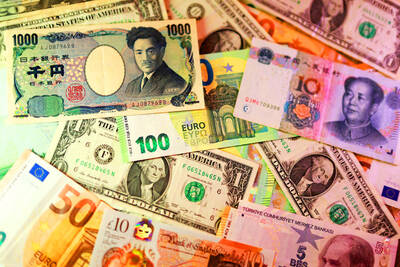
Taiwan’s foreign exchange reserves fell below the US$600 billion mark at the end of last month, with the central bank reporting a total of US$596.89 billion — a decline of US$8.6 billion from February — ending a three-month streak of increases. The central bank attributed the drop to a combination of factors such as outflows by foreign institutional investors, currency fluctuations and its own market interventions. “The large-scale outflows disrupted the balance of supply and demand in the foreign exchange market, prompting the central bank to intervene repeatedly by selling US dollars to stabilize the local currency,” Department of Foreign

Intel Corp is joining Elon Musk’s long-shot effort to develop semiconductors for Tesla Inc, Space Exploration Technologies Corp and xAI, marking a surprising twist in the chipmaker’s comeback bid. Intel would help the Terafab project “refactor” the technology in a chip factory, the company said on Tuesday in a post on X, Musk’s social media platform. That is a stage in the development process that typically helps make chips more powerful or reliable. The chipmaker’s shares jumped 4.2 percent to US$52.91 in New York trading on Tuesday. The Terafab project is a grand plan by Musk to eventually manufacture his own chips for

Some robotaxi passengers were left stranded in the middle of fast-moving traffic in a major Chinese city after their driverless vehicles stopped running, according to police and media reports on Wednesday. A preliminary investigation indicates more than 100 robotaxis came to a halt because of a “system malfunction,” police in the city of Wuhan said in a statement, without elaborating. No injuries were reported. One passenger told Chinese media that their robotaxi stopped after turning a corner. An instruction on a screen read: “Driving system malfunction. Staff are expected to arrive in 5 minutes.” After no one showed up, the passenger pushed
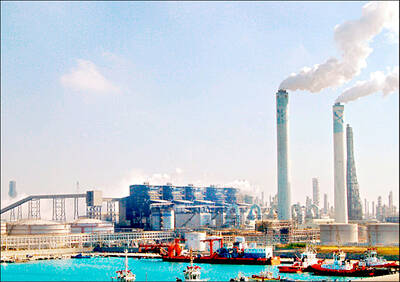
Taiwan Power Co (Taipower, 台電) yesterday said it plans to resume operations at two coal-fired power generators for three months to boost security of electricity supply as liquefied natural gas (LNG) supply risks are running high due to the Middle East conflict. The two coal-fired power generators are at Mailiao Power Plant in Yunlin County’s Mailiao Township (麥寮). The plant, operated by Formosa Plastics Group (台塑集團), supplied electricity to Taipower’s power grid until the end of last year. Taipower’s decision came about one month after Minister of Economic Affairs Kung Ming-hsin (龔明鑫) on March 10 said that the nation had no imminent


 RSS
RSS