


The president-elect of El Salvador appealed to a French court on Thursday to find out how and why his son was fatally stabbed in a fight on a Paris bridge. The chief suspect pleaded for the family’s forgiveness.
“I am a man who is not seeking vengeance,” president-elect Mauricio Funes said to the presiding judge. “I am only seeking the truth.”
“The least we can hope for is to know the facts and establish who is responsible. All this won’t bring back my son, but I want to honor his memory,” Funes said.
Alejandro Funes, a photography student in Paris, died in October 2007 from wounds suffered in the fight on the Pont des Arts, a pedestrian bridge next to the Louvre Museum.
The chief suspect, Mohamed Amor, is accused of stabbing him in the temple with an awl. The motive for the attack is unclear.
Amor said earlier in the trial that he didn’t remember exactly what happened. His lawyer will present his plea at the end of the trial.
Gang violence in El Salvador fuels one of the highest homicide rates in Latin America, and Funes sent his son to France in part to be more secure.
“We thought that in France he would be safer. I could have never imagined that he would be beaten to death in this country,” Funes told the court.
Funes last spoke to his son the night before the attack, and Alejandro congratulated his father on being chosen as presidential candidate for El Salvador’s Farabundo Marti National Liberation Front. Funes won the presidential election in March.
Alejandro had planned to return to El Salvador after finishing his French studies.
“Amor apologized to the family.
“I never wanted to kill him,” he said. “Forgive me.”
Amor he faces up to 30 years in prison if found guilty. Another suspect is on trial for participating in the attack.
The testimony began on Tuesday and was expected to wrap up yesterday. It was unclear when a verdict was expected.

A ship that appears to be taking on the identity of a scrapped gas carrier exited the Strait of Hormuz on Friday, showing how strategies to get through the waterway are evolving as the Middle East war progresses. The vessel identifying as liquefied natural gas (LNG) carrier Jamal left the Strait on Friday morning, ship-tracking data show. However, the same tanker was also recorded as having beached at an Indian demolition yard in October last year, where it is being broken up, according to market participants and port agent’s reports. The ship claiming to be Jamal is likely a zombie vessel that

Cannabis-based medicines have shown little evidence of effectiveness for treating most mental health and substance-use disorders, according to a large review of past studies published in a major medical journal on Monday. Medical use of cannabinoids has been expanding, including in the US, Canada and Australia, where many patients report using cannabis products to manage conditions such as anxiety, post-traumatic stress disorder and sleep problems. Researchers reviewed data from 54 randomized clinical trials conducted between 1980 and May last year involving 2,477 participants for their analysis published in The Lancet. The studies assessed cannabinoids as a primary treatment for mental disorders or substance-use
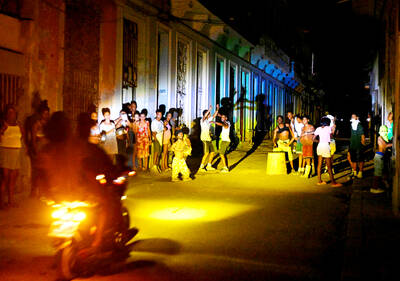
NATIONWIDE BLACKOUT: US President Donald Trump cut off Venezuelan oil shipments to Cuba, strangling the Caribbean island’s already antiquated grid Cuba’s national electric grid collapsed on Monday, the nation’s grid operator said, leaving about 10 million people without power amid a US-imposed oil blockade that has crippled the already obsolete generation system. Grid operator UNE on social media said that it is investigating the causes of the blackout, the latest in a series of widespread outages that last for hours or days and that this weekend sparked a rare violent protest in the communist-run nation. Officials ruled out a major power plant failure, but had still not pinpointed the root cause of the grid collapse, suggesting a problem with transmission. Officials said that
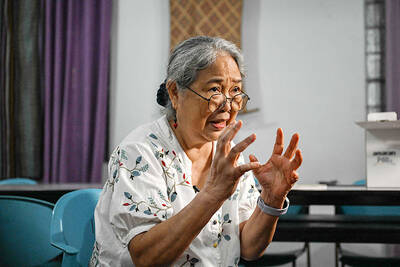
‘HEALTH ISSUE’: More than 250 women are hospitalized every day due to complications from unsafe abortions, and about three die, a study showed Jane had been bleeding heavily for days before finally seeking help, not from a hospital, but from the man who sold her the pills meant to end her six-week pregnancy. Abortions are strictly outlawed in the mainly Catholic Philippines, forcing women to turn to a patchwork of providers operating in the online shadows. While rare in practice, Philippine law allows for prison terms of up to six years for abortion patients and providers, leaving thousands of Filipinas to search for solutions in online forums where unlicensed sellers promote abortifacients. “It was very painful, as if my abdomen was being twisted,” said Jane, whose


 RSS
RSS