


The nation's postal service and largest oil refinery yesterday officially dropped "China" from their names in high-profile ceremonies presided over by the president, drawing the ire of those opposed to the move.
The Taiwan Post Co (臺灣郵政) and CPC Corp, Taiwan (台灣中油) -- formerly Chunghwa Post Co (中華郵政) and Chinese Petroleum Corp (中國石油) -- held ceremonies to officially unveil their new names.
At Taiwan Post's main office in Taipei, hundreds of riot police were stationed to prevent demonstrations from turning violent.
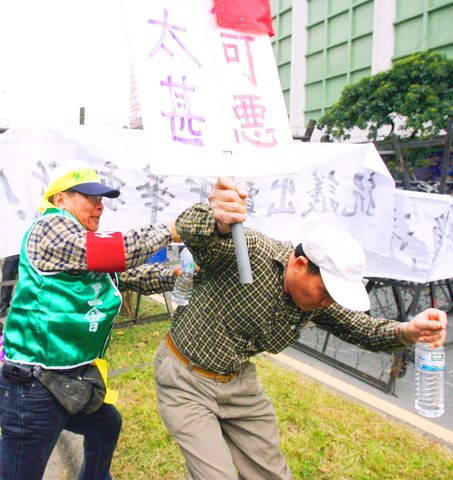
PHOTO: WANG YI-SUNG, TAIPEI TIMES
Although minor scuffles between different groups of demonstrators supporting or opposing the move occurred, no major violence took place and no injuries were reported.
Taiwan Post president Wu Min-yu (
"I feel sad," he told the Taipei Times. "The change came too fast. You can't help feeling a sense of loss, especially when you have been working under the title [the Chunghwa Post] for more than forty years."
Wu was the only chief executive from the company who stood at the entrance to the Taiwan Post's headquarters and faced criticism from the representatives of the Chunghwa Postal Workers Union.
The protesters called on Taiwan Post chairman Lai Chin-chyi (
Protestors were originally planning to throw eggs at the newly established signboard, but they were prevented from reaching it by barricades the police set up in front of the company.
They later carried their protests to the Ministry of Transportation and Communication (MOTC). The crowd dispersed after MOTC Vice Minister Ho Nuan-hsuen (
Meanwhile, a ceremony was held to unveil signs bearing the new name, with President Chen Shui-bian (陳水扁), Premier Su Tseng-chang (蘇貞昌), Transportation and Communications Minister Tsai Duei (蔡堆) and other government officials attending as guests of honor.
Chen said the name change was a fair and just policy, and was merely one small step taken to establish Taiwan as a "normal" country.
"Taiwan is our country, and it is the most beautiful and the most powerful name we have," he added.
KMT lawmakers reproached the government at a press conference yesterday.
"It's illegal to change the name of Chunghwa Post without amending related laws and regulations first. What's the urgency that you have to change the name at a time when the legislature is in recess?" KMT Legislator Kuo Su-chun (郭素春) said.
"We have been instructed to change the name," Taiwan Post general manager Wu Min-yu (
Ho Chung-mo (
Cheng Kuang-ming (
Cheng said that while he was not against the name change, he did not expect that the policy would be carried out in such an expedient manner.
"It took only two days to change the name," Cheng said. "I wonder how long it will take before they announce the company will privatize."
Meanwhile, behind walls of barbed wire and policemen, the atmosphere was tense outside CPC headquarters in Taipei yesterday afternoon.
The company was braced for protests from its labor union similar to those that hit the postal service, as the state-run oil refinery held its ceremony to inaugurate its new name, with the president presiding.
CPC passed the name-change proposal in a board meeting last Friday.
"CPC was established in Shanghai in 1946 and relocated to Taiwan in 1949. The name change demonstrates the government's respect for history and recognizes its status as a native company, like Taiwan Post Co and CSBC Corp, Taiwan (
Chen also explained that CPC could not be renamed "Taiwan Petroleum Corp" (
"Changes of name cards, employee passes, uniforms and stationery will be made only when the old ones are used up or become too old," said Liao Tsang-long (
CPC currently owns over 630 corporate-owned gas stations, and around 1,200 stations owned by franchisees.
The company has no timetable for changing all of their signs, Liao said.
The company estimated the cost of replacing signs in the gas stations and trademark in products and equipments would be NT$70 million (US$2.12 million).
Surprise
Although, to the surprise of the gathered group of reporters, the labor union yesterday did not show up to protest at the ceremony, some union members still expressed discontent with the controversial name change.
"CPC said the campaign will not cost much, but it's still taxpayers' money. Politics just overrides everything else," said Chuang Chueh-an (
In the meantime, Cabinet Spokesman Cheng Wen-tsang (
China Airlines
China Airlines (
"I must say, we continue to work on the issue of changing the names of our government-owned companies, and we will continue to negotiate with these companies' employees' unions if they are not happy about it," he said.
"We will definitely make announcements when the time comes. But not now," Cheng said.
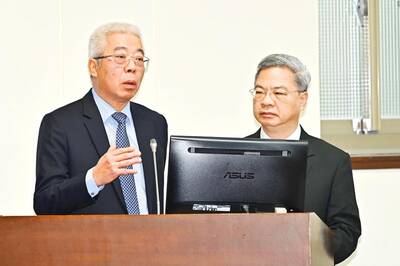
Taiwan has arranged for about 8 million barrels of crude oil, or about one-third of its monthly needs, to be shipped from the Red Sea this month to bypass the Strait of Hormuz and ease domestic supply pressures, CPC Corp, Taiwan (CPC, 台灣中油) said yesterday. The state-run oil company has worked with Middle Eastern suppliers to secure routes other than the Strait of Hormuz, through which about 20 percent of the world’s oil and liquefied natural gas typically passes, CPC chairman Fang Jeng-zen (方振仁) said at a meeting of the legislature’s Economics Committee in Taipei. Suppliers in Saudi Arabia have indicated they
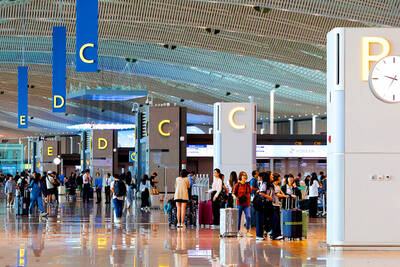
South Korea has adjusted its electronic arrival card system to no longer list Taiwan as a part of China, a move that the Ministry of Foreign Affairs said would help facilitate exchanges between the two sides. South Korea previously listed “Taiwan” as “Taiwan (China)” in the drop-down menus of its online arrival card system, where people had to fill out where they came from and their next destination. The ministry had requested South Korea make a revision and said it would change South Korea’s name on Taiwan’s online immigration system from “Republic of Korea” to “Korea (South),” should the issue not be
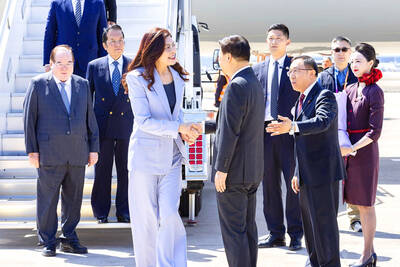
CCP ‘PAWN’? Beijing could use the KMT chairwoman’s visit to signal to the world that many people in Taiwan support the ‘one China’ principle, an academic said Chinese Nationalist Party (KMT) Chairwoman Cheng Li-wun (鄭麗文) yesterday arrived in China for a “peace” mission and potential meeting with Chinese President Xi Jinping (習近平), while a Taiwanese minister detailed the number of Chinese warships currently deployed around the nation. Cheng is visiting at a time of increased Chinese military pressure on Taiwan, as the opposition-dominated Legislative Yuan stalls a government plan for US$40 billion in extra defense spending. Speaking to reporters before going to the airport, Cheng said she was going on a “historic journey for peace,” but added that some people felt uneasy about her trip. “If you truly love Taiwan,
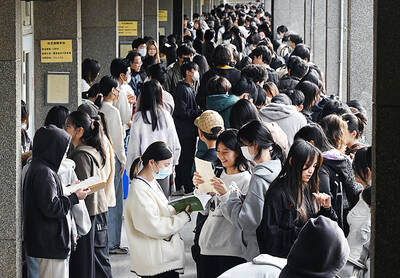
A global survey showed that 60 percent of Taiwanese had attained higher education, second only to Canada, the Ministry of the Interior said. Taiwan easily surpassed the global average of 43 percent and ranked ahead of major economies, including Japan, South Korea and the US, data from the Organisation for Economic Co-operation and Development (OECD) for 2024 showed. Taiwan has a high literacy rate, data released by the ministry showed. As of the end of last year, Taiwan had 20.617 million people aged 15 or older, accounting for 88.5 percent of the total population, with a literacy rate of 99.4 percent, the data


 RSS
RSS