


The Rolling Stones opened their first ever concert in China yesterday with the classic hit, Start Me Up.
The veteran rockers played to a packed house at Shanghai's 8,000 seat indoor stadium, where the audience was overwhelmingly foreign.
There was little sign of the fan frenzy that has followed the band on other stops on their current "A Bigger Bang" tour, however, demand for tickets had driven up the price to 5,000 yuan (US$624) on the black market.
Chinese rock pioneer Cui Jian who was to perform with the band said before the concert the show was a "milestone" for him and for all rock fans in China.
"It is a big moment, I will never forget this," said Cui, whose songs were anthems for student protesters in Beijing's Tiananmen Square in 1989.
In a reminder of the authoritarian communist government's cautious attitude toward the influence of western pop culture, The Stones were told not to perform five of their biggest hits because of suggestive lyrics.
At a news conference on Friday, frontman Mick Jagger said he wasn't surprised to receive the demand, but added with characteristic bite: "I'm pleased that the Ministry of Culture is protecting the morals of the expat bankers and their girlfriends that are going to be coming."
The banned songs were believed to be past hits Brown Sugar, Honky Tonk Woman, Beast of Burden, and Let's Spend the Night Together, along with Rough Justice from the new album.
The band said they accepted the restrictions as the price to pay for a concert that has taken years to organize.
During the 1966-1976 cultural revolution, the Rolling Stones were considered a symbol of decadent capitalism.
Even when politics was no longer a major obstacle, nature has intervened.
The band agreed not to play the contentious four songs at a gig arranged in 2003, but it had to be cancelled because of the SARS crisis.
This time, with ticket prices equivalent to several months of the average annual wage in China, more than 80 percent of the crowd at the 8,000 venue were expected to be foreigners.
Keith Richards, the lead guitarist, joked that the band might still play an instrumental version of the songs "to give Mick a break."
Organizers said the gig was to be the first show by a foreign band to be relayed live by CCTV -- the Chinese state broadcaster.

PROVOCATIVE: Chinese Deputy Ambassador to the UN Sun Lei accused Japan of sending military vessels to deliberately provoke tensions in the Taiwan Strait China denounced remarks by Japan and the EU about the South China Sea at a UN Security Council meeting on Monday, and accused Tokyo of provocative behavior in the Taiwan Strait and planning military expansion. Ayano Kunimitsu, a Japanese vice foreign minister, told the Council meeting on maritime security that Tokyo was seriously concerned about the situation in the East China and South China seas, and reiterated Japan’s opposition to any attempt to change the “status quo” by force, and obstruction of freedom of navigation and overflight. Stavros Lambrinidis, head of the EU delegation to the UN, also highlighted South China Sea

SILENCING CRITICS: In addition to blocking Taiwan, China aimed to prevent rights activists from speaking out against authoritarian states, a Cabinet department said The Ministry of Foreign Affairs (MOFA) yesterday condemned transnational repression by Beijing after RightsCon, a major digital human rights conference scheduled to be held in Zambia this week, was abruptly canceled due to Chinese pressure over Taiwanese participation. This year’s RightsCon, the world’s largest conference discussing issues “at the intersection of human rights and technology,” was scheduled to take place from tomorrow to Friday in Lusaka, and expected to draw 2,600 in-person attendees from 150 countries, along with 1,100 online participants. However, organizers were forced to cancel the event due to behind-the-scenes pressure from China, the ministry said, expressing its “strongest condemnation”
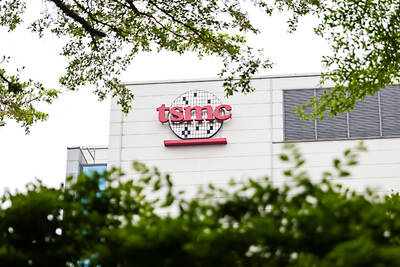
Taiwan Semiconductor Manufacturing Co (TSMC, 台積電), the world’s largest contract chipmaker, said it expects its 2-nanometer (2nm) chip capacity to grow at a compound annual rate of 70 percent from this year to 2028. The projection comes as five fabs begin volume production of 2-nanometer chips this year — two in Hsinchu and three in Kaohsiung — TSMC senior vice president and deputy cochief operating officer Cliff Hou (侯永清) said at the company’s annual technology symposium in Silicon Valley, California, last week. Output in the first year of 2-nanometer production, which began in the fourth quarter of last year, is expected to
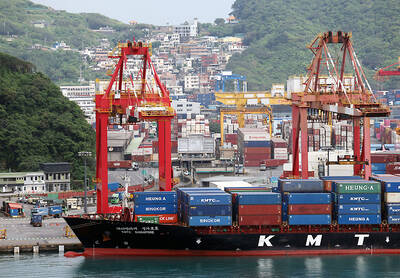
Taiwan’s economy grew far faster than expected in the first quarter, as booming demand for artificial intelligence (AI) applications drove a surge in exports, spilling over into investment and consumption, the Directorate-General of Budget, Accounting and Statistics (DGBAS) said yesterday. GDP growth was 13.69 percent year-on-year during the January-to-March period, beating the DGBAS’ February forecast by 2.23 percentage points and marking the most robust growth in nearly four decades, DGBAS senior official Chiang Hsin-yi (江心怡) told a news conference in Taipei. The result was powered by exports, which remain the backbone of Taiwan’s economy, Chiang said. Outbound shipments jumped 51.12 percent year-on-year to


 RSS
RSS