


The UK yesterday made it clear that it would not deal with Islamic extremists in Iraq holding engineer Kenneth Bigley, despite a dramatic appeal from the hostage begging Prime Minister Tony Blair to intervene and save his life.
Bigley's Thai wife, Sombat Bigley, added her voice yesterday to his family's desperate appeals to the Tawhid and Jihad (Unity and Holy War) group to spare the life of the 62-year-old engineer from Liverpool.
Bigley was snatched from his Baghdad home one week ago, along with two US colleagues who have since been executed. His captors have been demanding the release of women detained in US-run Iraqi prisons.
"My name is Sombat Bigley. I am Ken Bigley's wife. We have been married for seven years and I love him very much," Sombat Bigley said in an emotional appeal, made in her native Thai language and videotaped in Bangkok.
"I plead for your mercy now and beg that you release Ken so that I may be with him again and so that he may also be reunited with his family in England," she said, visibly shaken.
But in London, a spokesman for Blair -- who had been hoping that Iraq would fade from the headlines as he prepares for a looming general election -- said there was no change to Downing Street's uncompromising line.
"We're following the situation very closely, and our feelings are very much with Ken Bigley and his family," the spokesman told reporters.
"The government is doing all it can to secure his release, [but] we have no intention of negotiating with terrorists," the spokesman said.
Bigley appeared in a fuzzy video seen yesterday on the Internet, in which he appealed to Blair: "I need you to be compassionate as you always said you were and to help me to live..."
"I don't want to die ... Please, please release the female prisoners ... I need your help, Mr Blair. You are now the only person on God's earth that I can speak to," he said.
There was no word from Blair himself, while his wife, Cherie Blair, attending a senior citizens' event, only said: "Like everyone in Britain, my heart goes out to the Bigley family."
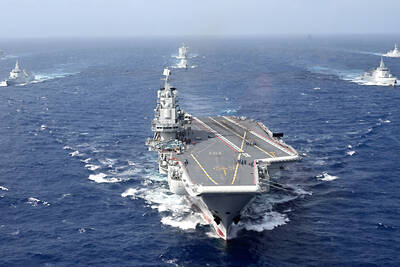
PROVOCATIVE: Chinese Deputy Ambassador to the UN Sun Lei accused Japan of sending military vessels to deliberately provoke tensions in the Taiwan Strait China denounced remarks by Japan and the EU about the South China Sea at a UN Security Council meeting on Monday, and accused Tokyo of provocative behavior in the Taiwan Strait and planning military expansion. Ayano Kunimitsu, a Japanese vice foreign minister, told the Council meeting on maritime security that Tokyo was seriously concerned about the situation in the East China and South China seas, and reiterated Japan’s opposition to any attempt to change the “status quo” by force, and obstruction of freedom of navigation and overflight. Stavros Lambrinidis, head of the EU delegation to the UN, also highlighted South China Sea
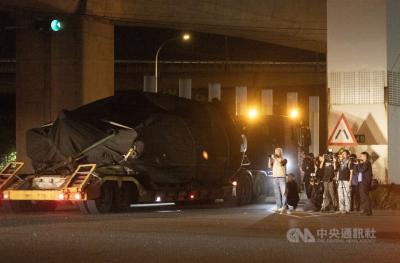
The final batch of 28 M1A2T Abrams tanks purchased from the US arrived at Taipei Port last night and were transported to the Armor Training Command in Hsinchu County’s Hukou Township (湖口), completing the military’s multi-year procurement of 108 of the tanks. Starting at 12:10am today, reporters observed more than a dozen civilian flatbed trailers departing from Taipei Port, each carrying an M1A2T tank covered with black waterproof tarps. Escorted by military vehicles, the convoy traveled via the West Coast Expressway to the Armor Training Command, with police implementing traffic control. The army operates about 1,000 tanks, including CM-11 Brave Tiger
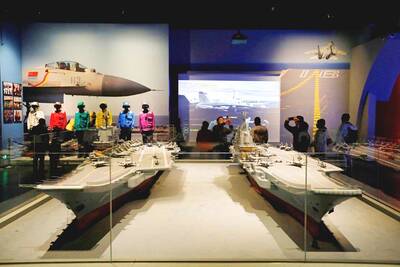
China on Wednesday teased in a video an aircraft carrier that could be its fourth, and the first using nuclear power, while making an allusion to Taiwan and vowing to further build up its islands, as it looks to boost maritime power, secure resources and bolster territorial claims. The video, issued on the eve of the 77th founding anniversary of the Chinese People’s Liberation Army Navy, featured fictional officers with names that are homophones of three commissioned aircraft carriers, the Liaoning (遼寧), Shandong (山東) and Fujian (福建). Titled Into the Deep, it showed a 19-year-old named “Hejian” (何劍) joining the group, sparking
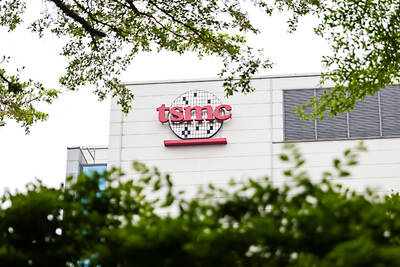
Taiwan Semiconductor Manufacturing Co (TSMC, 台積電), the world’s largest contract chipmaker, said it expects its 2-nanometer (2nm) chip capacity to grow at a compound annual rate of 70 percent from this year to 2028. The projection comes as five fabs begin volume production of 2-nanometer chips this year — two in Hsinchu and three in Kaohsiung — TSMC senior vice president and deputy cochief operating officer Cliff Hou (侯永清) said at the company’s annual technology symposium in Silicon Valley, California, last week. Output in the first year of 2-nanometer production, which began in the fourth quarter of last year, is expected to


 RSS
RSS