


Malaysia's highest court overturned the sodomy conviction of former deputy prime minister Anwar Ibrahim yesterday and freed him from prison -- exactly six years after his removal from office triggered the country's worst political crisis.
A panel of the Federal Court ruled 2 to 1 to reverse the conviction against Anwar. He was expected to travel to Germany for surgery to treat a back injury stemming from a police beating in 1998.
Anwar was once considered the heir apparent of his mentor-turned-nemesis, then-prime minister Mahathir Mohamad. But Mahathir fired him, touching off widespread political turmoil.
Prime Minister Ahmad Abdullah Badawi, who succeeded Anwar as Mahathir's hand-picked heir, had been expected to take a softer line toward Anwar and put the divisive issue behind Malaysia after he took office last year.
In his first remarks to reporters, Anwar claimed that the convictions against him had been "highly politically motivated" but that he bore no ill will toward Mahathir, who retired 10 months ago.
"I bear no malice against him. Let him retire," Anwar said. "I feel vindicated. This is all about justice."
Judge Abdul Hamid Mohamad read out the verdict over one-and-a-half hours. As it became apparent that Anwar, 57, would be freed, the prisoner -- wearing a neck brace and confined to a wheelchair -- exchanged excited glances with family members and gave a thumbs-up sign.
"We are not prepared to uphold the conviction," Abdul Hamid said. "We therefore allow this appeal and set aside the conviction and the sentence."
Abdul Hamid said the conviction was flawed because the chief prosecution witness, Azizan Abubakar, had repeatedly changed the dates that he claimed Anwar had had sex with him. Azizan had been the driver for Anwar's wife.
Anwar credited Abdullah -- despite being a long-time rival from their hometown of Penang -- for not interfering with the judiciary.
"You've got to recognize the fact that his predecessor wouldn't have made this judgment possible," Anwar said.
Anwar said that he felt "tired" and would wait for doctors to examine him before deciding his next move, but vowed that he would keep struggling for democratic reforms.
Hundreds of supporters cheered and shook Anwar's hands as he was wheeled out of the courtroom. His vehicle was escorted by police and he was expected to briefly go to his father's home, then to his own house.
Anwar has long claimed that the convictions were rigged to prevent him from challenging Mahathir for power.
"Finally, the courts have found courage which they never had under the Mahathir regime," said observer Param Cumaraswamy, vice president of the Geneva-based International Commission of Jurists.
Anwar had been jailed since 1998 and had been expected to be in prison for another five years. A separate six-year corruption sentence ran out last year after it was reduced for good behavior.
Despite the ruling, Anwar's future remains a pale shadow of the glittering career before him in the mid-1990s, when his charismatic, modern outlook made him the country's most popular politician.
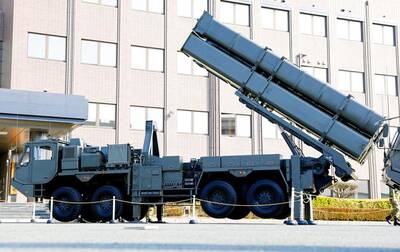
Japan has deployed long-range missiles in a southwestern region near China, the Japanese defense minister said yesterday, at a time when ties with Beijing are at their lowest in recent years. The missiles were installed in Kumamoto in the southern region of Kyushu, as Japan is attempting to shore up its military capacity as China steps up naval activity in the East China Sea. “Standoff defense capabilities enable us to counter the threat of enemy forces attempting to invade our country ... while ensuring the safety of our personnel,” Japanese Minister of Defense Shinjiro Koizumi said. “This is an extremely important initiative for
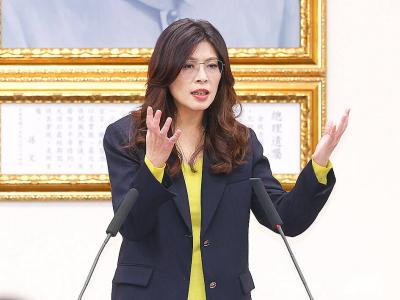
Chinese Nationalist Party (KMT) Chairwoman Cheng Li-wun (鄭麗文) today accepted an invitation from Chinese President Xi Jinping (習近平) to lead a delegation to China next month, saying she hopes to promote the peaceful development of cross-strait relations and bring stability to the Taiwan Strait. “I am grateful and happy to accept this invitation,” Cheng said in a statement from the KMT chairperson’s office. Cheng said she hopes both sides can work together to promote the peaceful development of cross-strait relations, enhance exchange and cooperation, bring stability to the Taiwan Strait and improve people’s livelihoods. At today's news conference, Cheng said any efforts to

MORE POPULAR: Taiwan Pass sales increased by 59 percent during the first quarter compared with the same period last year, the Tourism Administration said The Tourism Administration yesterday said that it has streamlined the Taiwan Pass, with two versions available for purchase beginning today. The tourism agency has made the pass available to international tourists since 2024, allowing them to access the high-speed rail, Taiwan Railway Corp services, four MRT systems and four Taiwan Tourist Shuttles. Previously, five types of Taiwan Pass were available, but some tourists have said that the offerings were too complicated. The agency said only two types of Taiwan Pass would be available, starting from a three-day pass with the high-speed rail and a three-day pass with Taiwan Railway Corp. The former costs NT$2,800

The nation’s fastest supercomputer, Nano 4 (晶創26), is scheduled to be launched in the third quarter, and would be used to train large language models in finance and national defense sectors, the National Center for High-Performance Computing (NCHC) said. The supercomputer, which would operate at about 86.05 petaflops, is being tested at a new cloud computing center in the Southern Taiwan Science Park in Tainan. The exterior of the server cabinet features chip circuitry patterns overlaid with a map of Taiwan, highlighting the nation’s central position in the semiconductor industry. The center also houses Taiwania 2, Taiwania 3, Forerunner 1 and


 RSS
RSS