


US and allied forces yesterday searched rugged Afghan terrain for fugitives Osama bin Laden and deposed Taliban leader Mullah Mohammad Omar as tribal chiefs squabbled over the former Taliban stronghold, Kandahar.
Bin Laden was said to be personally leading about 1,000 men in the defense of his bomb-blasted mountain hideouts in eastern Afghanistan, anti-Taliban forces said yesterday.
Pakistan said it had moved helicopter gunships and troop reinforcements to its long border with Afghanistan to prevent fleeing Taliban or members of bin Laden's al-Qaeda network from sneaking into the country.
A team of UN peacekeeping experts was in Kabul yesterday to plan the deployment of a multinational security force in the capital to prevent the kind of bloodbaths that Afghanistan has witnessed in previous changeovers of power.
On Saturday, the UN World Food Programme started its biggest ever food distribution in the capital, handing out sacks of wheat to more than three-quarters of the war-ravaged city's population.
Anti-Taliban forces had pushed al-Qaeda fighters out of their bases in the cave-riddled Tora Bora heights and were attacking them in nearby forests, a spokesman said.
"Osama himself has taken command of the fighting," Mohammad Amin said from eastern Jalalabad city. "He, along with around 1,000 of his people, including some Taliban officials, have now dug themselves into the forests of Spin Ghar after we overran all their bases in Tora Bora."
There was no independent confirmation of Amin's account.
US warplanes have pounded al-Qaeda forces in the snow-streaked Tora Bora peaks for days in support of local Afghan forces pursuing bin Laden, prime suspect in the Sept. 11 attacks on the US that killed nearly 4,000.
The US launched strikes on Afghanistan on Oct. 7 to try to catch bin Laden, destroy his al-Qaeda network and punish the Taliban for giving them sanctuary in Afghanistan.
About 2,000 fighters loyal to the new Afghan leaders are combing Tora Bora's caves and tunnels near Jalalabad where bin Laden might be hiding.
"You could bomb day and night and it won't make a big difference," said local commander Hazrat Ali. "Soldiers have to go in there."
In Kandahar, squabbling Pashtun tribal chiefs yesterday were vying to control the former Taliban bastion and meeting in council to try to patch up old sore points and end a third decade of warfare that began with the Soviet invasion of 1979.
Hamid Karzai, Afghanistan's designated interim prime minister has called for the meeting to try to resolve disputes over who should rule Kandahar and the border town of Spin Boldak.

PROVOCATIVE: Chinese Deputy Ambassador to the UN Sun Lei accused Japan of sending military vessels to deliberately provoke tensions in the Taiwan Strait China denounced remarks by Japan and the EU about the South China Sea at a UN Security Council meeting on Monday, and accused Tokyo of provocative behavior in the Taiwan Strait and planning military expansion. Ayano Kunimitsu, a Japanese vice foreign minister, told the Council meeting on maritime security that Tokyo was seriously concerned about the situation in the East China and South China seas, and reiterated Japan’s opposition to any attempt to change the “status quo” by force, and obstruction of freedom of navigation and overflight. Stavros Lambrinidis, head of the EU delegation to the UN, also highlighted South China Sea

SILENCING CRITICS: In addition to blocking Taiwan, China aimed to prevent rights activists from speaking out against authoritarian states, a Cabinet department said The Ministry of Foreign Affairs (MOFA) yesterday condemned transnational repression by Beijing after RightsCon, a major digital human rights conference scheduled to be held in Zambia this week, was abruptly canceled due to Chinese pressure over Taiwanese participation. This year’s RightsCon, the world’s largest conference discussing issues “at the intersection of human rights and technology,” was scheduled to take place from tomorrow to Friday in Lusaka, and expected to draw 2,600 in-person attendees from 150 countries, along with 1,100 online participants. However, organizers were forced to cancel the event due to behind-the-scenes pressure from China, the ministry said, expressing its “strongest condemnation”
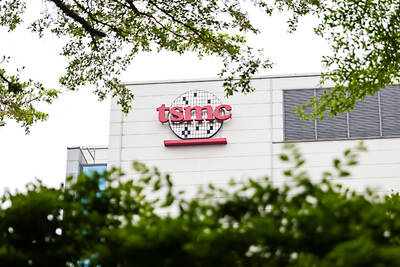
Taiwan Semiconductor Manufacturing Co (TSMC, 台積電), the world’s largest contract chipmaker, said it expects its 2-nanometer (2nm) chip capacity to grow at a compound annual rate of 70 percent from this year to 2028. The projection comes as five fabs begin volume production of 2-nanometer chips this year — two in Hsinchu and three in Kaohsiung — TSMC senior vice president and deputy cochief operating officer Cliff Hou (侯永清) said at the company’s annual technology symposium in Silicon Valley, California, last week. Output in the first year of 2-nanometer production, which began in the fourth quarter of last year, is expected to
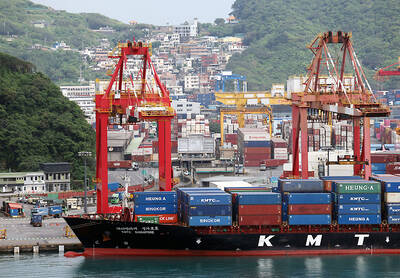
Taiwan’s economy grew far faster than expected in the first quarter, as booming demand for artificial intelligence (AI) applications drove a surge in exports, spilling over into investment and consumption, the Directorate-General of Budget, Accounting and Statistics (DGBAS) said yesterday. GDP growth was 13.69 percent year-on-year during the January-to-March period, beating the DGBAS’ February forecast by 2.23 percentage points and marking the most robust growth in nearly four decades, DGBAS senior official Chiang Hsin-yi (江心怡) told a news conference in Taipei. The result was powered by exports, which remain the backbone of Taiwan’s economy, Chiang said. Outbound shipments jumped 51.12 percent year-on-year to


 RSS
RSS