


The famous “bloody,” plant-based Impossible Burger is now available at almost 5,000 restaurants throughout the US. But that very appearance of bloodiness may have presented another regulatory hurdle for the company and its effort to get the product into supermarkets.
Impossible Foods, the Silicon Valley-based maker of the eponymous burger, uses genetically modified yeast to mass produce its central ingredient, soy leghemoglobin, or “heme.” It’s heme, the company said, that gives the Impossible Burger its essential meat-like flavor.
The substance was ready to break out this summer after the US Food and Drug Administration, following years of back-and-forth, declined to challenge findings voluntarily presented by the company that the cooked product is “Generally Recognized as Safe,” or GRAS. Such a “no questions” letter means the FDA found the information provided to be sufficient.
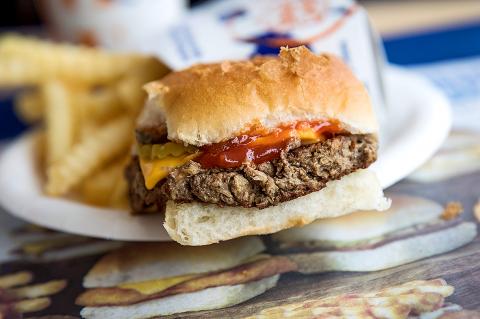
Photo: AFP
Heme is “responsible for the flavor of blood,” Impossible Foods CEO Patrick Brown said in an interview earlier this year. “It catalyzes reactions in your mouth that generate these very potent odor molecules that smell bloody and metallic.”
It’s how it looks that’s at issue, though. An FDA spokesman said heme, which is red in hue, needs to be formally approved as a color additive before individual consumers can purchase the uncooked product.
“If the firm wishes to sell the uncooked, red-colored ground beef analogue to consumers, pre-market approval of the soy leghemoglobin as a color additive is required,” FDA spokesman Peter Cassell said.
Impossible Foods filed a petition Nov. 5 seeking heme’s formal approval as a color additive, the FDA said. The agency has 90 days to respond, and the timeline can be extended.
Impossible Foods says heme isn’t a color additive as currently used in cooked Impossible Burgers sold in restaurants. However, other future uses might qualify as a color additive, company spokeswoman Rachel Konrad said in an e-mail. The company submitted the FDA petition to retain “maximum flexibility as our products and business continue to evolve.” Konrad declined to say whether uncooked heme-containing products to be sold in supermarkets were one of those contemplated future uses.
“Impossible Foods is in full compliance with all federal food-safety regulations and has been since 2014, well before we launched a product at restaurants in 2016,” she said.
The color additive FDA filing won’t affect the continued sale of cooked Impossible Burgers in restaurants, and approval by the regulator of the color additive petition could come in time for the company to roll out the raw product next year, as planned.
The demand for it is definitely there. Once just the province of animal welfare advocates and the health conscious, the meat alternative market has turned white-hot, given the massive role industrial meat production plays in global warming.
Impossible’s biggest competitor, Beyond Meat, is backed by food giant Tyson Foods. Its pea-based, beet juice-colored Beyond Burger already sells in supermarkets and has seen 70 percent annual growth. The company has even filed for an initial public offering.
Heme is a naturally occurring, iron-containing molecule that’s abundant in the blood and muscle of animals. It also exists in smaller amounts in plants such as soybeans, specifically nodules on their roots, which Impossible Foods harvests for use in its burgers. The company has pointed to heme’s natural occurrence in animal flesh as the reason it tastes so much like meat.
But the company has also promoted its Impossible Burger by saying it looks like meat.
Except in certain categories, a company can start selling novel ingredients in the US as food whenever and wherever it wants, as long as a panel of third party experts review it and deem it safe. If it wants the government’s blessing — a way to win consumer confidence — the company can present its results to the FDA. The regulator can either raise questions or accept the conclusions and issue a “no questions” letter. The safety standard applied by the FDA is, as Cassell stated in his e-mail, “reasonable certainty of no harm under the conditions of the intended use.”
Impossible Foods convened such an expert panel to evaluate heme’s safety in 2014. When it first showed the FDA its evidence, the regulator said the company had yet to prove that heme was safe. The company followed up with a 1,000-page filing. It included studies on everything from allergens to identifying proteins to rats made to eat heme for 28 days, all to show that it should be “Generally Recognized as Safe.”
In July 2018, the FDA issued a “no questions” letter in response to Impossible Foods’ GRAS filing.
The agency did offer a caveat, however. “There is no GRAS provision for color additives,” the FDA wrote. “In Impossible Foods’ notice, soy leghemoglobin preparation is described as red/brown. As such, the use of soy leghemoglobin preparation in food products (other than ground beef analogue products intended to be cooked) may constitute a color additive use. Part of the potential consumer appeal of the uncooked product is that it also looks like ground beef,” Cassell, the FDA spokesman, wrote Bloomberg. “The soy leghemoglobin imparts a red color that is important to the appearance of the food (i.e., makes it look like uncooked ground beef). Therefore, if the firm wishes to sell the uncooked, red-colored ground beef analogue to consumers, pre-market approval of the soy leghemoglobin as a color additive is required.”
Konrad, the company spokeswoman, said the FDA has already fully evaluated and accepted the safety of heme. She declined to say whether the company will delay the rollout of raw Impossible Burgers to consumers until the FDA makes a ruling on its petition. “It’s absurd to suggest that the mere fact that leghemoglobin, an intrinsically safe ingredient, has a visible color should raise any new safety concerns,” she said.

The small platform at Duoliang Train Station in Taitung County’s Taimali Township (太麻里) served villagers from 1992 to 2006, but was eventually shut down due to lack of use. Just 10 years later, the abandoned train station had become widely known as the most beautiful station in Taiwan, and visitors were so frequent that the village had to start restricting traffic. Nowadays, Duoliang Village (多良) is known as a bit of a tourist trap, with a mandatory, albeit modest, admission fee of NT$10 giving access to a crowded lane of vendors with a mediocre view of the ocean and the trains
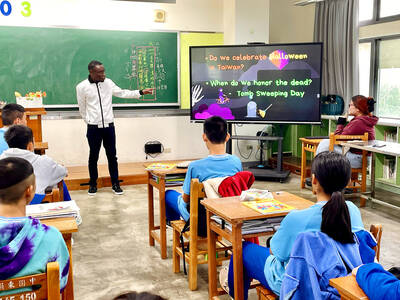
For many people, Bilingual Nation 2030 begins and ends in the classroom. Since the policy was launched in 2018, the debate has centered on students, teachers and the pressure placed on schools. Yet the policy was never solely about English education. The government’s official plan also calls for bilingualization in Taiwan’s government services, laws and regulations, and living environment. The goal is to make Taiwan more inclusive and accessible to international enterprises and talent and better prepared for global economic and trade conditions. After eight years, that grand vision is due for a pulse check. RULES THAT CAN BE READ For Harper Chen (陳虹宇), an adviser
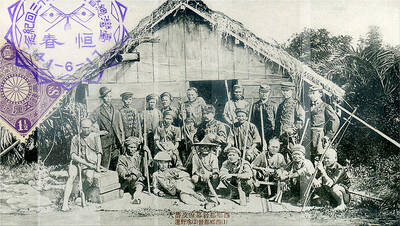
Traditionally, indigenous people in Taiwan’s mountains practice swidden cultivation, or “slash and burn” agriculture, a practice common in human history. According to a 2016 research article in the International Journal of Environmental Sustainability, among the Atayal people, this began with a search for suitable forested slopeland. The trees are burnt for fertilizer and the land cleared of stones. The stones and wood are then piled up to make fences, while both dead and standing trees are retained on the plot. The fences are used to grow climbing crops like squash and beans. The plot itself supports farming for three years.

President William Lai (賴清德) on Nov. 25 last year announced in a Washington Post op-ed that “my government will introduce a historic US$40 billion supplementary defense budget, an investment that underscores our commitment to defending Taiwan’s democracy.” Lai promised “significant new arms acquisitions from the United States” and to “invest in cutting-edge technologies and expand Taiwan’s defense industrial base,” to “bolster deterrence by inserting greater costs and uncertainties into Beijing’s decision-making on the use of force.” Announcing it in the Washington Post was a strategic gamble, both geopolitically and domestically, with Taiwan’s international credibility at stake. But Lai’s message was exactly


 RSS
RSS