


Japan, eclipsed by China in start-up activity, is boosting efforts to get foreign venture-capital firms more involved with its entrepreneurs.
The Japanese government-backed Cool Japan Fund yesterday said it would contribute US$10 million to become the largest limited partner in the Japan-focused fund of 500 Startups, a San Francisco-based venture firm specializing in early-stage investments.
The partnership aims to help start-ups in the nation expand abroad by leveraging the venture firm’s global network in about 60 countries.
The deal is unusual in a country where start-up funding is dominated by local corporations and marks the first time the state has directly backed a non-Japanese venture capital firm. The investment helps to show that foreign venture backers would be supported if they dedicate more resources to Japan.
The investment brings total capital raised for the venture firm’s Japan fund to US$35 million, exceeding its initial target of US$30 million when it debuted last year. So far the firm has invested about one-quarter of that amount in more than 20 local start-ups, including satellite services provider Infostellar Inc and high-tech wheelchair maker Whill Inc.
Its parent firm oversees US$350 million and has invested in about 1,800 companies globally.
By joining with 500 Startups, Cool Japan is aiming to bring in more local entrepreneurs. After nurturing businesses in their early stages, the government-backed fund might step in with additional financing in later rounds.
Cool Japan, established in 2013, invests in companies that promote Japanese culture. The government provides about 85 percent of the firm’s ¥69.3 billion (US$630 million) in capital.
Since its inception, it has taken stakes in more than 20 companies, including Japanese TV channel operator Wakuwaku Japan Corp and cafe chain Green Tea World USA Inc.
The US company is one of the few foreign venture firms that operate in Japan. Others include Salesforce.com Inc’s venture fund and Eight Roads, the late-stage venture capital arm of Fidelity Investments.
Silicon Valley accelerator Plug and Play Tech Center is to open its Japan office as early as this month, Bloomberg News reported last week.
More foreign backers could help boost venture activity in Japan, where start-up funding reached ¥210 billion last year, according to Japan Venture Research Co.
Still, that is far below China, which climbed to US$31 billion last year from US$3 billion three years prior, according to KPMG.
James Riney, the head of 500 Startups in Japan, said foreign venture firms can help change a culture dominated by corporate funding.
He said that companies dominate Japan’s start-up ecosystem, accounting for 72 percent of venture funding last year, compared with 24 percent in the US, according to CB Insights.
Corporate oversight can stifle risk-taking and innovation, and result in start-ups going public too soon, he said.

Taiwanese firms have increased investment in the Philippines in recent years as Manila’s ties with Washington deepen and global supply chains continue to shift away from China, an expert at the Chung-Hua Institution for Economic Research (CIER, 中華經濟研究院) said yesterday. The Philippines had not been among Taiwanese investors’ top choices in Southeast Asia, CIER Taiwan ASEAN Studies Center director Kristy Hsu (徐遵慈) said at a seminar in Taipei. However, Taiwan’s investment in the country has grown significantly since the COVID-19 pandemic, reaching US $257 million last year, a high in recent years, she said. Although Taiwan’s total investment in the Philippines still lags

Intel Corp regards Taiwan Semiconductor Manufacturing Co (TSMC, 台積電) as a longstanding partner, as the US chipmaker would continue outsourcing production of advanced chips to TSMC, Intel chief executive officer Lip-Bu Tan (陳立武) said yesterday. “I don’t look at people as competitors. I look at the collaboration... Nvidia is also, you know, a good friend,” Tan told a news conference following his keynote speech at the Computex trade show in Taipei. “It’s a very trusted partnership for us... We are a big, top customer for them, and we’re going to continue doing that,” he said, referring to TSMC, the world’s largest foundry

Artificial intelligence (AI) agents would supplant smartphones as the center of people’s digital lives, fundamentally reshaping personal devices and driving a major computing upgrade cycle, Qualcomm Inc CEO Cristiano Amon said yesterday. In his keynote speech for this year’s Computex trade show in Taipei, Amon said that the rise of "agentic AI" — AI systems capable of reasoning, planning and carrying out tasks autonomously — would transform how people interact with technology across phones, PCs, vehicles and wearable devices. Describing the technology as the next major evolution in computing, Amon said that "2026 is the year of agents.” For decades, smartphones have sat
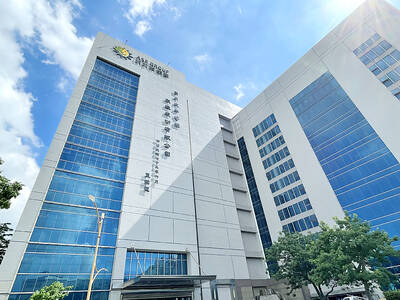
The average pay to employees by ASE Technology Holding Co (日月光投控) was the highest among the companies listed on the local main board last year, while contract chipmaker Taiwan Semiconductor Manufacturing Co (TSMC, 台積電) ranked seventh, the Taiwan Stock Exchange (TWSE) said on Monday. Data compiled by the exchange showed ASE Technology, the world’s largest chip packaging and testing services provider, paid its employees an average of NT$6.28 million (US$199,746) last year, up 40 percent from a year earlier. TSMC, the world’s largest contract chipmaker and the most profitable company in Taiwan, paid its employees NT$4.09 million on average, up


 RSS
RSS