


When Lu Tsung-yung (盧聰勇) held the first Robot Boxing Competition five years ago, more than 40 of the 62 constructions couldn’t even walk successfully.
“Basically, if you could even make your robot take a step, you won your round,” Lu laughs.
Nine competitions later, Lu says the mechanical gladiators have become so advanced that he has had to enlarge the ring and is thinking of another expansion. He’s also thrown in new challenges during last weekend’s event it was slope descending, which not a single robot passed.
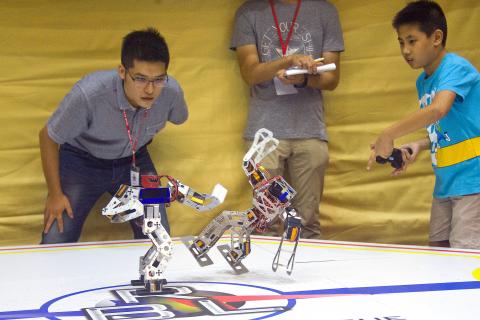
Photo: Han Cheung, Taipei Times
“We’ve had the robots ascend and descend stairs for the past two years and the contestants seem to have that figured out already,” Lu says. “So I added the slope. When someone figures that out, we’ll mix it up again. It’s brutal. What you see here is five years of evolution.”
LIKE HUMAN
Held at DMP Electronics (瞻營全電子股份有限公司), an electronics and robot parts company in Hsinchuang District’s (新莊) industrial area in New Taipei City, this competition — unlike often depicted in movies — is no simple slugfest between two bumbling metal stiffs.
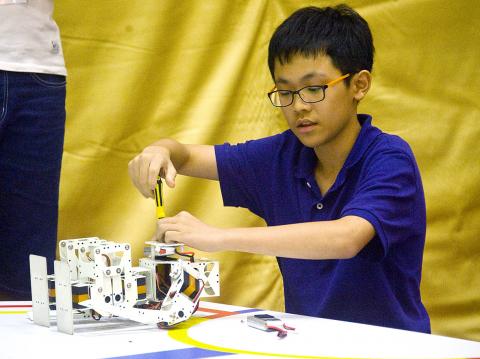
Photo: Han Cheung, Taipei Times
Set to a soundtrack of intense video game-esque speed metal, robots under 3kg deftly maneuver around the ring, throwing punches and kicks, dodging and grappling while shifting their weight around to avoid a knockdown. It’s fast-paced, entertaining stuff to watch, complete with a referee yelling out the results. At the end of the three-minute round, the robot that gets knocked down by a legitimate attack the fewest times wins.
To score a “down,” the attacker has to remain standing. But referee Wu Chia-hsien (吳佳憲) says the number one thing he watches for is the intent of a certain move.
“We have to be able to tell if it was a complete attack — if the punch was properly executed and if it hit the other robot in a spot where it could fall over,” he says.
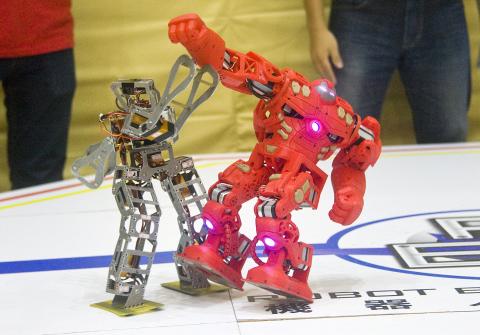
Photo: Han Cheung, Taipei Times
“If you accidentally topple the opponent during a part of a movement, such as retracting your fist from an unsuccessful attack — that doesn’t count.”
Wu says the rules have been refined over the years. He cites an example of some contestants’ strategy of moving and attacking sideways or while in a squatting position to avoid falling. That has since been banned, as Lu wants this to be realistically anthropomorphic as possible.
Lu says there are many “schools” in robot building — he believes in making and promoting bipedal robots, while others may favor wheels or tentacles
“That’s why we place such an emphasis on walking, fighting and staying upright,” he says. “When you watch movies, the robots are usually bipedal because they need to do many things, and with two feet you aren’t as limited by the terrain around you.”
Robotics instructor Liu Chun-ming (劉俊民) says that he always asks his students to physically perform a maneuver first before programming the robot to do it. Part of it is to look realistic, but also to teach them that if a human cannot do something, a humanoid robot should not either.
“If they perform the move and feel pain or discomfort, then they should not make the robot do it,” Liu says. “The robot cannot cry out in pain, but its motor might start smoking.”
DUELING MACHINES
The finals are in action by the afternoon — with 24 warriors standing. It’s a mix of demographics — ranging from fourth-graders to adults. There’s a group from Macau, and there’s one lone female, an engineering student at Chenghsiu University (正修大學), whose instructors and several classmates are also in the final fray.
Most robots are built along the same vein and prototype, with minor modifications such as fists or shovels as hands. A contestant with a claw robot says it simply is aesthetic preference. The construction that stands out the most is a replica of Iron Man’s Hulkbuster armor, made by Mike Chen (陳念勤) using 3D printing technology.
Chen works in a family team — he designs and prints the parts, his brother programs the action and his nephew operates the product on the battlefield. They originally started making robots for this competition, but now have branched into other areas of robotics.
“The fun is in the process,” Chen says. “I didn’t put too much thought into the design — the point was to think of how to use 3D printing, seven motors and other parts to make a moving Iron Man. Can it beat others? We don’t know.”
Alas, Iron Man suffers a bad connection with its controller and has trouble getting up, losing points. After taking a two-minute timeout to fix the problem, it is knocked out of competition.
Meanwhile, the Chenghsiu students keep advancing. The final battle is between classmates, the Black Knight (黑武士) and Fashion Pioneer (時尚尖兵). The more experienced Black Knight, controlled by Ko Shih-tung (葛士冬), makes it out on top.
Ko doesn’t think much of his accomplishment, at least on the surface, as he stoically walks off the stage and starts packing his bags.
“It’s just luck,” he says. “There’s nothing special to this.”
His robotics teacher, Hu Che-wei (胡哲瑋), steps in: “Instead of going on vacation, they’ve been coming to my robotics classroom to practice three times a week this summer. Also, the Black Knight’s programming is better than that of his opponent. You can tell that his movements are more fluid.”
Ko disagrees, as Hu was knocked out in the first round of the finals. “Even if I write really good code, it’s not going to be better than my teacher’s,” he says.
For more information on upcoming competitions, visit www.facebook.com/RobotBoxing.
Jason Han says that the e-arrival card spat between South Korea and Taiwan shows that Seoul is signaling adherence to its “one-China” policy, while Taiwan’s response reflects a reciprocal approach. “Attempts to alter the diplomatic status quo often lead to tit-for-tat responses,” the analyst on international affairs tells the Taipei Times, adding that Taiwan may become more cautious in its dealings with South Korea going forward. Taipei has called on Seoul to correct its electronic entry system, which currently lists Taiwan as “China (Taiwan),” warning that reciprocal measures may follow if the wording is not changed before March 31. As of yesterday,
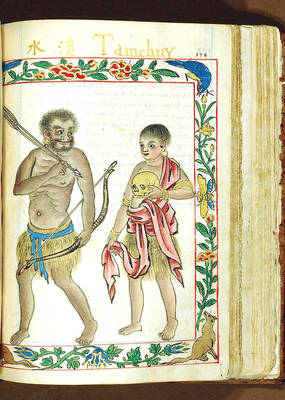
The Portuguese never established a presence on Taiwan, but they must have traded with the indigenous people because later traders reported that the locals referred to parts of deer using Portuguese words. What goods might the Portuguese have offered their indigenous trade partners? Among them must have been slaves, for the Portuguese dealt slaves across Asia. Though we often speak of “Portuguese” ships, imagining them as picturesque vessels manned by pointy-bearded Iberians, in Asia Portuguese shipping between local destinations was crewed by Asian seamen, with a handful of white or Eurasian officers. “Even the great carracks of 1,000-2,000 tons which plied

It’s only half the size of its more famous counterpart in Taipei, but the Botanical Garden of the National Museum of Nature Science (NMNS, 國立自然科學博物館植物園) is surely one of urban Taiwan’s most inviting green spaces. Covering 4.5 hectares immediately northeast of the government-run museum in Taichung’s North District (北區), the garden features more than 700 plant species, many of which are labeled in Chinese but not in English. Since its establishment in 1999, the site’s managers have done their best to replicate a number of native ecosystems, dividing the site into eight areas. The name of the Coral Atoll Zone might
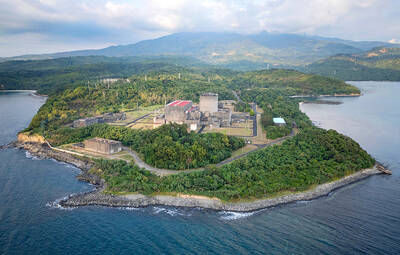
Nuclear power is getting a second look in Southeast Asia as countries prepare to meet surging energy demand as they vie for artificial intelligence-focused data centers. Several Southeast Asian nations are reviving mothballed nuclear plans and setting ambitious targets and nearly half of the region could, if they pursue those goals, have nuclear energy in the 2030s. Even countries without current plans have signaled their interest. Southeast Asia has never produced a single watt of nuclear energy, despite long-held atomic ambitions. But that may soon change as pressure mounts to reduce emissions that contribute to climate change, while meeting growing power needs. The


 RSS
RSS