


When American expat Brent Calkins started surfing in Taiwan four years ago he immediately fell in love with the sport.
“When you’re in the ocean sitting on a surfboard with [the coast and mountains] as your backdrop, there aren’t many things that can beat it,” says Calkins.
Lately, he’s become proactive about promoting environmental awareness, too. Calkins and local surfer George Tsai (蔡喬治) of SuperGeorge Surf Taiwan (喬治衝浪), a surf shop in Yilan County, will be hosting a Trash Art Contest for elementary school students at Double Lions Beach (雙獅海邊) near Waiao Train Station (外澳火車站) tomorrow morning as a tribute to World Oceans Day on Wednesday.
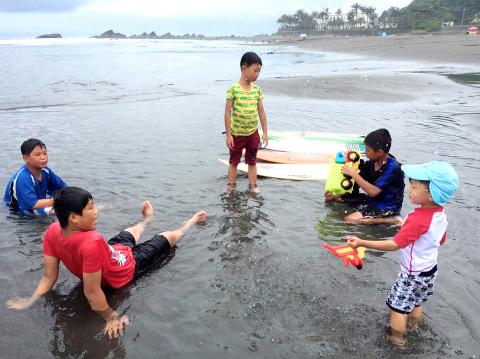
Photo courtesy of Taiwannasurf
It was Tsai’s idea to get the students from Toucheng Humanities Elementary School (頭城人文國小) involved. The children, who are in the fourth and fifth grades, will collect as much trash from the beach as possible and make art out of it. There will be prizes for first, second and third places. In the afternoon, the students will also get a chance to swim and surf. The day will culminate with an awards ceremony.
Anyone is invited to join and help out, though it’s only the students who will be participating in the actual contest. Calkins and Tsai are also looking for surfers to teach the children how to surf.
Litter from cities often ends up on beaches and coastlines and flows into the ocean, so Calkins says the goal of the event is to educate children about the ramifications of throwing trash on the ground, notably how the act is harmful to our ecosystem and to us.
“Once they see a dead seagull with its stomach full of plastic, once they see the trash on our beaches, once they know how good it feels to clean a beach and do their part, they will be positively changed forever, and then they will become the teachers,” Calkins tells the Taipei Times.
One way to change people’s attitudes and make them realize the importance of keeping the environment clean is through exposure to beach culture, including playing at the beach and learning how to swim — and all of this begins at an early age.
During martial law, most of Taiwan’s coastline was sealed off from public access and as a result, many Taiwanese grew up fearing the ocean, seeing it as a dangerous place that was used for military drills.
This has changed in the past decade though, with more and more beachgoers populating the black sand beaches on Taiwan’s east coast every weekend. In fact, more children are learning how to swim, either at school or on their own. Some are even learning how to surf.
Calkins is also the founder of Taiwannasurf (台灣哪衝浪有限公司), a soon-to-be-launched bilingual Web site and app that provides up-to-date surf reports and forecasts for surfers, as well as information on surf shops and hostels.
The Web site will also have an educational component with information about ocean awareness and how to take care of the environment. The decision to include this component was partly driven by how Calkins has always loved nature and was disheartened to see so much trash end up on Taiwan’s beaches — which is why he is happy about the event.
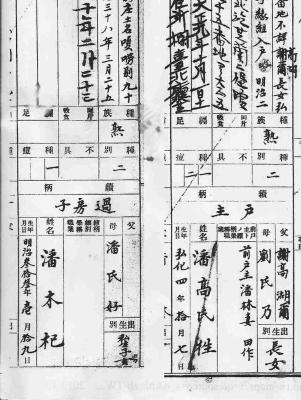
Feb. 9 to Feb.15 Growing up in the 1980s, Pan Wen-li (潘文立) was repeatedly told in elementary school that his family could not have originated in Taipei. At the time, there was a lack of understanding of Pingpu (plains Indigenous) peoples, who had mostly assimilated to Han-Taiwanese society and had no official recognition. Students were required to list their ancestral homes then, and when Pan wrote “Taipei,” his teacher rejected it as impossible. His father, an elder of the Ketagalan-founded Independence Presbyterian Church in Xinbeitou (自立長老會新北投教會), insisted that their family had always lived in the area. But under postwar
In 2012, the US Department of Justice (DOJ) heroically seized residences belonging to the family of former president Chen Shui-bian (陳水扁), “purchased with the proceeds of alleged bribes,” the DOJ announcement said. “Alleged” was enough. Strangely, the DOJ remains unmoved by the any of the extensive illegality of the two Leninist authoritarian parties that held power in the People’s Republic of China (PRC) and Taiwan. If only Chen had run a one-party state that imprisoned, tortured and murdered its opponents, his property would have been completely safe from DOJ action. I must also note two things in the interests of completeness.
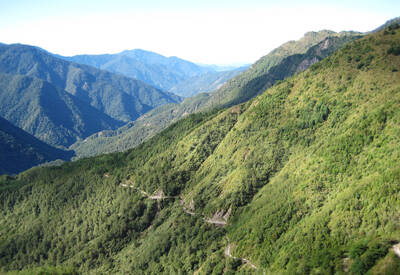
Taiwan is especially vulnerable to climate change. The surrounding seas are rising at twice the global rate, extreme heat is becoming a serious problem in the country’s cities, and typhoons are growing less frequent (resulting in droughts) but more destructive. Yet young Taiwanese, according to interviewees who often discuss such issues with this demographic, seldom show signs of climate anxiety, despite their teachers being convinced that humanity has a great deal to worry about. Climate anxiety or eco-anxiety isn’t a psychological disorder recognized by diagnostic manuals, but that doesn’t make it any less real to those who have a chronic and
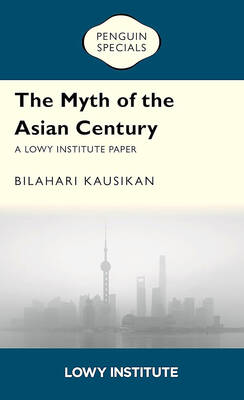
When Bilahari Kausikan defines Singapore as a small country “whose ability to influence events outside its borders is always limited but never completely non-existent,” we wish we could say the same about Taiwan. In a little book called The Myth of the Asian Century, he demolishes a number of preconceived ideas that shackle Taiwan’s self-confidence in its own agency. Kausikan worked for almost 40 years at Singapore’s Ministry of Foreign Affairs, reaching the position of permanent secretary: saying that he knows what he is talking about is an understatement. He was in charge of foreign affairs in a pivotal place in


 RSS
RSS