


Since the initial Taiwan International Arts Festival (TIFA) in 2009, the National Theater Concert Hall (NTCH) programmers have kept raising the bar, bringing some of the best and most innovative artists from around the world and Taiwan to fill up the weekends over five to six weeks in Taipei.
NTCH artistic director Lee Huey-mei (李惠美) said each festival takes about two years of planning, and the goal is to expand the horizons of local audiences as well as inspire the nation’s performers and arts groups.
The line-up of 20 shows put together under the theme of “Echos of Imagination” this year hold a lot of promise. In keeping with the worldwide celebrations to mark the 400th anniversary of William Shakespeare’s death, there are two productions based on his works: Avignon Festival director Olivier Py’s King Lear (李爾王), a joint production with the NTCH, and Taipei-based Contemporary Legend Theatre’s (當代傳奇劇場) Beijing opera interpretation of A Midsummer’s Night Dream (仲夏夜之夢).
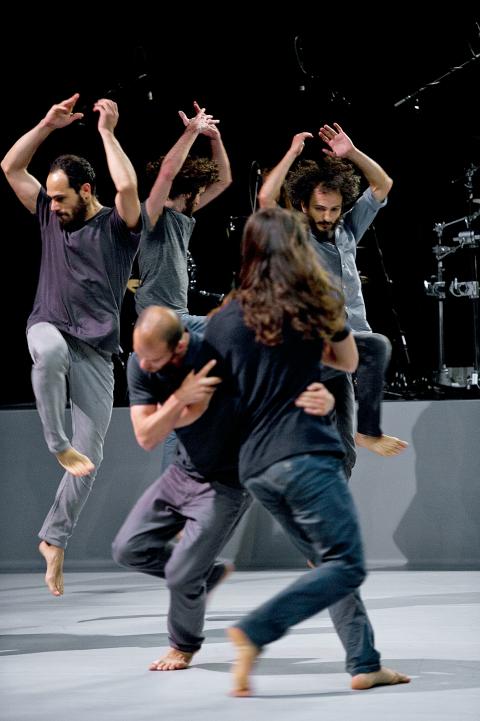
Photo courtesy of marc domage
While opening night of the festival is not until Feb. 25, ticket sales have been strong. As expected several of the shows in the smaller venues have already sold out: Mr. Wing Theatre Company’s (人力飛行劇團) black comedy The Company Thanks You (公司感謝你), Roland Auzet and Arushi Mudgal’s dance collaboration SAMA and choreographer Arthur Pita’s The Little Match Girl — all in the Experimental Theater — and Djanav Zengror Bunun and Umav Balalavi’s Ayi-yanga (念念古調) in the Recital Hall.
However, the first to sell out was the one-night-only concert by Russian soprano Anna Netrebko and tenor Yusif Eyvazov in the Concert Hall, while King Lear tickets vanished quickly as did the National Symphony Orchestra’s (國家交響樂團) performance of Gustave Mahler’s Sixth Symphony.
However, procrastinators should not despair, as there are still plenty of options, but jazz and film lovers should act fast if they want to catch The Triplets of Belleville Cine Concert (佳麗村三姊妹電影音樂會) on March 11. Benoit Charest, who composed the score for the enchanting 2003 film, will appear with Le Terrible Orchestre de Belleville, and there are less than 50 tickets left.
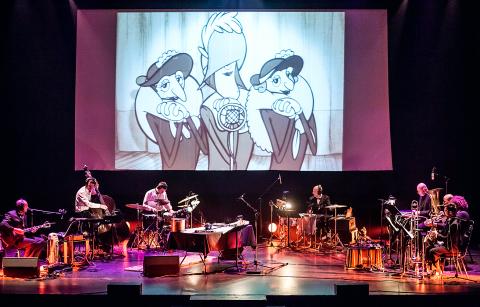
Photo courtesy of the National Theater Concert Hall
The festival opens on Feb. 25 with the return of U-Theatre (優人神鼓) to the National Theater with Lover, its coproduction with German composer Christian Jost and the Rundfunkchor Berlin that had its world premiere in April 2014 in Berlin.
Another theater work is a revival of Needles and Opium (癮‧迷) by Canadian Robert Lepage with EX MACHINA, starting April 15, while US-based Chinese puppet master Yeung Fai (楊輝) will present a new work in the Experimental Theater starting on March 8.
Dance productions on the main stage include French choreographer Christian Rizzo’s multicultural Based on a True Story (d’apres une histoire vraie) on March 5 and March 6; Cloud Gate 2 (雲門2), with artistic director Cheng Tseng-lung’s (鄭宗龍) latest work, 13 Tongues (十三聲), which opens on March 11; Sidi Larbi Cherkaoui’s Mjlonga, a joint creation by the Belgian choreographer, Saddler’s Wells Theatre and Argentine dancers and musicians, opening on April 1, and the Hofesh Shechter Company, making its second appearance at a TIFA, with Sun starting on April 8.
Taiwanese choreographer Lai Tsui-shuang’s (賴翠霜) own group will perform Sound, Body, Memories (發聲) upstairs in the the Experimental the weekend of March 25.
Rounding out the list of shows with tickets still available, the Ju Percussion Group (朱宗慶打擊樂團) will be performing The Fifth Sound of Beats (第五種擊聲) in mid-March in the Concert Hall, while Bosnian singer Amira Medunjanin and her trio will be in the Recital Hall the beginning of April.
Further details are available on the festival’s Web site, in Chinese and English, at tifa.npac-ntch.org/2016/tw/#programme.
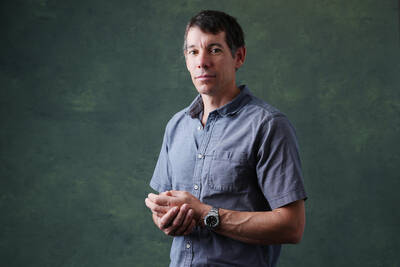
Towering high above Taiwan’s capital city at 508 meters, Taipei 101 dominates the skyline. The earthquake-proof skyscraper of steel and glass has captured the imagination of professional rock climber Alex Honnold for more than a decade. Tomorrow morning, he will climb it in his signature free solo style — without ropes or protective equipment. And Netflix will broadcast it — live. The event’s announcement has drawn both excitement and trepidation, as well as some concerns over the ethical implications of attempting such a high-risk endeavor on live broadcast. Many have questioned Honnold’s desire to continues his free-solo climbs now that he’s a

Francis William White, an Englishman who late in the 1860s served as Commissioner of the Imperial Customs Service in Tainan, published the tale of a jaunt he took one winter in 1868: A visit to the interior of south Formosa (1870). White’s journey took him into the mountains, where he mused on the difficult terrain and the ease with which his little group could be ambushed in the crags and dense vegetation. At one point he stays at the house of a local near a stream on the border of indigenous territory: “Their matchlocks, which were kept in excellent order,

Lines between cop and criminal get murky in Joe Carnahan’s The Rip, a crime thriller set across one foggy Miami night, starring Matt Damon and Ben Affleck. Damon and Affleck, of course, are so closely associated with Boston — most recently they produced the 2024 heist movie The Instigators there — that a detour to South Florida puts them, a little awkwardly, in an entirely different movie landscape. This is Miami Vice territory or Elmore Leonard Land, not Southie or The Town. In The Rip, they play Miami narcotics officers who come upon a cartel stash house that Lt. Dane Dumars (Damon)
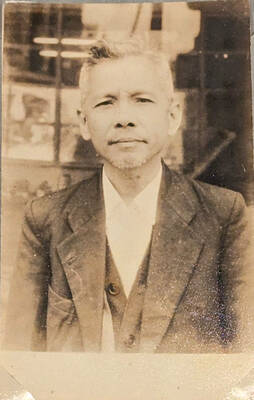
Jan. 19 to Jan. 25 In 1933, an all-star team of musicians and lyricists began shaping a new sound. The person who brought them together was Chen Chun-yu (陳君玉), head of Columbia Records’ arts department. Tasked with creating Taiwanese “pop music,” they released hit after hit that year, with Chen contributing lyrics to several of the songs himself. Many figures from that group, including composer Teng Yu-hsien (鄧雨賢), vocalist Chun-chun (純純, Sun-sun in Taiwanese) and lyricist Lee Lin-chiu (李臨秋) remain well-known today, particularly for the famous classic Longing for the Spring Breeze (望春風). Chen, however, is not a name


 RSS
RSS