


Most Westerners who come to Taiwan spend a year teaching, save some money and then move on. Sometimes, however, something magical happens in that first year. Because Taiwanese are extremely welcoming and those passing through Taiwan are stimulating, deep bonds are made in a short time, and soon that first year inexplicably becomes three, and then five and then 10.
This story is true for Fratzuki (real name Dominick Fresnia), who deejays and emcees at Elektro four times a week. He arrived in Taiwan after traveling the world and was in need of a financial windfall. In the decade since, he has been a party promoter, worked as a magician, started his own booth that sold deep fried oreos at the Raohe night market, made a hip-hop album in Mandarin, and has been an all around hustler since he has stepped off the plane.
The people that have a hard time in Taiwan usually get sick of teaching snotty-nosed kids rather quickly and are frustrated that there are not a ton of other opportunities out there. Fratzuki’s advice to them is to find something to do that you are passionate about.
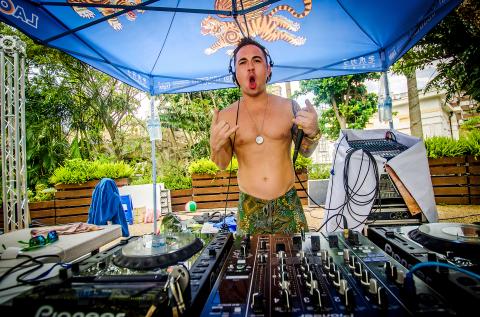
Photo courtesy of Jason Matthew Peters
“I’ve had friends start English-language exercise classes, English-language guitar classes, outdoor adventure trips and small restaurants. [They] had great success because they loved doing it. The great thing about starting businesses in Taiwan is it is very cheap in the beginning, so stop being scared of failure and try to make one of your hobbies a new career,” said Fratzuki.
Big dreams
The thing about Fratzuki is that he always dreams big, but when he comes up with these ideas, he follows through and makes them successful. Music has always been a big passion and right now, he calls being an MC and DJ at Elektro the best job he’s ever had.
The owner of the club, DJ Junior, is getting a pretty big name for himself around Asia. When Fratzuki goes to big shows with him at Club Grid or the Ultra Music Festival in Korea to emcee, they play in front of thousands of people and share the same stage with the likes of hip-hop superstars Lil’ Jon and Snoop Dogg.
The future looks quite bright for Fratzuki as he has a big gig with DJ Junior opening up for Skrillex in the beginning of October at Fulong Beach and then some DJ gigs in Japan after that. He is also in the middle of a music production course and hoping to have some original tunes out soon.
“I’m at the point where I need original music that I’m releasing to keep forward progress,” Fratzuki said. “For the rest of this year and next year, I’ll just be focused on producing more, and releasing super hot fire tracks!”
■ Fratzuki will be the opening DJ for international superstar Moti tonight starting 10pm at Elektro, 6F, 12 Songshou Rd, Taipei City (台北市松壽路12號6樓). Admission is NT$900 and includes a drink.
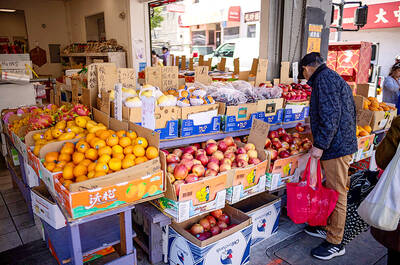
Ajay Verma, a consultant gastroenterologist at Kettering general hospital in Northamptonshire, says our gut is a “complex machine.” “It is constantly providing us with the nutrition we need, initially to grow and develop, and then for us to survive, thrive and repair from injury and illness.” How can we keep it functioning well? Put simply: “Make sure what you put into it is balanced, and that you clear out its waste products adequately,” Verma says. “In a general gastroenterology clinic, the most common conditions we see are irritable bowel syndrome (IBS), gastroesophageal reflux disease, inflammatory bowel disease and constipation,” says Nisha

And so, in the wake of US President Donald Trump’s trip to the People’s Republic of China (PRC), all the experts on the Strait of Hormuz suddenly became experts on US-China-Taiwan relations. The Internet has certainly expanded human knowledge. Lots of these sudden experts made noise this week about Trump’s words after the meeting with PRC dictator Xi Jin-ping (習近平). Trump is going to sell out Taiwan! Longtime Taiwan commentator J. Michael Cole summed the situation up neatly in the Guardian: “We need to keep in mind that he has a tendency to say many things — sometimes contradicting himself within

Last week US President Donald Trump was asked by a reporter whether he would speak on the phone to the President of Taiwan. “l’ll speak to him. I speak to everybody. We have that situation very well in hand,” Trump said. This marked the second time in a couple of weeks he had said he would talk to the President of Taiwan. In 2016 he famously took a call from then-president Tsai Ing-wen (蔡英文), when he was president-elect. Despite warnings that the apocalypse was nigh because of a phone call, the world quickly forgot about the conversation between two democratically-elected presidents.
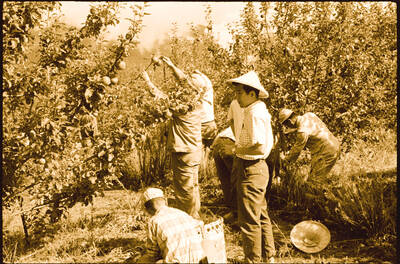
May 25 to May 31 Few believed that apples could be cultivated on a commercial scale in Taiwan’s high mountains. When horticulturalist Cheng Chao-hsiung (程兆熊) first proposed the idea in 1955, both American and Taiwanese colleagues dismissed it as implausible, arguing that temperate fruit could not be reliably grown on a subtropical island, especially on rugged terrain. However, it was this terrain in the Central Mountain Range where many Chinese Civil War veterans were resettled in the late 1950s. With limited job prospects and no family in Taiwan, they were placed on cooperative farms aimed toward self-sufficiency. Some say the conditions


 RSS
RSS