


When Tony Kuo (郭大同), a retired high school English teacher in Chiayi City, decided a few years ago to translate his late father’s handwritten war-time “recollections” of his life as a civilian conscript in the Japanese Imperial Army when he was in his early 20s, he took on a challenge: translating into English the notebooks his elderly farmer father had used to write down his memoirs in Chinese and Japanese and then finding a local print shop to turn out readable copies of a small but important part of Taiwanese history.
He also wanted to honor his father, Kuo Tien-lu (郭天祿), a Kaohsiung banana farmer who passed away in 2001 at the age of 84. The elderly Kuo first began jotting down his wartime memories when he was 76.
Spotlight on history
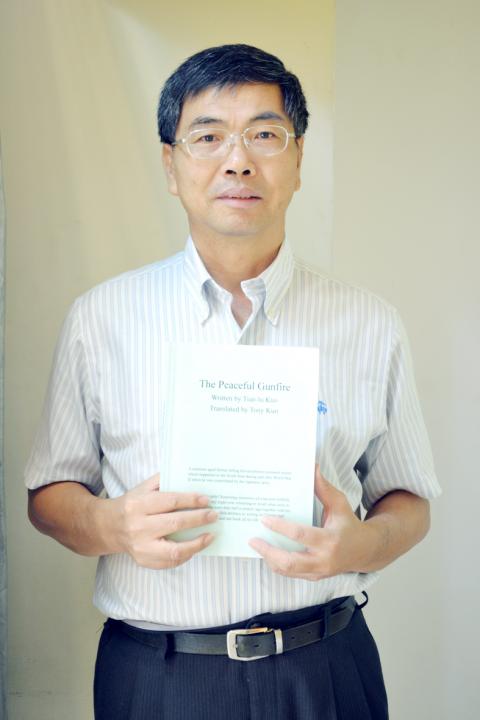
Photo Courtesy of Buddy Lee
The memoirs, titled The Peaceful Gunfire (和平戰火) in English, shine a revealing spotlight on a seldom-told chapter of Taiwan’s wartime history, especially of Japan’s conscription of Taiwanese men to work and wage war in southeast Asia.
“My father’s diary, written much later after the war, after he retired from farming in Kaohsiung, is a slice of life that I wanted to make available for historians, academics and anyone else who might want to read this,” Kuo said in a recent interview with the Taipei Times. “My father was sent to Japan-controlled Indonesia. He left by ship in 1943 and came back by ship in 1946, a year after Tokyo surrendered.”
Conscripted to work for the Mitsui Company as a rice warehouse laborer, the senior Kuo, a native of Kaoshiung, shipped out from Taiwan on July 29, 1943, according to his diary notations. Although the war ended some two years later, he was not able to make it back home until 1946 due to bureaucratic problems.
In writing down his memories in old age, the elderly Taiwanese banana farmer was able to recollect such detailed memories as US air raids over Japanese bases where he was stationed, a near fatal bout with malaria that saw him pass “black urine,” sightings of so-called “comfort women” aboard a Japanese troop ship and a one-night, unhappy visit to a local brothel in the former Dutch colony of Indonesia.
Don’t mention the war
The younger Kuo said that his father seldom spoke about the war. “The first we learned about all this was when he presented us with the diary he wrote in his old age,” Kuo, 57, said.
Kuo’s father was not a soldier in the Japanese Imperial Army, but was conscripted as a civilian worker for a Japanese company connected to the war effort in southeast Asia. After leaving Kaohsiung by ship in 1943 — the first time he ever left Taiwan — the 21-year-old spent 10 months in New Guinea. As the only son of a widowed mother, he spent a lot of his time there thinking about his mother back home and writing her letters which he never knew if she received until he got back home three years later.
“I sometimes missed my hometown very much because my mother had always been plagued with chronic asthma, and I was worried about her,” he wrote in one of his diary entries, adding: “Here in New Guinea it is March and we have summer all year long here, but in Taiwan, it is winter. How is my mother’s health? I have written about 10 letters home already, but I never know if she received them. And I never receive any mail from her since I am at one of the frontlines of the war. So getting mail from home is impossible.’’
Black urine
The day Kuo passed “black urine” was something he would never forget, he told his son back in Taiwan long after the war. He wrote about it in a diary entry about a local man, an overseas-Chinese tailor, who had recently died from malaria, after just a three-day illness.
“Two months later, I also got malaria and had to stay in bed,” Kuo noted in his diary. “To my utter astonishment, the color of my urine had turned very dark after two days of this terrible sickness. I thought I would soon die, too.”
Kuo was bouyed, however, by memories he had of a local medical treatment in Taiwan he had heard about as a youth, where local people would drink coconut milk when they had malaria.
“I tried the same coconut milk cure,” he wrote. “The next day, sure enough, the color of my urine returned to normal yellow. After this incident, I kept drinking coconut milk as often as I could, and I thanked the gods for blessing me with life.”
Comfort women
Being a young single man far away from home, Kuo decided to go to a local brothel during his stay in Indonesia. Most likely, the young Dutch and Indonesian girls who worked there were the euphemistically-named “comfort women,” so Kuo was about to see it all up close and personal. He reasoned that as an unmarried man, he might as well get to know what sex was all about so that when he did get married one day back in Taiwan, he would know how to please his wife. But things did not turn out as planned.
“I chose a girl and went into her room, but to tell the truth I felt disgusted by what I was doing and almost vomited,” he confessed in his diary. “Was this really a place to soothe one’s body and mind? The girl I was with was about the same age as me. I reasoned that I could have my first sexual experience so that when I got married later in the future, I would not be teased by my future wife in Taiwan for having a lack of sexual experience.”
So far so good, but Kuo was soon to come up against something that some men suffer from time to time.
“A most embarrassing thing happened that night at the brothel. I often suffer from irrational fears and phobias about cleanliness and sexual diseases, and I had also heard from the army doctors about the dangers of catching a venereal disease. As those thoughts and images came to my mind, my sex drive completely disappeared and I could not get an erection even though the girl was ‘comforting’ me.”
It got worse, Kuo confessed to his diary: “No matter how hard I tried, I just could not do it. Even though I had prepared two condoms to protect me, I never used them. After 30 minutes of this, I walked out of the room without having done the deed.”
Tony Kuo said he hopes his father’s memoir will reach interested readers in the three languages it is now available in: Chinese, Japanese and English.
“This is not a commercial book and it is not for sale in bookstores or online,” Kuo said. “I just wanted to try my hand at doing the translations and making the booklets available in Taiwan to whoever might benefit from reading them. It was all just a labor of love.”
* To order a copy of The Peaceful Gunfire, please send an email to: bikolang@gmail.com.
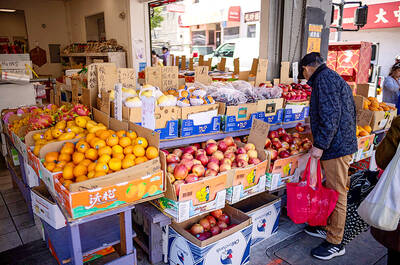
Ajay Verma, a consultant gastroenterologist at Kettering general hospital in Northamptonshire, says our gut is a “complex machine.” “It is constantly providing us with the nutrition we need, initially to grow and develop, and then for us to survive, thrive and repair from injury and illness.” How can we keep it functioning well? Put simply: “Make sure what you put into it is balanced, and that you clear out its waste products adequately,” Verma says. “In a general gastroenterology clinic, the most common conditions we see are irritable bowel syndrome (IBS), gastroesophageal reflux disease, inflammatory bowel disease and constipation,” says Nisha
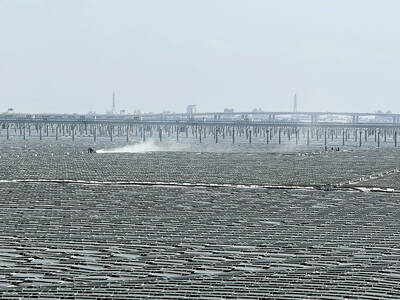
The arithmetic is straightforward and uncomfortable. By the end of 2025, Taiwan had committed itself to a 50-30-20 electricity mix — half natural gas, 30 per cent coal, 20 per cent renewables. The Ministry of Economic Affairs’s (MOEA) own monthly energy reports tell a different story. Natural gas reached 47.8 per cent of generation last year. Coal stood at 35.4 per cent, comfortably above its target ceiling. Renewables came in at 13.1 per cent, well short of the 20 per cent Taipei had pledged a decade earlier. Installed renewable capacity reached roughly half of the 12 gigawatts (GW) the government
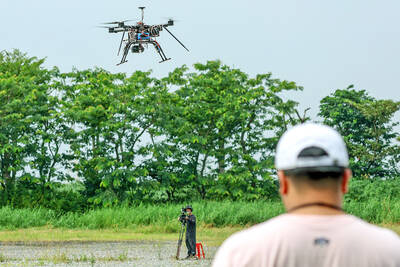
Taiwan’s drone exports are taking off, fuelled by the war in Ukraine, as Taiwanese companies seek a stake in the fast-growing global market for unmanned aerial vehicles (UAV). Low-cost drones used for reconnaissance and strikes are in high demand as governments around the world boost defense spending in the face of intensifying conflicts. A relative new player in the increasingly competitive industry, Taiwan’s pitch is to be an “Asian hub” for the production of UAVs and components free of Chinese materials, or “non-red.” That means its UAVs can be up to three times more expensive than their Chinese competitors, like the world’s biggest
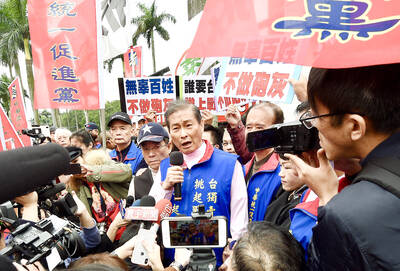
There are shadowy cabals plotting to sell out Taiwan to be annexed by China, by invasion if necessary. Fortunately, they are buffoons. In 2019, former Bamboo Union gangster and founder of the China Unification Promotion Party (CUPP), Chang An-le (張安樂, colorfully known as “White Wolf”), led a protest at the Legislative Yuan against comments made by then-premier Su Tseng-chang (蘇貞昌) that in the event of an attack by China, he would never surrender, but would protect the nation by fighting to the end, even if he only had a broom. Chang had party members bring a wooden casket that they


 RSS
RSS