


The Sixth International Ballet Star Gala on Saturday night at the National Theater was a delight from start to finish, but it was the contemporary pieces, more than the usual gala virtuoso works that really made the event special.
The long and leggy Russian siblings from the Berlin Staatsoper Ballet, Polina Semionova and Dmitry Semionov, got the chance to show off those limbs to full effect in Rolando d’Alesio’s seven-minute Come Neve al Sole. Set to a Frederic Chopin piece arranged for cello by Peter Schindler, Come Neve al Sole was quirky, funny — amazing what you can do with stretchy T-shirts — and just a delight to watch. The goofy interplay between the two dancers seemed tailor-made for a brother-sister act.
Next up was the highlight of the evening, Itzik Galili’s 2003 duet Mona Lisa, danced by Alicia Amatriain and the very muscular Jason Reilly from the Stuttgart Ballet. The Netherlands-based Israeli choreographer has crafted a little jewel of a work, set to an edgy, jazzy syncopated score by Thomas Hof.
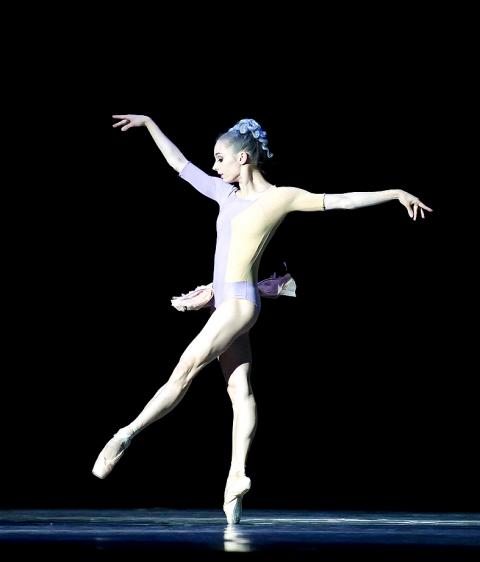
Photo Courtesy of Art Wave
Amatriain and Reilly were amazing, her over-extensions coming into full play in some of the spins, the like of which are usually reserved for ice-skating competitions, such as when he held her by her upper arms and swung her around as she held her legs up in a outstretched V-shape. The lifts and carries were equally breathtaking — you could hear the sharp intakes of breath around the hall. This was a true partnership in every sense of the word; although the woman’s part is the flashier of the two, she can’t be flashy without the man’s support.
Also stunning was Igor Kolb’s short solo Adam, by Daniil Salimbave, that sees a fallen angel mourn for the loss of his bloodied, tortured wings and lament the human form he must now embrace.
The piece, set to an excerpt from Mozart’s Requiem, gave the Mariinsky Theatre star a chance to show off his terrific arms (and the rest of his body) as well as his flair for the dramatic.
The gala’s first half closed with a roar — literally — as fans of Daniil Simkin screamed with delight at his Don Quixote pas de deux with the petite Maria Kochetkova from the San Francisco Ballet. The elfin Simkin’s partnering technique has improved a lot in the past two years and he carried off the one-arm overhead lifts of Kochetkova with a huge smile on his face and hardly a visible quiver of strain.
The second half’s highlights included Kolb’s second solo, choreographed by Dmitri Pimonov to music by Rene Aubry, the Semionovs in the flashy classic Le Cosaire pas de deux and Jiri Jelinek and Sonia Rodriquez from the National Ballet of Canada in Luis Martin Oya’s quietly beautiful Por Ti.
For sheer drama, however, it was hard to beat Roland Petit’s Le Rendez Vous, danced by Isabelle Ciaravola and Yann Saiz from the Paris Opera Ballet. From the moment Ciaravola walked onto the stage you knew she was trouble with a capital T, from the black-bob hair down to the tip of her shoes. The straight-edged razor she produced at the end was hardly necessary; she could kill a man with looks alone.
Saturday night’s audience called the dancers back for curtain call after curtain call, all well deserved. But for ballet fans, there was still excitement when the curtain finally fell — those who bought the program book saw the ads for the Universal Ballet’s April visit, when it will be staging four modern works and a July visit by the American Ballet Theater, which will be bringing its production of La Bayadere, thanks to the gala’s producers, Wang Tzer-shing (王澤馨) and her husband, Tzong Yi-shieh (謝宗益).

Jason Han says that the e-arrival card spat between South Korea and Taiwan shows that Seoul is signaling adherence to its “one-China” policy, while Taiwan’s response reflects a reciprocal approach. “Attempts to alter the diplomatic status quo often lead to tit-for-tat responses,” the analyst on international affairs tells the Taipei Times, adding that Taiwan may become more cautious in its dealings with South Korea going forward. Taipei has called on Seoul to correct its electronic entry system, which currently lists Taiwan as “China (Taiwan),” warning that reciprocal measures may follow if the wording is not changed before March 31. As of yesterday,

The Portuguese never established a presence on Taiwan, but they must have traded with the indigenous people because later traders reported that the locals referred to parts of deer using Portuguese words. What goods might the Portuguese have offered their indigenous trade partners? Among them must have been slaves, for the Portuguese dealt slaves across Asia. Though we often speak of “Portuguese” ships, imagining them as picturesque vessels manned by pointy-bearded Iberians, in Asia Portuguese shipping between local destinations was crewed by Asian seamen, with a handful of white or Eurasian officers. “Even the great carracks of 1,000-2,000 tons which plied

It’s only half the size of its more famous counterpart in Taipei, but the Botanical Garden of the National Museum of Nature Science (NMNS, 國立自然科學博物館植物園) is surely one of urban Taiwan’s most inviting green spaces. Covering 4.5 hectares immediately northeast of the government-run museum in Taichung’s North District (北區), the garden features more than 700 plant species, many of which are labeled in Chinese but not in English. Since its establishment in 1999, the site’s managers have done their best to replicate a number of native ecosystems, dividing the site into eight areas. The name of the Coral Atoll Zone might
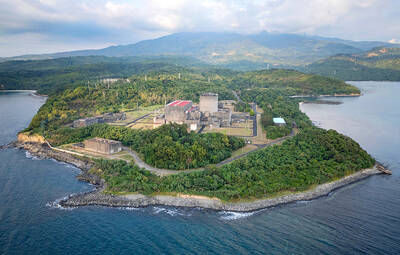
Nuclear power is getting a second look in Southeast Asia as countries prepare to meet surging energy demand as they vie for artificial intelligence-focused data centers. Several Southeast Asian nations are reviving mothballed nuclear plans and setting ambitious targets and nearly half of the region could, if they pursue those goals, have nuclear energy in the 2030s. Even countries without current plans have signaled their interest. Southeast Asia has never produced a single watt of nuclear energy, despite long-held atomic ambitions. But that may soon change as pressure mounts to reduce emissions that contribute to climate change, while meeting growing power needs. The


 RSS
RSS