


The ArtsCross — DansCross performance at the Taipei National University of the Arts’ (TNUA, 國立臺北藝術大學) Experimental Theater on Saturday night was a wonderful cross-cultural showcase that introduced Taipei dance fans to some new faces, gave Taiwanese choreographers a chance to try a different look, and reaffirmed the talent — and polished stage presence — of the school’s dance students.
The show was the culmination of a three-week intensive exchange project between the ResCen of Middlesex University, the Beijing Dance Academy (BDA, 北京舞蹈學院) and TNUA, with the ResCen having selected three “emerging choreographers” working in England, BDA sending three established choreographers from its staff and the TNUA organizers selecting four Taiwanese choreographers of varying experience, though two of them — Lai Tsui-shuang (賴翠霜) and Yu Yen-fang (余彥芳) — have done most of their choreographic work abroad. Ten BDA students also took part, along with two dozen or so TNUA students, including a few from Hong Kong, the US and elsewhere who were in Taipei to take summer classes at the school.
The focus of attention for the academics, researchers and staff involved in the project is the creative and rehearsal process and the intercultural dialogue involved. For the dancers, it is the chance to work with one or more choreographers whose movement vocabulary and working style may be very different from what they are used to. The audience can only judge by what takes place onstage.
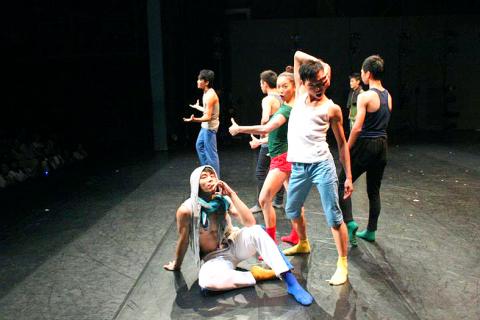
Photo Courtesy of Huang Yin-kuang
Three weeks from auditions to performance is no time at all — even to produce a 10-minute work — and most of the choreographers used a bare stage, with a few projections and basic costuming. When they did use props, the danger factor was upped exponentially — dancing balanced atop the rails of ballet barres in Avatara Ayuso’s Typhoon or hurling themselves onto, into or off mattresses in Century Contemporary Dance Company (世紀當代舞團) director Yao Shu-fen’s (姚淑芬) Dream Hatched III & One-Sixth.
Two factors immediately divided the 10 works so that even if you had not looked at the program beforehand, you could, for the most part, guess which country the choreographer had come from.
BDA’s team — Zhang Jianmin (張建民), Zhang Xiaomei (張曉梅) and Li Shanshan (李珊珊) — came from its “Chinese national” division (as opposed to Chinese classic dance, ballet or modern), and their pieces had the most structured, almost old-fashioned look, as opposed to the improvisational feel common to the others (not to mention the fun quotient).
Three of the Taiwanese pieces were distinctive either because of their props — Yao’s mattresses, a favorite of hers — or the use of dialogue, either between dancers or as monologues to the audience, although Khamlane Halsackda from the UK also had talk.
Other than that, it would have been difficult to tell which were created by a Taiwanese — Yao, Lai, Yu or Bulareyaung Pagarlava (布拉瑞揚) — and which by a member the UK contingent: Ayuso, Halsackda and Alexander Whitley.
Trying not to be biased, and with much to commend many of the works, I felt the four Taiwanese pieces were the best of the lot. Bula’s Uncertain/Waiting was the hit of the night, both for its sheer exuberance and because it was so different from his previous work. He’s done funny before, a little. Segments in Ode to Joy, Chapter I or 37 Arts are two examples, but both those pieces end on much, much darker notes.
Uncertain/Waiting unfolds as an audition, as Bula (in a “voice of God” mode from the back of the theater) calls out directions to the dancers to introduce themselves, and then puts them through a series of solos, duets and combos. The six men and one woman remove and add clothing throughout as Bula tinkers with them, until he has stripped them bare. In the end all but one of the men are shorn even of their support belts and the woman is criss-crossing the stage in a billowing red skirt, her hands shielding her bare breasts.
ArtsCross — DansCross will be held at BDA next year and in London in 2013. It is going to be very interesting for all those involved see how the works produced in those cities differ from those created here.
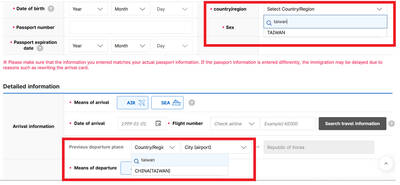
Jason Han says that the e-arrival card spat between South Korea and Taiwan shows that Seoul is signaling adherence to its “one-China” policy, while Taiwan’s response reflects a reciprocal approach. “Attempts to alter the diplomatic status quo often lead to tit-for-tat responses,” the analyst on international affairs tells the Taipei Times, adding that Taiwan may become more cautious in its dealings with South Korea going forward. Taipei has called on Seoul to correct its electronic entry system, which currently lists Taiwan as “China (Taiwan),” warning that reciprocal measures may follow if the wording is not changed before March 31. As of yesterday,
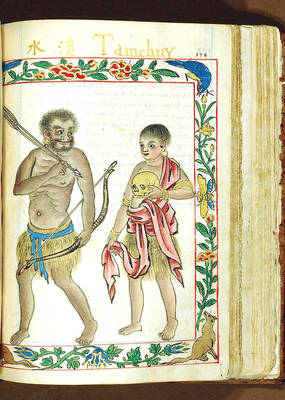
The Portuguese never established a presence on Taiwan, but they must have traded with the indigenous people because later traders reported that the locals referred to parts of deer using Portuguese words. What goods might the Portuguese have offered their indigenous trade partners? Among them must have been slaves, for the Portuguese dealt slaves across Asia. Though we often speak of “Portuguese” ships, imagining them as picturesque vessels manned by pointy-bearded Iberians, in Asia Portuguese shipping between local destinations was crewed by Asian seamen, with a handful of white or Eurasian officers. “Even the great carracks of 1,000-2,000 tons which plied
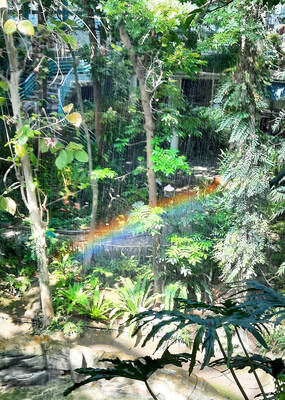
It’s only half the size of its more famous counterpart in Taipei, but the Botanical Garden of the National Museum of Nature Science (NMNS, 國立自然科學博物館植物園) is surely one of urban Taiwan’s most inviting green spaces. Covering 4.5 hectares immediately northeast of the government-run museum in Taichung’s North District (北區), the garden features more than 700 plant species, many of which are labeled in Chinese but not in English. Since its establishment in 1999, the site’s managers have done their best to replicate a number of native ecosystems, dividing the site into eight areas. The name of the Coral Atoll Zone might
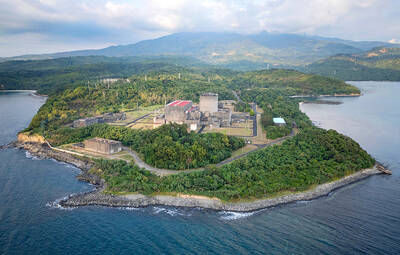
Nuclear power is getting a second look in Southeast Asia as countries prepare to meet surging energy demand as they vie for artificial intelligence-focused data centers. Several Southeast Asian nations are reviving mothballed nuclear plans and setting ambitious targets and nearly half of the region could, if they pursue those goals, have nuclear energy in the 2030s. Even countries without current plans have signaled their interest. Southeast Asia has never produced a single watt of nuclear energy, despite long-held atomic ambitions. But that may soon change as pressure mounts to reduce emissions that contribute to climate change, while meeting growing power needs. The


 RSS
RSS