


Under the Hawthorn Tree (山楂樹之戀)
Between his flashy epics, Zhang Yimou (張藝謀) returns to austere simplicity with Under the Hawthorn Tree (山楂樹之戀), a tale of young love set during China’s Cultural Revolution in the early 1970s. It begins with high school student Jing (Zhou Dongyu, 周冬雨) being sent to the countryside to learn from peasants as part of a re-education campaign. During her stay in the village, Jing falls in love with Sun (Shawn Dou, 竇驍), an educated young man working in a nearby geological unit. After Jing returns to the city, the two are torn between their blossoming romance and the discretion imposed upon them by the conservative and turbulent times. Based on the novel Hawthorn Tree Forever (山楂樹之戀) by Aimi (艾米), the film paints a portrait of innocence with utter sweetness, taming sexual passion with modesty and repression. Though the film hints at the turmoil of the Cultural Revolution, political overtones are mostly subdued by nostalgia for innocence lost and the transience of youth.
Jane Eyre
Yet another adaptation of a classic Victorian novel with quaint costumes and funny mannerisms of speech might sound a little too familiar, but this version of the doomed romance between Jane and Mr Rochester created by the young American Japanese director Cary Joji Fukunaga takes the story by the neck, shakes it out from the clasp of well-mannered British domestic drama, and puts it firmly back on the wild Yorkshire moors where passion and madness run side by side. The two stars, Mia Wasikowska and Michael Fassbender, are much more physically attractive than their characters are described in Charlotte Bronte’s novel, but their performances are strong enough to make up for it.
Get Low
This oddball drama, which mixes fable and fact, is a fine stage on which great character actors including the likes of Robert Duvall, Sissy Spacek and Bill Murray can go through their paces. There is a solid dose of sometimes corny sentiment, and the tale of a backwoods hermit (Duvall) who arranges his own funeral at which various long-hidden secrets are revealed sometimes wanders off track into woolly fantasy. That said, the whole concept is carried off with grace and intelligence. This is decidedly a small movie that relies on the presence of its leads to carry it, and Duvall is so memorable that it is easy to forgive the movie’s many faults.
SP: The Motion Picture
The first of a two-part motion picture based on a hugely successful Japanese television cop drama titled SP, referring to Security Police. SP: The Motion Picture is a big-budget action film with some spectacular car chases and other set pieces, and stars pop idol Okada Junichi as supercop Inoue Kaoru. Kaoru routinely uses his extraordinary abilities to fight crime, but his insubordinate ways get him no love from his superiors. When he gets caught up in a terrorist plot hatched deep within government, even his almost superhuman gifts fail to keep him out of the firing line.
Umizaru 3: The Last Message
A movie about coast guards and workers trapped in a natural gas plant after it has been damaged by a typhoon might be a little close to current events in Japan for comfort. Umizaru 3: The Last Message takes an unabashedly heroic perspective on the work of coast guard rescue divers, and in the preliminary sequences when divers undergo their grueling training, the film has strong echoes of The Guardian with Kevin Costner and Ashton Kutcher. As the gas plant becomes increasingly unstable, the government faces the option of sealing it off, with all those inside. Some pretty heavy-handed melodrama follows.
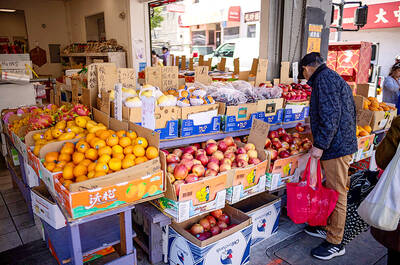
Ajay Verma, a consultant gastroenterologist at Kettering general hospital in Northamptonshire, says our gut is a “complex machine.” “It is constantly providing us with the nutrition we need, initially to grow and develop, and then for us to survive, thrive and repair from injury and illness.” How can we keep it functioning well? Put simply: “Make sure what you put into it is balanced, and that you clear out its waste products adequately,” Verma says. “In a general gastroenterology clinic, the most common conditions we see are irritable bowel syndrome (IBS), gastroesophageal reflux disease, inflammatory bowel disease and constipation,” says Nisha
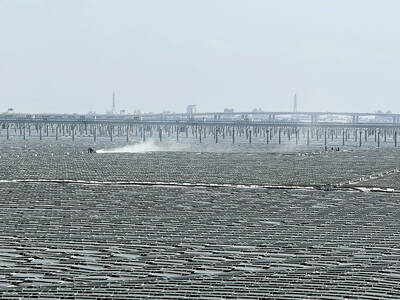
The arithmetic is straightforward and uncomfortable. By the end of 2025, Taiwan had committed itself to a 50-30-20 electricity mix — half natural gas, 30 per cent coal, 20 per cent renewables. The Ministry of Economic Affairs’s (MOEA) own monthly energy reports tell a different story. Natural gas reached 47.8 per cent of generation last year. Coal stood at 35.4 per cent, comfortably above its target ceiling. Renewables came in at 13.1 per cent, well short of the 20 per cent Taipei had pledged a decade earlier. Installed renewable capacity reached roughly half of the 12 gigawatts (GW) the government

Last week US President Donald Trump was asked by a reporter whether he would speak on the phone to the President of Taiwan. “l’ll speak to him. I speak to everybody. We have that situation very well in hand,” Trump said. This marked the second time in a couple of weeks he had said he would talk to the President of Taiwan. In 2016 he famously took a call from then-president Tsai Ing-wen (蔡英文), when he was president-elect. Despite warnings that the apocalypse was nigh because of a phone call, the world quickly forgot about the conversation between two democratically-elected presidents.
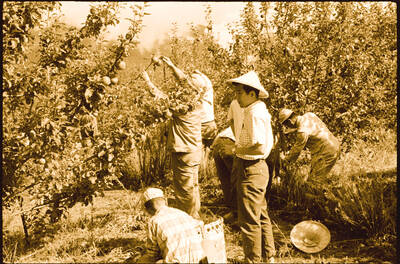
May 25 to May 31 Few believed that apples could be cultivated on a commercial scale in Taiwan’s high mountains. When horticulturalist Cheng Chao-hsiung (程兆熊) first proposed the idea in 1955, both American and Taiwanese colleagues dismissed it as implausible, arguing that temperate fruit could not be reliably grown on a subtropical island, especially on rugged terrain. However, it was this terrain in the Central Mountain Range where many Chinese Civil War veterans were resettled in the late 1950s. With limited job prospects and no family in Taiwan, they were placed on cooperative farms aimed toward self-sufficiency. Some say the conditions


 RSS
RSS