


The past year saw Taiwanese cinema continue to scale new heights as directors, both young and established, produced new works with polished production quality and fluid storytelling. Though lighthearted romance flicks starring pop idols made up the bulk of this year’s movies, a considerable amount of diversity was shown in the directors’ choices of subject matter.
The year started with Doze Niu’s (鈕承澤) Monga (艋舺), a gangster movie that looks at the underworld through rose-tinted glasses. Friendship, loyalty and the loss of innocence take precedence over violence in the story of five young friends. With box-office receipts reaching NT$258 million (US$8.8 million), the movie was this year’s third-highest grossing film in Taiwan, falling slightly behind Iron Man 2 (NT$260 million) and Inception (NT$288 million). Despite its uneven narrative, the film succeeded as a Made-in-Taiwan blockbuster because of effective publicity, the appeal of its pop star cast and its local subject matter.
Seven Days in Heaven (父後七日), on the other hand, was a surprise box-office success starring largely theatrical and nonprofessional actors. Directed by veteran television director Wang Yu-lin (王育麟) and novelist Essay Liu (劉梓潔), the absurd comedy focuses on traditional Taiwanese mourning rituals and examines death and how we cope with it. The culturally rooted production made it into the top five highest grossing Chinese-language movies of the year in Taiwan, with box-office receipts totaling more than NT$34 million, a success hard-earned through word of mouth rather than fancy marketing gimmicks.
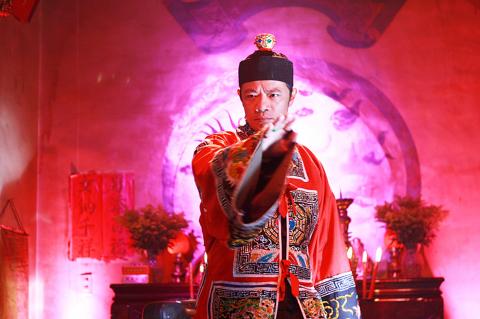
Photo courtesy of Swallow Wings Films
Far from the Changhua countryside where Seven Days in Heaven takes place, Taipei is given a sweet, romantic treatment in Taiwanese American director Arvin Chen’s (陳駿霖) feature debut Au Revoir Taipei (一頁台北), a romantic comedy set mostly during the young protagonist’s final night in the capital.
In Taipei Exchanges (第36個故事), also set in the capital, television commercial director Hsiao Ya-chuan (蕭雅全) evokes a fairy-tale city, in which memory and relationships are more valuable than commerce, through the story of a young woman who opens a business. Both Seven Days and Taipei Exchanges are blessed with vivacious cinematography, opulent art direction and delightful soundtracks, but the directors should have paid more attention to the narrative if they had hoped to tell realistic stories that conveyed genuine emotions.
Made up of three shorts, Juliets (茱麗葉) demonstrates an admirable amount of creativity and imagination compared with the year’s other works of youthful romance, which are mostly dull and pallid. All three directors — up-and-coming filmmaker Hou Chi-jan (侯季然), documentary director Shen Ko-shang (沈可尚) and veteran commercial director Chen Yu-hsun (陳玉勳) — are each working on eagerly anticipated new feature films.

Photo courtesy of Good Days Film
Stories of Taiwan’s foreign migrant workers are rarely presented to mainstream audiences. But in Malaysia-born director Ho Wi-ding’s (何蔚庭) feature debut Pinoy Sunday (台北星期天), the leading men are two Filipino workers who try to carry a discarded sofa across town, out of Taipei and back to their drab factory dormitory on the city’s fringe. The well-executed film lyrically renders discrimination and injustice inflicted on the workers with comic absurdity, establishing Ho as a new talent in Taiwanese cinema and a name to watch closely.
In his atmospheric and exquisitely crafted second feature, The Fourth Portrait (第四張畫), emerging auteur Chung Mong-hong (鍾孟宏) takes a poignant look at the issue of domestic violence through the tale of a boy haunted by loss. Weaving rich color, elegant composition and fluid camera work into expressive cinematography that gives the narrative a dreamlike feel, Chung once again achieved a distinguished style and unique aesthetic that none of his peers are able to match.
Not to be outdone, established directors also released new works deserving of kudos. For his fifth feature, Tears (眼淚), Cheng Wen-tang (鄭文堂) paints a dark, pensive portrait of a police officer living with a tortured past. Billed as the first part of a trilogy that addresses transitional justice, the film neatly focuses on its characters and carefully examines how an individual’s actions, though condoned by the state apparatus, can have devastating consequences for others.
Noted for creating cinematic worlds populated by social underdogs, gangsters and men trapped in vicious cycles of violence, veteran director Chang Tso-chi (張作驥) broke many of his filmmaking habits with When Love Comes (當愛來的時候), a melodramatic tale that follows an extended family’s road to reconciliation and understanding. The female characters take center stage, and Chang’s trademark fatalism mellows when toward the end of the film tragedy strikes and the women band together, offering each other solace and strength.
As for documentaries, the award-winning Let the Wind Carry Me (乘著光影旅行) delivered an intimate portrayal of cinematographer Mark Lee (李屏賓) as a loving son and an accomplished artist. Directed by Taiwan’s Chiang Hsiu-chiung (姜秀瓊) and Kwan Pun-leung (關本良) from Hong Kong, the film can be seen as a valuable record of the words and wisdoms of Lee, as well as other greats in Taiwanese cinema, such as Hou Hsiao-hsien (侯孝賢). Meanwhile, 28-year-old filmmaker Su Che-hsien (蘇哲賢) carried on the country’s tradition of narrative-driven, crowd-pleasing documentaries with Hip-Hop Storm (街舞狂潮), a lively, playful take on Taipei’s street dancers.
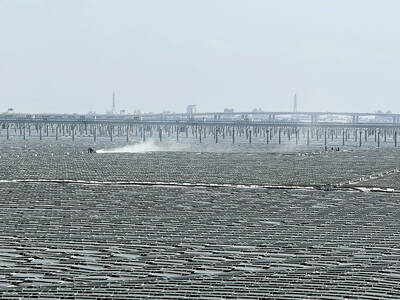
The arithmetic is straightforward and uncomfortable. By the end of 2025, Taiwan had committed itself to a 50-30-20 electricity mix — half natural gas, 30 per cent coal, 20 per cent renewables. The Ministry of Economic Affairs’s (MOEA) own monthly energy reports tell a different story. Natural gas reached 47.8 per cent of generation last year. Coal stood at 35.4 per cent, comfortably above its target ceiling. Renewables came in at 13.1 per cent, well short of the 20 per cent Taipei had pledged a decade earlier. Installed renewable capacity reached roughly half of the 12 gigawatts (GW) the government
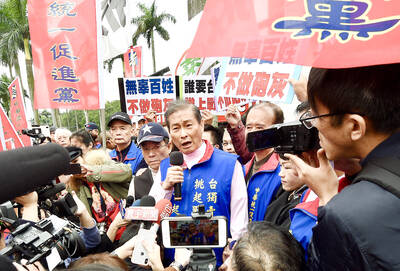
There are shadowy cabals plotting to sell out Taiwan to be annexed by China, by invasion if necessary. Fortunately, they are buffoons. In 2019, former Bamboo Union gangster and founder of the China Unification Promotion Party (CUPP), Chang An-le (張安樂, colorfully known as “White Wolf”), led a protest at the Legislative Yuan against comments made by then-premier Su Tseng-chang (蘇貞昌) that in the event of an attack by China, he would never surrender, but would protect the nation by fighting to the end, even if he only had a broom. Chang had party members bring a wooden casket that they
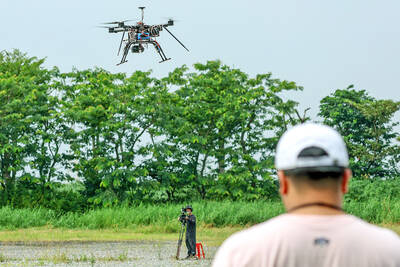
Taiwan’s drone exports are taking off, fuelled by the war in Ukraine, as Taiwanese companies seek a stake in the fast-growing global market for unmanned aerial vehicles (UAV). Low-cost drones used for reconnaissance and strikes are in high demand as governments around the world boost defense spending in the face of intensifying conflicts. A relative new player in the increasingly competitive industry, Taiwan’s pitch is to be an “Asian hub” for the production of UAVs and components free of Chinese materials, or “non-red.” That means its UAVs can be up to three times more expensive than their Chinese competitors, like the world’s biggest
It seems every few days one bumps into one of those “real man” comments in which Taiwan is urged to “face reality” or similar, and “make a deal,” with the speaker implying that soon it will be too late. “Deal” advocates always present themselves as having a superior grip on reality, and the manly ability to make the “hard choice.” Their testosterone-laden language often echoes that of Taiwan sellout advocates. Note that such commentary always specifies a process (“make a deal, work with, make progress”), never the end state of what occupation by a violent authoritarian colonialist state will entail. In


 RSS
RSS