


Classic rock legend John Fogerty and new wave pioneers Roxy Music received warm, even reverent receptions for their top slots on Saturday night at the Fuji Rock Festival in Naeba, Japan, while Taiwan’s electro-punk foursome, Go Chic, also managed to impress with its first ever Japanese gig on a stage for up-and-coming bands called the Rookie-A-Go-Go.
Rookie-A-Go-Go is one of around 15 stages at Fuji Rock, and bands that play there are selected by an open application process. In total, more than 1,500 acts applied this year, and Go Chic guitarist and keyboard player Sonia Lai (賴思勻) said there was no special process for overseas acts.
“We applied just like everybody else,” said Lai.
Go Chic was last year selected by Taiwan’s Government Information Office (GIO) as one of a dozen indie bands with international market potential. The GIO subsidized the group’s appearance earlier this year at SXSW, a huge indie-music showcase in Austin, Texas. Since late last month, the band has been touring China on its own, and also arrived at Fuji Rock — one of the world’s most expensive music festivals — on its own coin. Last night, Go Chic played with three Japanese bands at an indie showcase at Tokyo’s Fever live house, and later this month the band begins a three-city tour of Canada.
The Rookie stage is located in one of the festival’s free areas, just outside the main gates and near the parking lot. But rather than a sideshow to walk past, the zone, known as the Palace of Wonder and filled with sculptures made from scrapped automobiles, has become Fuji Rock’s biggest in-festival after party.
Still, Go Chic’s time slot of 11pm on Saturday night put them up against one of the hottest young indie bands at the festival, MGMT, which played to well over 10,000 fans at Fuji Rock’s second-largest stage a couple of kilometers away down the winding mountain valley of the festival site. MGMT was high on the list of many Taiwanese festivalgoers, including most of the top staff at The Wall (這牆), Taipei’s best-known live house. The Brooklyn-based foursome has gone from a college art-rock band to an engine for rock dance anthems and Grammy nominations in the past four years, and while MGMT’s hits did not fail to rouse a highly expectant crowd, one couldn’t help feel it was still competing with the power of its recorded material.
John Fogerty, formerly of Creedence Clearwater Revival and the only Fuji Rock artist in years that performed at the original Woodstock, had no such problems. With his folksy, Farmer Brown voice and an American flag on the bass drum, the 60-year-old guitarist and singer churned out a barnburner of a set that included tunes now so classic one tends to forget their creator is still a viable and in fact fantastic performer. Born on the Bayou was as much of a weirdly haunting anthem as it ever was, and classic rock radio hits like Proud Mary and Suzie Q did not fail to stir around 20,000 sets of muddy feet filling the natural amphitheater in front of the stage.
On Friday, Fuji Rock’s opening night featured stellar performances from the British trio Muse and a healthy dose of power rock from the new supergroup Them Crooked Vultures, which is comprised of Nirvana drummer Dave Grohl, Led Zepplin bass player John Paul Jones and Josh Homme, singer for Queens of the Stone Age. The biggest dose of pure adrenaline, however, may have come from the Los Angeles punk-ska band Fishbone, which played like it was defending the title for best live band in the world. In all, the festival hosted around 250 performances stretching from last Thursday evening to late Sunday.



The breakwater stretches out to sea from the sprawling Kaohsiung port in southern Taiwan. Normally, it’s crowded with massive tankers ferrying liquefied natural gas from Qatar to be stored in the bulbous white tanks that dot the shoreline. These are not normal times, though, and not a single shipment from Qatar has docked at the Yongan terminal since early March after the Strait of Hormuz was shuttered. The suspension has provided a realistic preview of a potential Chinese blockade, a move that would throttle an economy anchored by the world’s most advanced and power-hungry semiconductor industry. It is a stark reminder of
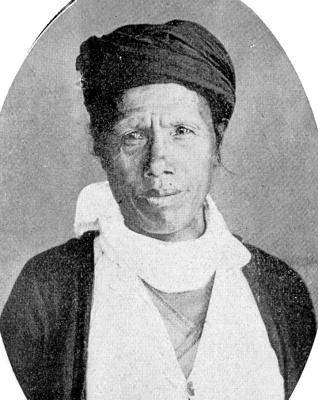
May 11 to May 17 Traversing the southern slopes of the Yushan Range in 1931, Japanese naturalist Tadao Kano knew he was approaching the last swath of Taiwan still beyond colonial control. The “vast, unknown territory,” protected by the “fierce” Bunun headman Dahu Ali, was “filled with an utterly endless jungle that choked the mountains and valleys,” Kano wrote. He noted how the group had “refused to submit to the measures of our authorities and entrenched themselves deep in these mountains … living a free existence spent chasing deer in the morning and seeking serow in the evening,” even describing them as
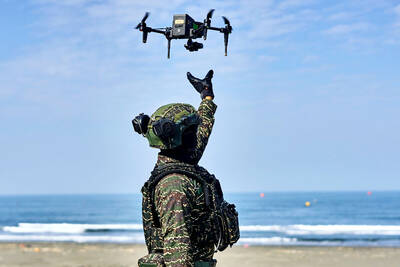
The last couple of weeks spectators in Taiwan and abroad have been treated to a remarkable display of infighting in the Chinese Nationalist Party (KMT) over the supplementary defense budget. The party has split into two camps, one supporting an NT$800 billion special defense budget and one supporting an NT$380 billion budget with additional funding contingent on receiving letters of acceptance (LOA) from the US. Recent media reports have said that the Taiwan People’s Party (TPP) is leaning toward the latter position. President William Lai (賴清德) has proposed NT$1.25 trillion for purchases of US arms and for development of domestic weapons

As a different column was being written, the big news dropped that Chinese Nationalist Party (KMT) caucus whip Fu Kun-chi (傅?萁) announced that negotiations within his caucus, with legislative speaker Han Kuo-yu (韓國瑜) of the KMT, party Chair Cheng Li-wun (鄭麗文), Taichung Mayor Lu Shiow-yen (盧秀燕) and Taiwan People’s Party (TPP) Chair Huang Kuo-chang (黃國昌) had produced a compromise special military budget proposal. On Thursday morning, prior to meeting with Cheng over a lunch of beef noodles, Lu reiterated her support for a budget of NT$800 or NT$900 billion — but refused to comment after the meeting. Right after Fu’s


 RSS
RSS