


Like the polar ice caps, Jolin Tsai’s (蔡依林) breasts are in danger of disappearing. Or so claims Apple Daily, which noted ruefully that Tsai’s chest appeared flatter at a recent performance, where her low-cut costume revealed cleavage that was far less luxurious than in previous years.
When questioned by a reporter, the formerly pneumatic singer, whose rack once earned her the sobriquet G Milk (G奶, a reference to her supposed cup size), dismissed rumors that she had had previous plastic surgery reversed. “I just didn’t stuff my bra today,” said Tsai, laughing uncomfortably. “I didn’t want anything to pop out while I was dancing.”
Apple Daily provided readers with a detailed timeline (and photographic evidence) charting the evolution of the pop idol’s hooters, even as they appear on the verge of extinction. When Tsai released her first single in 1999, she was fresh-faced and flat-chested. But after Tsai released her album See My 72 Changes (看我72變) in 2004, one of those changes evidently included jug enhancement. Around that time, the G Milk moniker made its first appearance; soon afterward Tsai denied that her lady lumps were man-made, insisting that special undergarments and the side effects of acupuncture and Chinese medicine had inflated her steamed buns. In 2006, Tsai made waves at a concert by dangling upside-down from an acrobatic swing in a tight, low-cut dress, a maneuver that seemed designed to showcase her chesticles.
Dedicated chroniclers of Tsai’s growing bazookas are doomed to be let down, as the twins appear to have shrunk considerably in recent months. But the scrutiny continues unabated. In response to a reporter’s questions about her dirty pillows, Tsai asked, “why are you paying so much attention?”
Boobs also got Joe Nieh (倪震), the husband of Hong Kong actress and singer Vivian Chow (周慧敏), in the spotlight this week. Nieh caused a media furor in 2008 when he was caught kissing another woman, but the longtime couple made up and married last year. This time, however, Nieh was nowhere near the scandalous melons.
The brouhaha erupted over a videotape showing a man and woman engaged in some dirty dancing at Joe’s Billiards and Bar in Hong Kong, which is co-owned by Nieh. The two patrons didn’t just bump and grind — the woman stripped down to a thong and the man went shirtless as she rubbed her bare chest against him in front of 50 excited, screaming onlookers.
Nieh denied such a bawdy event could have taken place at Joe’s until he was confronted with stills from the raunchy tape. He rushed back to the establishment before emerging and stating, “It’s probably because someone had a private party, we’ll look into it immediately.” Whoever was in charge that evening would be fired, Nieh promised, presumably to ward off charges that the bar had morphed into a den of iniquity. Apple Daily noted that the punishment for obscene performances is up to 10 years in jail under Hong Kong law.
Since news broke last week that A-mei’s (張惠妹) “former” boyfriend Sam Ho (何守正) was caught dallying with another woman, the Queen of Mando-pop has kept a low profile. Her celebrity friends are speaking up for her in the press, letting her fans know that A-mei is doing fine.
But pop star Little S’s (小S) attempt to vouch for her buddy stirred up a media frenzy. When asked on a talk show how A-mei was holding up, Little S, real name Dee Hsu (徐熙娣), cheerfully replied that the two had recently spent time together, taking a child to their mutual friend’s house.
Gossip rags immediately reignited persistent rumors that A-mei has a secret kid and that the moppet she took visiting with Little S was none other than this mysterious offspring. Little S quickly explained that the little boy was just A-mei’s nephew.
When reached for comment by the Liberty Times, our sister newspaper, A-mei’s agent snapped, “A-mei doesn’t have any children! I’ve already said this at least 20 times! It’s ridiculous I even have to say it again!”


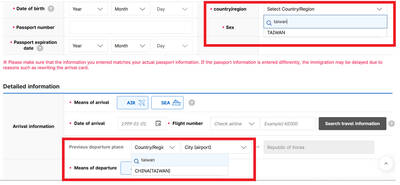
Jason Han says that the e-arrival card spat between South Korea and Taiwan shows that Seoul is signaling adherence to its “one-China” policy, while Taiwan’s response reflects a reciprocal approach. “Attempts to alter the diplomatic status quo often lead to tit-for-tat responses,” the analyst on international affairs tells the Taipei Times, adding that Taiwan may become more cautious in its dealings with South Korea going forward. Taipei has called on Seoul to correct its electronic entry system, which currently lists Taiwan as “China (Taiwan),” warning that reciprocal measures may follow if the wording is not changed before March 31. As of yesterday,
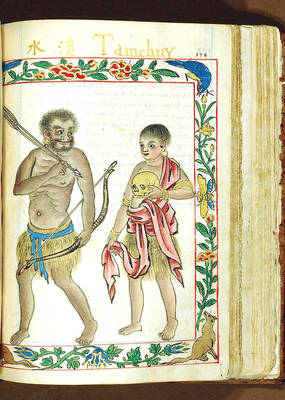
The Portuguese never established a presence on Taiwan, but they must have traded with the indigenous people because later traders reported that the locals referred to parts of deer using Portuguese words. What goods might the Portuguese have offered their indigenous trade partners? Among them must have been slaves, for the Portuguese dealt slaves across Asia. Though we often speak of “Portuguese” ships, imagining them as picturesque vessels manned by pointy-bearded Iberians, in Asia Portuguese shipping between local destinations was crewed by Asian seamen, with a handful of white or Eurasian officers. “Even the great carracks of 1,000-2,000 tons which plied
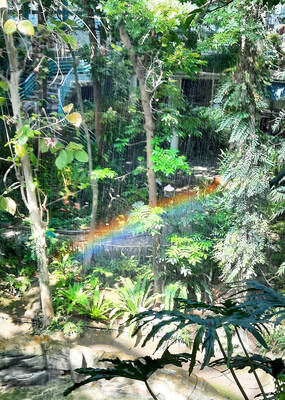
It’s only half the size of its more famous counterpart in Taipei, but the Botanical Garden of the National Museum of Nature Science (NMNS, 國立自然科學博物館植物園) is surely one of urban Taiwan’s most inviting green spaces. Covering 4.5 hectares immediately northeast of the government-run museum in Taichung’s North District (北區), the garden features more than 700 plant species, many of which are labeled in Chinese but not in English. Since its establishment in 1999, the site’s managers have done their best to replicate a number of native ecosystems, dividing the site into eight areas. The name of the Coral Atoll Zone might
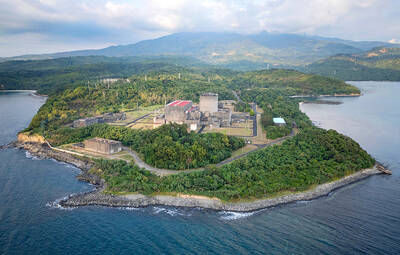
Nuclear power is getting a second look in Southeast Asia as countries prepare to meet surging energy demand as they vie for artificial intelligence-focused data centers. Several Southeast Asian nations are reviving mothballed nuclear plans and setting ambitious targets and nearly half of the region could, if they pursue those goals, have nuclear energy in the 2030s. Even countries without current plans have signaled their interest. Southeast Asia has never produced a single watt of nuclear energy, despite long-held atomic ambitions. But that may soon change as pressure mounts to reduce emissions that contribute to climate change, while meeting growing power needs. The


 RSS
RSS