


Since US documentary The Cove won an Oscar last month, Ric O’Barry’s journey from dolphin trainer to activist has become known throughout the world. He was the lead trainer on the hit 1960s TV series Flipper, which spawned a craze for dolphin performances at amusement parks like SeaWorld. But after one of the dolphins he had trained died in his arms, O’Barry dedicated his life to keeping dolphins out of captivity. He now travels around the world, rescuing dolphins, protesting against hunts and drives and earning the ire of fishermen, trainers and, occasionally, other activists.
O’Barry’s work in Taiji, Japan was the focus of The Cove, which premieres in Taiwan this week at the Urban Nomad Film Festival. Directed by Louie Psihoyos, the film brought international attention to the yearly dolphin drive in the coastal town, one of the largest suppliers of dolphins to aquariums and amusement parks around the world (including in Taiwan). Dolphins not sent into captivity are slaughtered and their meat sold for consumption, despite containing high levels of mercury. But the film has only been shown so far at a handful of theaters and film festivals in Japan; a screening last week at a US Air Force base was canceled after protests outside the Japanese distributor’s office. (O’Barry wants the film released online for free with Japanese subtitles.)
Advocating for dolphins is in many ways a path of redemption for O’Barry. While on leave from the US Navy in 1955, O’Barry visited the Miami Seaquariam in his hometown. “I saw the dolphins in the tank underwater and I said, ‘When I get out of the Navy, I’m going to come back here,’” he remembers. Five years later, he did just that, capturing dolphins for the Seaquariam. O’Barry then joined the Flipper crew, training the five dolphins that shared the title role.
While working on the series, O’Barry says he began to realize dolphins were self-aware and keeping them in captivity was morally inexcusable. But it wasn’t until one of the dolphins, Cathy, swam into his arms and, he says, committed suicide by closing her blowhole (dolphins are voluntary breathers) that he felt compelled to act.
O’Barry returns to Taiji five or six times a year, but Japan represents just one part of his work. “If there’s a dolphin in trouble, anywhere in the world, my phone will ring,” he says. At the time of this interview last week, O’Barry had just come back from the Solomon Islands, where his activities included convincing tribes on Malaita island to replace dolphin hunting with beekeeping and other ventures.
He says he also tried to find other forms of subsidy for the Taiji fishermen, but they turned him down, claiming the dolphin hunt is a form of “pest control.” The Japanese government, O’Barry says, told the fishermen that dolphins are the main reason for dwindling stocks of fish, instead of overfishing by humans.
O’Barry blames the Japanese government — which continues whaling in the face of pressure from other nations and the International Whaling Commission — for a “media blackout” about dolphin hunting in Japan and the high levels of mercury in the marine mammal’s meat.
In an interview with the Taipei Times, O’Barry talked about why stopping dolphin hunts is more than just an animal rights and environmental issue, the charges of cultural imperialism that have been leveled against his activism and The Cove, and why he thinks the Japanese public needs to see the film.
Taipei Times: In The Cove, you said that at one point while you were working on Flipper you were buying a new Porsche every year, you’d become successful and it wasn’t until Cathy died that you decided you weren’t going to support dolphins being in captivity. But I’m curious about what direction your life would have taken if Cathy hadn’t died in your arms.
Ric O’Barry: I would probably be making five million [US] dollars a year at my own dolphin swim program somewhere in the Bahamas. I could do that today if I wanted to. There’s nothing stopping me from getting an investor and opening up my own dolphin park. I wouldn’t be able to sleep at night, though. When I realized during Flipper that dolphins are self-aware, I didn’t do anything about it. I was aware of it but I didn’t do anything about it until Cathy committed suicide. That’s when I walked away from the industry and launched a campaign to try to educate people with the message “don’t buy a ticket.” That’s really the solution to the problem. The industry is based on supply and demand like any other product. If people in Taiwan stopped buying tickets to see dolphin shows, dolphins wouldn’t be captured in Taiji and sent to Taiwan.
TT: There’s footage of you standing on a busy intersection [Shibuya Scramble in Tokyo] with a TV screen strapped to you. What were you showing and how did people react?
RO: It was the most graphic footage [of the dolphin slaughter in Taiji], more graphic than what you saw in The Cove. When you are looking at The Cove, you are looking at the Disney version. There is throat-cutting [in the footage O’Barry shows], I mean, it’s really, really graphic. I interviewed 100 people in Ginza walking down the sidewalk randomly. I showed them the footage and asked them if they knew this is happening in their country. Not one of them knew it. How is that possible?
So when you ask me about a media cover-up, obviously it’s covered up. There is a media blackout on all whale and dolphin stories and that, I think, is illegal. I say that because Article 21 of the Japanese constitution [which protects the right to assembly and speech] guarantees them the right to this information and yet they are not given this information. That is why I think it is so important to show The Cove in Japan for free, in Japanese.
TT: I thought one of the most interesting arguments The Cove made was that the dolphin slaughter is not just an environmental or animal welfare issue, but that it’s also a consumer rights issue with the dolphin meat being mislabeled and containing high levels of mercury.
RO: Exactly. If you talk to fishermen in Taiji, they will tell you that Ric O’Barry is a cultural imperialist and this is our culture, our tradition. But we now know that [dolphin meat] is contaminated and we know for sure that they continue to sell it and that they are aware it is contaminated. That takes it out of the arena of animal rights and puts it in the arena of human rights. You can go to a supermarket and find packages of cigarettes that are labeled “this is dangerous,” but most of the dolphin meat has higher levels of mercury than the fish that killed all of those people in Minamata [a Japanese town that suffered high levels of mercury poisoning and neurological disease after wastewater from a Chisso Corporation factory was dumped into its bay] in the 1950s.
TT: One of the other criticisms I’ve seen about the film besides cultural imperialism is that it’s ethnocentric because there is dolphin hunting going on in other countries, including the Faroe Islands. I know you have traveled all over the world, to wherever dolphins are hunted, but why did The Cove focus on Taiji?
RO: I’m not one of the filmmakers. I happened to be there and working on the cove in Taiji and trying to figure out a way to abolish it, but I am as concerned about [other countries with dolphin hunts] ... Regarding the Faroe Islands, my wife is Danish and she’s going over there in a few days. We have a mandate, the Earth Island Institute [where O’Barry works as a marine mammal specialist], to protect dolphins and whales worldwide. It’s not just Japan, the filmmakers happened to make a movie about Japan and the cove. You would have to ask them about their motivations.
TT: In The Cove an interviewee stated that one of the reasons the Japanese government doesn’t stop whaling is basically because they don’t want to be told by other countries what to do. For example, after the International Whaling Commission placed a moratorium on commercial whale hunts [in 1986], they continued to slaughter whales, which they said was for scientific research. Do you think that films like The Cove and the action of foreign activists and governments might actually make the Japanese government dig in their heels even further concerning the hunting of whales and dolphins?
RO: I don’t know. I don’t know what they think for the same reason I don’t know what you are thinking. I just know that ... look, I’m just one guy. I don’t sit on the right hand side of God and have a solution for all these problems. I see this extreme cruelty, I see people being denied the right to know that they are eating contaminated dolphin meat and we do what we can do about it.
It used to be that the Aztec Indians ripped out the heart of [human sacrifice] victims while they were still beating and that was a tradition in their culture, but it doesn’t mean it was okay. It was our culture and our tradition to not allow women the right to vote. It was our tradition to own slaves, but [that] doesn’t make it okay. So we changed and now as a result of that change, a black man is president of the United States and a lot of the people who got him there were women voters. So change is good sometimes. They can’t cling to that tradition and culture.
And by the way, the way they kill dolphins in Taiji has only been going on since 1933 [when motorized boats were introduced]. Motorized boats are not traditional. Many years ago they used canoes with spears and they would kill a whale for the village. So when they say [the dolphin drive] is [Japanese] tradition and culture, it’s hard to believe that after you interview a hundred people in Tokyo who have no idea it’s going on.
TT: I’m curious because there were two Taiji councilmen [Junichiro Yamashita and Hisato Ryono] featured in The Cove who spoke out against dolphin meat being served in schools because of the mercury in it, and that led to the meat being removed from school lunches. Do you know what kind of reactions they got from other councilmen?
RO: I do. I stay in touch with them. Mr Ryono is still in Taiji. He is like the vice mayor now and the spokesman, he flip-flopped and changed his story [Ryono has since said he was misled by filmmakers into appearing in The Cove]. Mr Yamashita is the real hero in this story. He was born in Taiji, he lived there all of his life and he had to leave. He was ostracized. He’s now driving a taxicab outside of Tokyo. He should be the minister for the environment and someday he will be a national hero in Japan, once this movie gets seen and people realize that he is a national hero. They don’t know who he is because they haven’t seen this movie. There were some people in Minamata in the 1950s that spoke out against the government and the Chisso factory and they too were ostracized, but today they are national heroes. It’s going to take some time before Mr Yamashita is recognized.
On the Net:
Ric O’Barry: www.savejapandolphins.org The Cove: www.thecovemovie.com
Urban Nomad Film Festival:
urbannomadfilmfest.blogspot.com



Ajay Verma, a consultant gastroenterologist at Kettering general hospital in Northamptonshire, says our gut is a “complex machine.” “It is constantly providing us with the nutrition we need, initially to grow and develop, and then for us to survive, thrive and repair from injury and illness.” How can we keep it functioning well? Put simply: “Make sure what you put into it is balanced, and that you clear out its waste products adequately,” Verma says. “In a general gastroenterology clinic, the most common conditions we see are irritable bowel syndrome (IBS), gastroesophageal reflux disease, inflammatory bowel disease and constipation,” says Nisha
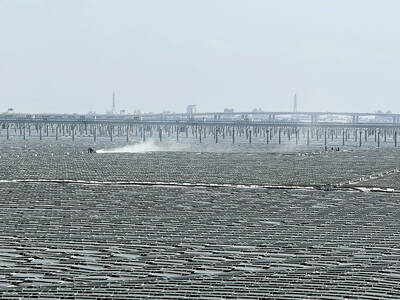
The arithmetic is straightforward and uncomfortable. By the end of 2025, Taiwan had committed itself to a 50-30-20 electricity mix — half natural gas, 30 per cent coal, 20 per cent renewables. The Ministry of Economic Affairs’s (MOEA) own monthly energy reports tell a different story. Natural gas reached 47.8 per cent of generation last year. Coal stood at 35.4 per cent, comfortably above its target ceiling. Renewables came in at 13.1 per cent, well short of the 20 per cent Taipei had pledged a decade earlier. Installed renewable capacity reached roughly half of the 12 gigawatts (GW) the government

Last week US President Donald Trump was asked by a reporter whether he would speak on the phone to the President of Taiwan. “l’ll speak to him. I speak to everybody. We have that situation very well in hand,” Trump said. This marked the second time in a couple of weeks he had said he would talk to the President of Taiwan. In 2016 he famously took a call from then-president Tsai Ing-wen (蔡英文), when he was president-elect. Despite warnings that the apocalypse was nigh because of a phone call, the world quickly forgot about the conversation between two democratically-elected presidents.
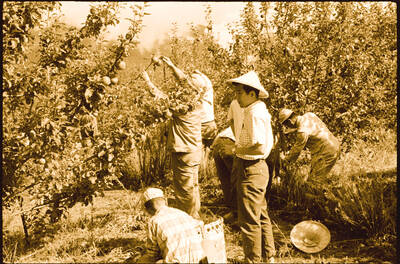
May 25 to May 31 Few believed that apples could be cultivated on a commercial scale in Taiwan’s high mountains. When horticulturalist Cheng Chao-hsiung (程兆熊) first proposed the idea in 1955, both American and Taiwanese colleagues dismissed it as implausible, arguing that temperate fruit could not be reliably grown on a subtropical island, especially on rugged terrain. However, it was this terrain in the Central Mountain Range where many Chinese Civil War veterans were resettled in the late 1950s. With limited job prospects and no family in Taiwan, they were placed on cooperative farms aimed toward self-sufficiency. Some say the conditions


 RSS
RSS