


The Rock N’ Roll Circus is back. Started several years ago by Yilan expat band The Deadly Vibes, the event has settled on a formula for good old-fashioned, risque fun: a revue of 1950s and 1960s retro rock and burlesque dancing.
This weekend’s “circus,” now in its third run, takes place tonight at 89K in Taichung and tomorrow at VU Livehouse (地下絲絨) in Taipei.
With the exception of the Vibes, all of the performers hail from Japan, and one of the featured acts is “Miss Cabaretta,” a Tokyo burlesque dancer.
Also appearing is Ed Woods, a band playing psychobilly, a combination of punk and rockabilly. The trio draws inspiration from 1950s sci-fi and B-movie horror flicks and performs songs with titles like Monster Trash and Mutant-Z. The band members also dress for what they call “Trash Rock ’n’ Roll,” donning bandanas and flannel shirts and sometimes covering their bodies in green or blue body paint. Expect to get covered in gold and silver glitter as the lead singer wields a wind-blower at one point in the show.
The Minnesota Voodoomen of Tokyo are fans of 1960s British Invasion rock and adeptly look the part, sporting mod haircuts, matching suits with black ties and vintage-looking guitars. Their sound is a slick mash-up of 1950s American surf rock, the Kinks, early Beatles and punk. The Voodoomen’s drummer, who gave his name only as “Pete,” said in an e-mail that the band hopes the audience will “dance and sing along with us.”
Keeping the party moving throughout the evening will be DJ Harry the Hampstead Heath, who spins 1950s and 1960s rock and Motown but wants to prove that British Invasion is “still alive in the 21st century.”
The Deadly Vibes will also perform, and between sets there will be games for the audience with give-away prizes to match the rock ’n’ risque theme. In the past, audience members have won panties and bras emblazoned with the words “The Deadly Vibes,” free shots of whiskey, flying V pinatas and dildos. There will be several new prizes and surprises for this weekend’s shows, say the Vibes, who are expecting to match the attendance of their last shows, which saw up to 200 people a night.
“We have a trademark name, I think people know what to expect ... come out, act silly, have a good time,” said singer Jason Copps.
The crowd at a Rock N’ Roll Circus event isn’t the typical rock club audience, he said. “It tends to attract a lot of people that don’t really go to shows that much.”
Also See: DANCE: Undulating delights

Ajay Verma, a consultant gastroenterologist at Kettering general hospital in Northamptonshire, says our gut is a “complex machine.” “It is constantly providing us with the nutrition we need, initially to grow and develop, and then for us to survive, thrive and repair from injury and illness.” How can we keep it functioning well? Put simply: “Make sure what you put into it is balanced, and that you clear out its waste products adequately,” Verma says. “In a general gastroenterology clinic, the most common conditions we see are irritable bowel syndrome (IBS), gastroesophageal reflux disease, inflammatory bowel disease and constipation,” says Nisha
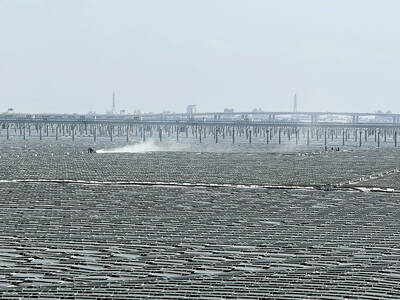
The arithmetic is straightforward and uncomfortable. By the end of 2025, Taiwan had committed itself to a 50-30-20 electricity mix — half natural gas, 30 per cent coal, 20 per cent renewables. The Ministry of Economic Affairs’s (MOEA) own monthly energy reports tell a different story. Natural gas reached 47.8 per cent of generation last year. Coal stood at 35.4 per cent, comfortably above its target ceiling. Renewables came in at 13.1 per cent, well short of the 20 per cent Taipei had pledged a decade earlier. Installed renewable capacity reached roughly half of the 12 gigawatts (GW) the government

Last week US President Donald Trump was asked by a reporter whether he would speak on the phone to the President of Taiwan. “l’ll speak to him. I speak to everybody. We have that situation very well in hand,” Trump said. This marked the second time in a couple of weeks he had said he would talk to the President of Taiwan. In 2016 he famously took a call from then-president Tsai Ing-wen (蔡英文), when he was president-elect. Despite warnings that the apocalypse was nigh because of a phone call, the world quickly forgot about the conversation between two democratically-elected presidents.

May 25 to May 31 Few believed that apples could be cultivated on a commercial scale in Taiwan’s high mountains. When horticulturalist Cheng Chao-hsiung (程兆熊) first proposed the idea in 1955, both American and Taiwanese colleagues dismissed it as implausible, arguing that temperate fruit could not be reliably grown on a subtropical island, especially on rugged terrain. However, it was this terrain in the Central Mountain Range where many Chinese Civil War veterans were resettled in the late 1950s. With limited job prospects and no family in Taiwan, they were placed on cooperative farms aimed toward self-sufficiency. Some say the conditions


 RSS
RSS