


“If deep house were an animal, it would be a unicorn,” says Matt Ward, promoter of tomorrow night’s Return to Paradise at China White. “No that’s not realistic ... maybe a whale or a dolphin. No, forget it. A curvaceous woman wearing diamond-studded stilettos and nothing else.”
And with that the mood is set for a trip down musical lane with Ward, SL (劉軒), and king of the late night finish, Hooker.
“Everyone who grew up listening to trance and progressive eventually gravitates towards deep house,” says SL. “We all gotta grow up sometime ... There isn’t too much of a club scene for deep house in Taiwan, but what people should realize is that this music sounds great when it’s played loud.”
Although deep house is a classic genre, SL will be bringing something entirely new to the party.
“Recently I’ve developed a new system of deejaying, which uses a lot of live rearrangement and layering that is much more like remixing than straight-up deejaying. I’m going to give the crowd a little taste of this on Saturday. In fact XUAN is my new DJ name under this new performance system and believe me, it’s worth a name change.”
“You know that familiar expression ‘something for your mind, your body and your soul,’” says SL, “deep house is just that … not as hard-hitting as electro and doesn’t have that hands-in-the-air happiness of disco house, but it works in subtle ways.”
Return to Paradise, tomorrow from 10pm until 5am at China White, 2F, 97-101, Dunhua S Rd Sec 2, Taipei City (台北市敦化南路二段97-101號2樓). Admission is NT$350 with a drink.
On the Net: SL’s new Web site can be found at
www.xuan-music.com.
It’s colorful, extravagant costumes and island rhythms at the The Wall (這牆), as DJ production team Islandjam is throwing its first ever Caribbean carnival tomorrow night.
The baby of O-Brothaz Sound System, a four-strong group of DJs and MCs from as many countries — Fyah B, aka Henry Wade from Belize, Oliver “Lion” Harley from Jamaica, Thierry “Taili” Cuvillier from Martinique and Katzu Saruyama from Japan — the night’s music is “what you would hear at any Caribbean carnival: soca, soca and more soca,” says Harley. “With some sprinkles of dancehall, some compas for the Haitians who are here and special Belizean punta ... anything to make the crowd sweat, dance and sweat some more.”
The organizers are holding the carnival to promote Caribbean music and culture in Taiwan and hope it will become an annual event.
“The [Caribbean music] scene is definitely growing,” says Harley. “More and more DJs and bands are putting some reggae or dancehall, even some soca, into the mix of a song even though they might not know it ... so it is getting out there.”
With a performance by live percussion ensemble Pan Africana Cultural Troupe, known for its intense and rousing gigs, this promises to be a colorful party of calypso hedonism.
“It will be an indoor carnival that we will try to make as street as possible by putting the Caribbean vibe in the room,” said Harley. “Costumes and music atmosphere will be like St Vincent or Trinidad or any other Caribbean culture.”
Expect to see local reggae fans and Caribbean expats decked out in their carnival best, donning feathered masks and headdresses and waving the flags of their home countries.
Caribbean Carnival, tomorrow from 10:30pm until 4am at The Wall, B1, 200, Roosevelt Rd Sec 4, Taipei City (北市羅斯福路四段200號B1). Admission is NT$450 with a drink, and NT$350 with drink for students with ID.
On the Net: www.panafricana.blogspot.com.
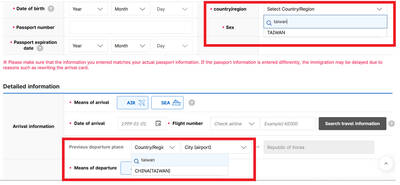
Jason Han says that the e-arrival card spat between South Korea and Taiwan shows that Seoul is signaling adherence to its “one-China” policy, while Taiwan’s response reflects a reciprocal approach. “Attempts to alter the diplomatic status quo often lead to tit-for-tat responses,” the analyst on international affairs tells the Taipei Times, adding that Taiwan may become more cautious in its dealings with South Korea going forward. Taipei has called on Seoul to correct its electronic entry system, which currently lists Taiwan as “China (Taiwan),” warning that reciprocal measures may follow if the wording is not changed before March 31. As of yesterday,
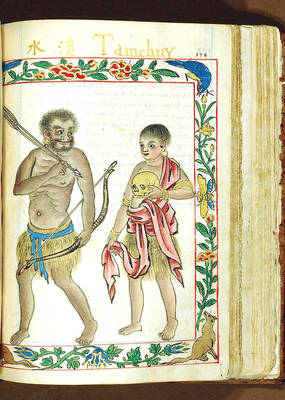
The Portuguese never established a presence on Taiwan, but they must have traded with the indigenous people because later traders reported that the locals referred to parts of deer using Portuguese words. What goods might the Portuguese have offered their indigenous trade partners? Among them must have been slaves, for the Portuguese dealt slaves across Asia. Though we often speak of “Portuguese” ships, imagining them as picturesque vessels manned by pointy-bearded Iberians, in Asia Portuguese shipping between local destinations was crewed by Asian seamen, with a handful of white or Eurasian officers. “Even the great carracks of 1,000-2,000 tons which plied
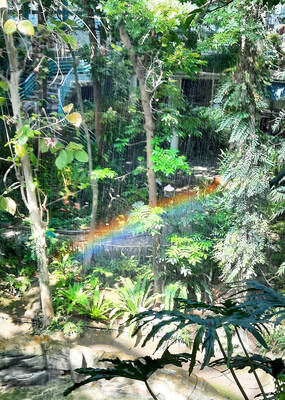
It’s only half the size of its more famous counterpart in Taipei, but the Botanical Garden of the National Museum of Nature Science (NMNS, 國立自然科學博物館植物園) is surely one of urban Taiwan’s most inviting green spaces. Covering 4.5 hectares immediately northeast of the government-run museum in Taichung’s North District (北區), the garden features more than 700 plant species, many of which are labeled in Chinese but not in English. Since its establishment in 1999, the site’s managers have done their best to replicate a number of native ecosystems, dividing the site into eight areas. The name of the Coral Atoll Zone might
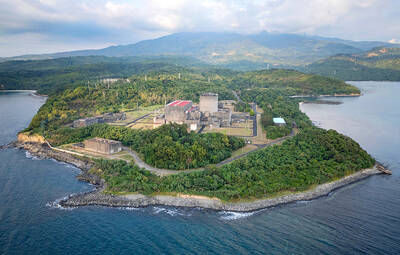
Nuclear power is getting a second look in Southeast Asia as countries prepare to meet surging energy demand as they vie for artificial intelligence-focused data centers. Several Southeast Asian nations are reviving mothballed nuclear plans and setting ambitious targets and nearly half of the region could, if they pursue those goals, have nuclear energy in the 2030s. Even countries without current plans have signaled their interest. Southeast Asia has never produced a single watt of nuclear energy, despite long-held atomic ambitions. But that may soon change as pressure mounts to reduce emissions that contribute to climate change, while meeting growing power needs. The


 RSS
RSS