


The last time Kou Chou Ching (拷秋勤) played at The Wall (這牆), the hip-hop group received NT$200 for its efforts, the net earnings for the gig. Ever since, its members have avoided performing at live music venues, “unless it is something big and important, something new we like to show,” MC Fan Chiang (范姜) said.
What draws the young rappers back to The Wall this Sunday is their desire to present Unsung Heroes (無名英雄), a new compilation album the outfit made with Taichung-based DJ and producer MoShang, socially conscious rapper Chang Jui-chuan (張睿銓) and DJ Point.
Kou Chou Ching, the members of which rap in Hakka and Hoklo [commonly known as Taiwanese] about their observations on society, will touch on Taiwanese cinema and con artists at the concert. The set list includes Gray Coastline (灰色海岸線), a song about ocean pollution, and features samplings of traditional love songs from the Tao (達悟族) tribe on Orchid Island (蘭嶼) and Pau-dull’s (陳建年) The Crying Road Home (哭泣的回家之路).
Tao musician Alilis will also perform.
“We first met Alilis when he asked if we could make a recording of his songs so his sister has something to listen to on the train,” Fan Chiang said.
Sunday’s gig includes stints from DJ Point, who has worked with such indie acts as nu-metal combo Monkey Insane (潑猴) and Adia (阿弟仔) and whose music is compared to that of DJ Krush, Chang, who raps about Taiwanese history, and South African musician MoShang, who’s chill out lounge set will mix electronica with Tibetan chant.
Though Kou Chou Ching doesn’t plan to release a new album before 2011, the group performs a steady schedule of gigs, often at cultural and social events held by activists. The group embarks on a mini-tour of Tokyo’s rock venues, its third, in September.
Meanwhile, band members have been trying to secure sponsorship so they can attend the Just Plain Folks Music Awards in the US. The group’s first full-length album Kou!! It’s Coming Out!!! (拷!!出來了!!) received four nominations at what is billed as the world’s largest independent music awards program.
According to the Just Plain Folks’ Web site (www.jpfolks.com), 42,000 albums and 560,000 songs were submitted to the competition this year. The award ceremony will be held in Nashville, Tennessee, on Aug. 29.
What most puzzles the young rappers about the awards is not their nomination, but who submitted their album for competition in the first place.
“At first we thought the mail [from the organizer] was an e-mail hoax. One day I clicked on one of them and realized they had been trying to contact us for quite a while,” Fan Chiang said.

Paul Thomas Anderson’s “One Battle After Another” was crowned best picture at the 98th Academy Awards, handing Hollywood’s top honor to a comic, multi-generational American saga of political resistance. The ceremony Sunday, which also saw Michael B. Jordan win best actor and “Sinners” cinematographer Autumn Durald Arkapaw make Oscar history as the first female director of photography to win the award, was a long-in-coming coronation for Anderson, a San Fernando Valley native who made his first short at age 18 and has been one of America’s most lionized filmmakers for decades. Before Sunday, Anderson had never won an Oscar. But “One Battle
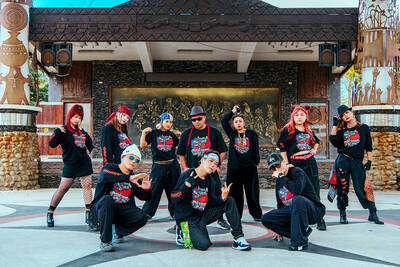
In Kaohsiung’s Indigenous People’s Park (原住民主題公園), the dance group Push Hands is training. All its members are from Taiwan’s indigenous community, but their vibe is closer to that of a modern, urban hip-hop posse. MIXING CULTURES “The name Push Hands comes from the idea of pushing away tradition to expand our culture,” says Ljakuon (洪濬嚴), the 44-year-old founder and main teacher of the dance group. This is what makes Push Hands unique: while retaining their Aboriginal roots, and even reconnecting with them, they are adamant about doing something modern. Ljakuon started the group 20 years ago, initially with the sole intention of doing hip-hop dancing.

What was the population of Taiwan when the first Negritos arrived? In 500BC? The 1st century? The 18th? These questions are important, because they can contextualize the number of babies born last month, 6,523, to all the people on Taiwan, indigenous and colonial alike. That figure represents a year on year drop of 3,884 babies, prefiguring total births under 90,000 for the year. It also represents the 26th straight month of deaths exceeding births. Why isn’t this a bigger crisis? Because we don’t experience it. Instead, what we experience is a growing and more diverse population. POPULATION What is Taiwan’s actual population?

You would never believe Yancheng District (鹽埕) used to be a salt field. Today, it is a bustling, artsy, Kowloon-ish “old town” of Kaohsiung — full of neon lights, small shops, scooters and street food. Two hundred years ago, before Japanese occupiers developed a shipping powerhouse around it, Yancheng was a flat triangle where seawater was captured and dried to collect salt. This is what local art galleries are revealing during the first edition of the Yancheng Arts Festival. Shen Yu-rung (沈裕融), the main curator, says: “We chose the connection with salt as a theme. The ocean is still very near, just a


 RSS
RSS