


Mogadishu’s best barometer of violence is the little blackboard on which Taher Mahmoud daily records the number of patients in his hospital. For the past 20 years the tall surgeon with huge hands has been operating on the victims of the city’s civil war.
“It’s good times now,” he told me when we met a few weeks ago. “We are only getting four to six gunshot casualties per day. That’s very good.” He pointed at the blackboard covered with his neat white handwriting: it recorded that 86 patients were undergoing treatment. “During the Ethiopian war [2007 to 2008] we had 300 in this hospital.”
Few respites in this most ravaged of cities lasts long and within days of our conversation the relative calm had given way to a more familiar story: running battles between the forces of Sheikh Sharif Sheikh Ahmed, the notional president, and the more radical Islamist al-Shabaab militia. More than 200 people have been killed in these skirmishes and as many as 60,000 people have fled.
Yet the chances are you won’t have heard about it: with the exception of the latest pirate drama, Somalia is the country the world forgot, a state so broken that scenes which would elsewhere dominate international news bulletins are barely noted on the foreign pages of major newspapers. Last year Foreign Policy magazine ranked Somalia as the state most at risk of total collapse, a verdict some might have considered flattering.
On Thursday I spoke to Mahmoud again. The hospital was full and around 40 patients were having to sleep under the trees outside. “We need tents to shelter the patients from rain, and medicine is running very low. If the fighting continues we will be without medicine.” The number on his blackboard was 167.
Even before the latest surge in violence you could get a sense of the precariousness of life in Mogadishu from a quick tour of the hospital. In the dark, bungalow-like emergency room, five men lay on soiled, torn beds. All had abdominal gunshot wounds; plastic drip bags lay between their legs or on the floor. A man sat on a plastic chair next to his wounded brother and waved a small paper fan over his head to chase away flies.
All the men had been injured a day earlier when a pro-government Islamist militia fought a unit of the government’s “proper” army for control of an intersection in the government-controlled area of the capital. “ I was standing when the fighting started, I tried to hide but they shot me,” one man wheezed. Across the yard in the intensive care unit, another dark bungalow packed with flies and the sick, a man waved a fan over the burned-to-white flesh of his small son, caught in the fire when a grenade had been tossed into their house during a clash between two rival gangs.
A mother looking after another burned child said: “We pray for peace — we have nothing but prayers. This is the best hospital in Mogadishu and we don’t have electricity or running water.”
Mahmoud, who was appointed director last month after the previous director was shot on the way to work, nodded, adding: “We get water from a well in the yard and we have a small generator for electricity, we get the fuel from a rich Somali businessman. Everyone has left us here in Mogadishu.”
Earlier this week the Shabaab shelled the presidential palace as they fought government forces for control of the city. A few weeks before, I sat next to Hassan Haila, the government’s media coordinator, as we drove towards the palace. Every Somali politician who is not an MP or minister is a coordinator of some sort, it seems. We drove past women queuing, clattering and shouting outside a shop, one of very few open in the streets. “Look at the Somalis,” he said. “After all these years of fighting, they have become like dead people walking. There is no life in their eyes.”
‘The most difficult job in the world’
Sheikh Sharif Sheikh Ahmed was appointed president in January. He is the leader of the Islamic Courts, the Islamist movement that defeated the infamous Mogadishu warlords in 2006, bringing a measure of peace to the city for the first time in almost two decades. The Islamic Courts, routed by US-backed Ethiopian forces, re-emerged as the dominant force when the Ethiopians pulled out after a brutal insurgency earlier this year. Now Ahmed is leader of Somalia only in the loosest sense of the word: when we met he controlled perhaps 40 percent of Mogadishu. A week later it was more like 20 percent. And ever since the ousting of the dictator Muhamad Seyad Berry in 1991, two vast regions, Somaliland and Puntland, have cut themselves free of the war-torn south altogether.
At the entrance of the presidential compound a few “technicals” — Toyota pickup trucks with anti-aircraft guns mounted on them — were parked. Somali soldiers sat in the shade of few trees. Outside the president’s door two Ugandan soldiers, members of the flimsy African Union force charged with keeping peace in the city, slouched on plastic chairs.
“I have the most difficult job in the world,” the president said, looking exhausted. Big drops of sweat rolled down his forehead in the suffocating humidity. He fumbled with the air-conditioning remote control and then handed it to an assistant. The machine hissed and cold breeze crossed his desk.
“It’s different from the jobs of all other presidents of other countries,” he went on. “In the beginning we want to stand on our feet. We have inherited a very bad reputation from our predecessors [presidents] because of 20 years of internal fighting and disagreement. The economy is non-existent, state institutions are non-existent, essential services are non-existent.”
It was cold now and Ahmed ordered his assistant to switch off the air conditioning. “You can say that the idea of a state is non-existent in Somalia. We have to teach people what a state is.”
Many of Ahmed’s ministers and advisers huddled for safety in the Sohafi hotel, though the 17 bullet holes in my door did not promote a sense of security. In the courtyard, over acidic strong espressos, I heard different accounts of why Somalia’s Islamists had turned on each other. “They are fighting because they come from two different Islamic schools,” explained one seasoned Somali journalist. “The president is from the Muslim Brotherhood and the Shabaab are Salafis.”
“Nonsense,” guffawed an Islamic commander. He was an ally of the president who fought the Ethiopians alongside the Islamic Courts but had good connections with the Shabaab. “We are all Salafis. The difference is between the ideologues, the young people with principles, the Shabaab on one side, and the people who see where is the maslaha [the interest of the nation] and are willing to compromise. I agree with the Shabaab that we should fight a jihad on principle but the maslaha says that we should compromise and use the opportunity we have now to build a state.”
Another Somali official with a thick American accent from long years of asylum in the US told me: “It’s very simple — it’s about who gets to be the president. There is no ideological difference. It’s all about who gets what share of the pie. Everyone wants to be come a president in Somalia.”
On a searingly hot day that saw the first clouds of the monsoon gathering, parliament was convened to debate the imposition of Sharia law. One of the main demands of the Shabaab movement has been the imposition of Sharia, which has also been backed by the Islamic Courts.
Ali Hassan, a police officer sipping tea with his men outside his station, told me that imposing Sharia meant progress “in the absence of law.” He said that like the rest of the force, he hadn’t been paid a salary for the past 18 months. “This month was good. They gave us some wheat, sugar, tea and canned food.”
A warehouse that was once a garage for the Mogadishu police force had been converted to house the parliament. Hundreds of plastic chairs were lined up for the 275 members. Colored paper decoration criss-crossed the ceiling and balloons and advertisements for mobile phone companies hung from the walls.
After the parliament voted to introduce Sharia I went back to visit the police officer. He shrugged and smiled when I told him about the debate. “We have always used Sharia in our work,” he said, handing me a cup of murky tea. “When the whole state is collapsing all that we have is our religion.”
He explained that he had joined the army in 1970 and then the police just before the collapse of Mogadishu 20 years ago. He had been wearing the same beige uniform since then. “You are trying to impose law but where is the law when everyone is fighting? When the Ethiopians came those same Islamists that are in the government attacked us every day. They said we are supporting the invaders. In one day 15 shells fell on our police station. Now they are the government hopefully things will be better.”
First we establish order
In a Mogadishu courtyard one afternoon I watched Sharia justice in action. The judge sat in front of a broken glass table decorated with red plastic flowers, a big folder and piles of papers spread on his lap. In neat Arabic handwriting he recorded the statements of the two adversaries sitting in front of him. A man in his 40s was accusing a teenage boy of stealing his son’s bicycle. The case had been running for two weeks.
“This how we establish Sharia,” the judge told me. “First we establish order and judgment in the middle of the chaos of war and destruction. When we started back in 1996 we were not a political movement. We started as judges to bring justice, then we became a political movement and then we became military.”
We crossed the basketball pitch of the compound that was once an army college. A lone boot sat in the middle of the pitch. The judge went on: “You know, Sharia is fearing God and establishing religion. It’s not about chopping hands off. First we establish security and then impose the rulings. It’s the fear and hunger and chaos. If I cut the hands of hundreds of thieves I will not bring justice. Feed the hungry first and then punish them if they steal.”
Two decades of garbage have been piled into the streets of the Hamrawaine area in Mogadishu. The piles have decomposed into mounds of earth and plastic, the earth giving life to cacti and shrubs through which small rivers of sewage trickle. Goats climb the walls of destroyed houses and graze on the shrubs. Mogadishu resembles a city destroyed by a nuclear blast. Shattered walls, peppered with millions of bullet holes, are that is left of the city’s Italian colonial architecture and communist monuments.
One of the mysteries is how the city’s residents survive in the absence of any meaningful economy. “Somalis have a very strong social support network,” one young government employee explained. “If you work with the government or in the market you support at least 10 people of your family, and your neighbors. The people who live outside [the country] send money, and if there is a rich Somali and he doesn’t support the poor, he will be despised, and no one would marry his daughters.”
After 20 years people had become used to life without a functioning state, explained one businessman with interests in fuel, mobile telephones and food. “Businessmen learned to do their work without a government. In the port the shipment is downloaded just as if there was a government, only you are the government so if you have a ship you have to bring your men and your guards and do your work. Amongst the businessmen everything is run through trust — for example, when we need to buy fuel 20 merchants put money together, send it to Dubai, and there our Somali friends send us a fuel tanker. Every merchant has his own militia and men who protect his interests. We do business with the government and the Shabaab. Lots of our friends in Dubai are envious of us because we live without a state and we can trade everywhere without control.”
Back at the presidential compound I met one of the young commanders of the Islamic Courts, Jami’a. A thin 22-year-old with deep black eyes and long eyelashes, dressed in stone-washed jeans and a faded white shirt, he sat flanked by two new Chinese fans. Like soldiers, the fans moved their heads, first to the left and then to the right, with mechanical precision.
Like all the young Somali fighters Jami’a was born out of the chaos of two decades of civil war. “When I was in high school our area was controlled by two warlords, Mousa Yaljo and Omar Fenish. It was a very difficult time. Sometimes we went to school in buses and sometimes because of the fighting we had to walk. Their soldiers would steel everything, even our shoes.”
Jami’a told me how he had learned the Koran at university, then joined the Islamists battling Mogadishu’s warlords. After the warlords, he fought the Ethiopians. Later he took me to the frontline. We drove in two Toyota Land Cruisers along Factory Road in south Mogadishu, to our east a wasteland of shrubs and swamps where the Shabaab positions were.
We walked through the grounds of the burnt-out ministry of defense, where young, frail and underfed fighters, in tattered clothes and broken sandals, sat under trees or on broken ammunition boxes. There was a look on their faces that I had seen before in Iraq and Syria and Afghanistan. They carried guns and wrapped themselves with bandoliers of bullets but their faces gave them away: they were scared. Their enemy was somewhere across the fields, Islamists like them, heads wrapped by kuffiyas like them, holding Kalashnikovs like them, tired and underfed like them.
A week later the Factory Road frontline fell to the Shabaab, when most of the commanders I met switched sides and decided to fight with the opposition. A tiny, barely noticed footnote in the tragedy of Somalia.
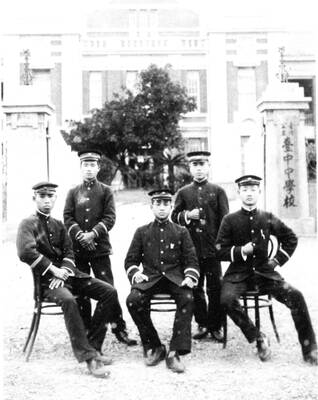
April 28 to May 4 During the Japanese colonial era, a city’s “first” high school typically served Japanese students, while Taiwanese attended the “second” high school. Only in Taichung was this reversed. That’s because when Taichung First High School opened its doors on May 1, 1915 to serve Taiwanese students who were previously barred from secondary education, it was the only high school in town. Former principal Hideo Azukisawa threatened to quit when the government in 1922 attempted to transfer the “first” designation to a new local high school for Japanese students, leading to this unusual situation. Prior to the Taichung First
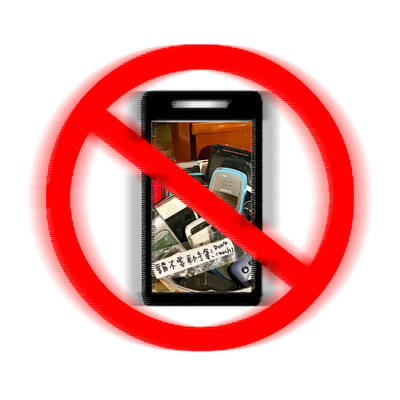
The Ministry of Education last month proposed a nationwide ban on mobile devices in schools, aiming to curb concerns over student phone addiction. Under the revised regulation, which will take effect in August, teachers and schools will be required to collect mobile devices — including phones, laptops and wearables devices — for safekeeping during school hours, unless they are being used for educational purposes. For Chang Fong-ching (張鳳琴), the ban will have a positive impact. “It’s a good move,” says the professor in the department of

On April 17, Chinese Nationalist Party (KMT) Chairman Eric Chu (朱立倫) launched a bold campaign to revive and revitalize the KMT base by calling for an impromptu rally at the Taipei prosecutor’s offices to protest recent arrests of KMT recall campaigners over allegations of forgery and fraud involving signatures of dead voters. The protest had no time to apply for permits and was illegal, but that played into the sense of opposition grievance at alleged weaponization of the judiciary by the Democratic Progressive Party (DPP) to “annihilate” the opposition parties. Blamed for faltering recall campaigns and faced with a KMT chair

Article 2 of the Additional Articles of the Constitution of the Republic of China (中華民國憲法增修條文) stipulates that upon a vote of no confidence in the premier, the president can dissolve the legislature within 10 days. If the legislature is dissolved, a new legislative election must be held within 60 days, and the legislators’ terms will then be reckoned from that election. Two weeks ago Taipei Mayor Chiang Wan-an (蔣萬安) of the Chinese Nationalist Party (KMT) proposed that the legislature hold a vote of no confidence in the premier and dare the president to dissolve the legislature. The legislature is currently controlled


 RSS
RSS