


Looking for Taiwanese music beyond Mando-pop and karaoke dirges? So is the government.
The Government Information Office (GIO, 新聞局) started a program last year that gives independent musicians recording funds and some official promotion.
The bands and musicians apply for subsidies by submitting a demo and written plan, which is reviewed by a panel of industry professionals and musicians selected by the government. This year, 20 bands were chosen to each receive NT$300,000 to put towards producing a new album.
On top of that, the chosen groups are showcased in the government-sponsored Taiwan Band Festival (台灣樂團節), which started last weekend and runs until the beginning of next month, and takes place at live music venues in Taipei, Taichung and Kaohsiung.
The festival aims to bring wider attention to the bands, which represent a broad range of genres, from fusion jazz and punk to traditional folk and electronica.
“There is so much really great music [out there] … why hasn’t anyone heard it? I think it’s really too bad,” says Terri Wu of the Taiwan Music Culture International Alternation Association (TCMIAA, 台灣音樂文化國際交流協會), which was hired by the government to organize the festival.
For Wu, part of the remedy for Taiwan’s independent music scene lies in nurturing “live houses,” which she says have been an “important source of strength” in helping bands grow and develop.
With this in mind, the association arranged for shows to be held at places that regularly host live music.
Popular indie venues in Taipei like The Wall (這牆) and Underworld (地下社會) will not charge admission fees for festival performances [see schedule for details], while others will only charge a one-drink minimum instead of the normal cover charge, which averages NT$300.
Loyal fans might rejoice at the prospect of gratis or cheaper shows, but Wu says the aim is not to provide a free ride, but to attract people who don’t normally go to live shows and cultivate new crowds.
Wu thinks audiences at live music venues need even more support in the form of business — which means buying a drink outside of the freebie that comes with admission.
“If you come to watch a show, and you want to support the band, actually you should also support the [performance] space,” she says.
The festival continues this weekend in Taichung with performances from indie-electronica duo Nylas and pop punk band Mojo, and concludes on Nov. 1 with a free show at The Wall, featuring indie-pop rockers Tizzy Bac and a guest appearance by local underground rock legends the Chairman (董事長).
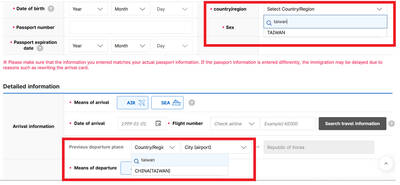
Jason Han says that the e-arrival card spat between South Korea and Taiwan shows that Seoul is signaling adherence to its “one-China” policy, while Taiwan’s response reflects a reciprocal approach. “Attempts to alter the diplomatic status quo often lead to tit-for-tat responses,” the analyst on international affairs tells the Taipei Times, adding that Taiwan may become more cautious in its dealings with South Korea going forward. Taipei has called on Seoul to correct its electronic entry system, which currently lists Taiwan as “China (Taiwan),” warning that reciprocal measures may follow if the wording is not changed before March 31. As of yesterday,

The Portuguese never established a presence on Taiwan, but they must have traded with the indigenous people because later traders reported that the locals referred to parts of deer using Portuguese words. What goods might the Portuguese have offered their indigenous trade partners? Among them must have been slaves, for the Portuguese dealt slaves across Asia. Though we often speak of “Portuguese” ships, imagining them as picturesque vessels manned by pointy-bearded Iberians, in Asia Portuguese shipping between local destinations was crewed by Asian seamen, with a handful of white or Eurasian officers. “Even the great carracks of 1,000-2,000 tons which plied
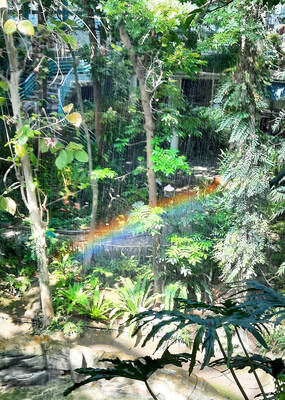
It’s only half the size of its more famous counterpart in Taipei, but the Botanical Garden of the National Museum of Nature Science (NMNS, 國立自然科學博物館植物園) is surely one of urban Taiwan’s most inviting green spaces. Covering 4.5 hectares immediately northeast of the government-run museum in Taichung’s North District (北區), the garden features more than 700 plant species, many of which are labeled in Chinese but not in English. Since its establishment in 1999, the site’s managers have done their best to replicate a number of native ecosystems, dividing the site into eight areas. The name of the Coral Atoll Zone might
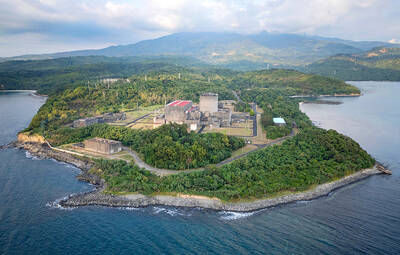
Nuclear power is getting a second look in Southeast Asia as countries prepare to meet surging energy demand as they vie for artificial intelligence-focused data centers. Several Southeast Asian nations are reviving mothballed nuclear plans and setting ambitious targets and nearly half of the region could, if they pursue those goals, have nuclear energy in the 2030s. Even countries without current plans have signaled their interest. Southeast Asia has never produced a single watt of nuclear energy, despite long-held atomic ambitions. But that may soon change as pressure mounts to reduce emissions that contribute to climate change, while meeting growing power needs. The


 RSS
RSS