


Google’s entry into the cellphone market is no longer a rumor. The company’s new G1 phone, unveiled this week, will go head-to-head with Apple’s iPhone in an effort to capture part of the market in cutting-edge “app” phones — wireless phones that marry standard wireless telephony with data-driven applications.
But the G1 won’t be the best wireless phone for everyone. While the G1 is clearly a direct competitor of the iPhone — in terms of looks, feature set, and price — it’s a departure from the iPhone in significant ways. Here’s what you’ll get.
APPS
The G1 is designed almost from the ground up to run applications — Google’s apps and those created by third-party developers. Of course, Google will have the lion’s share of applications ready upon the phone’s release — everything from GMail to Google Maps to the growing number of office applications that Google offers in its Google Docs suite of programs.
Accordingly, the G1 comes with a keyboard — with traditional key locations — that’s larger than just about any other keyboard supplied on a wireless phone today. The slide-out keyboard is hidden under the phone’s LCD when not in use. The keyboard will come as a pleasant surprise to those who have never quite grown accustomed to “virtual” keyboards provided on some phone, such as Apple’s iPhone.
That keyboard could be put to good use by what very well may be the biggest news about the G1 — its open source operating system, dubbed Android, for which any developer with the necessary know-how can write applications. Contrast this with Apple’s typically proprietary approach with its iPhone operating system, and you just might be tempted to recall the thumping that Apple received from IBM-compatible computers many years ago when Apple insisted on keeping third parties from developing hardware and software that were compatible with its computers.
Google’s approach with Android will undoubtedly result in a flood of applications for its new G1. The downside is that, because Google has little control over third-party developers, the quality of those applications will be variable. Nevertheless, those who already use Google’s current applications will be pleased to see how well they operate on the G1. Google Maps on the G1, for example, is a wonder to behold. Making use of Google Maps’ Street View — which provides real-world, street-level views of your surroundings — makes finding your way to a destination particularly easy.
ERGONOMICS AND FEATURES
While the G1’s focus on applications suggests a device made for keyboard mavens, fans of touch screens won’t be disappointed. The G1’s LCD is a touch-screen that you can use to navigate and use many applications. The keyboard is often entirely optional.
In terms of design, the G1 is comparable in size to Apple’s iPhone — although the G1 is a bit taller and thicker. The G1 feels arguably a bit flimsier than the iPhone, more plasticky. The Android interface is contemporary-looking and attractive — much more like a miniature Windows-style desktop than the iPhone’s unique, highly tactile interface that seeks to become an extension of your natural ability to select drag, and adjust things with your hands.
Like the iPhone, the G1 offers a full array of features that one expects of a cutting-edge wireless phone today: Wi-Fi, a Web browser, music player, integrated digital camera, games, numerous applications, GPS, and e-mail. The G1’s digital camera, notably, is 3.2 megapixels, while the iPhone’s is only 2 megapixels.
There are areas in which the G1 simply does not provide as much as the iPhone, however. The G1’s battery life, unfortunately, is only about 130 hours standby, while the iPhone’s is 300 hours, and base memory of the G1 is 1GB, while the iPhone’s is 8GB. The G1’s memory can be expanded to 8GB, while the iPhone’s can be expanded to 16GB. The G1 also does not have streaming video capabilities, unlike the iPhone, although you can get YouTube on the G1.
The G1 also has no PC synching capability. Instead, Google expects you to synchronize your contacts and calendars through the Web. This will be a major shortcoming to those who are tied to Microsoft Exchange servers — that is, the Outlook e-mail and contact management program — at work. Apple’s iPhone, by contrast, is capable of synchronizing with Outlook, with the addition of a free software update. G1 users can synchronize with Google’s own e-mail service, GMail, but frankly there are not many offices that rely upon GMail as a primary e-mail carrier.
Oddly, the G1 also lacks a headphone jack. Instead, you’ll need to use the single USB jack on the phone to plug in either a special USB headset or enlist the help of a USB to 3.5mm adapter in order to use conventional headphones. To make matters worse, the G1’s only USB port is also used for power, audio, and USB synching. Needless to say, the G1 won’t be a plug-and-play replacement for your iPod or other mobile media player.
CONCLUSION
The G1’s seamless tie-ins with Google’s growing number of applications and its open source operating system will endear the phone to those already tied to Google applications. It will also be appealing to technophiles who enjoy trying out multiple add-ons and want to have at their disposal a potentially wider array of applications. On the other hand, opening up the G1 to coders around the world means that quality control may be an issue — and that the user ultimately experience could suffer. The G1, in short, will appeal to gadget freaks and technology warriors. Those who want a product that just works might want to place their bets on Apple’s tightly-controlled iPhone.
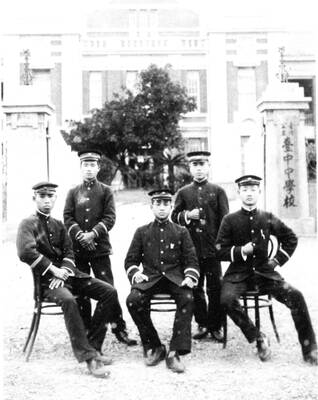
April 28 to May 4 During the Japanese colonial era, a city’s “first” high school typically served Japanese students, while Taiwanese attended the “second” high school. Only in Taichung was this reversed. That’s because when Taichung First High School opened its doors on May 1, 1915 to serve Taiwanese students who were previously barred from secondary education, it was the only high school in town. Former principal Hideo Azukisawa threatened to quit when the government in 1922 attempted to transfer the “first” designation to a new local high school for Japanese students, leading to this unusual situation. Prior to the Taichung First
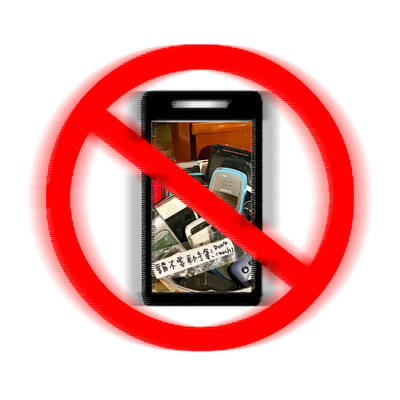
The Ministry of Education last month proposed a nationwide ban on mobile devices in schools, aiming to curb concerns over student phone addiction. Under the revised regulation, which will take effect in August, teachers and schools will be required to collect mobile devices — including phones, laptops and wearables devices — for safekeeping during school hours, unless they are being used for educational purposes. For Chang Fong-ching (張鳳琴), the ban will have a positive impact. “It’s a good move,” says the professor in the department of

On April 17, Chinese Nationalist Party (KMT) Chairman Eric Chu (朱立倫) launched a bold campaign to revive and revitalize the KMT base by calling for an impromptu rally at the Taipei prosecutor’s offices to protest recent arrests of KMT recall campaigners over allegations of forgery and fraud involving signatures of dead voters. The protest had no time to apply for permits and was illegal, but that played into the sense of opposition grievance at alleged weaponization of the judiciary by the Democratic Progressive Party (DPP) to “annihilate” the opposition parties. Blamed for faltering recall campaigns and faced with a KMT chair
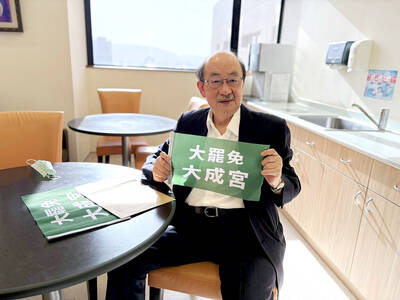
Article 2 of the Additional Articles of the Constitution of the Republic of China (中華民國憲法增修條文) stipulates that upon a vote of no confidence in the premier, the president can dissolve the legislature within 10 days. If the legislature is dissolved, a new legislative election must be held within 60 days, and the legislators’ terms will then be reckoned from that election. Two weeks ago Taipei Mayor Chiang Wan-an (蔣萬安) of the Chinese Nationalist Party (KMT) proposed that the legislature hold a vote of no confidence in the premier and dare the president to dissolve the legislature. The legislature is currently controlled


 RSS
RSS