


Shimmering sandy beaches, bikini babes and tanned surfers. These are not among the sights you will see if you visit Longdong (龍洞), the rugged coastal strip that sits at the northern end of the Northeast Coast (東北角). Though it attracts fewer tourists than neighboring Fulong Beach (福隆海灘) and Honeymoon Bay (蜜月灣), Longdong still has much to offer for both families and, especially, adventurers. Here, visitors will find towering cliffs, choppy coastal waters, well-maintained trails — and some of Taiwan’s premier diving and rock-climbing destinations.
So named because it resembles a curved dragon in shape, Longdong, or dragon’s cave, is officially divided into three parts: Longdongwan Coast Park (龍洞灣海洋公園), Longdongwan Cape Trail (龍洞灣步道), and Longdong South Ocean Park (龍洞南口海洋公園). Driving from Taipei on Provincial Highway No. 2, also known as the Coastal Highway (省道2號), you will first arrive at Longdongwan Coast Park, where you will find several diving shops located across from the park’s main entrance.
Diver Inn (東北角潛水客棧, diver228.divers.com.tw) rents snorkeling equipment, including a mask, snorkel and diving suit, for NT$200 per day. Besides scuba-diving courses, which must be booked in advance, the store also offers provides weekend afternoon tours for snorkeling (NT$450 per person) or scuba diving (NT$1,500 per person).
Pioneer Longdong Bay Dive Center (龍洞灣潛水訓練中心, www.pioneerdiver.net) is more popular among foreigners because some staff speak English. It holds diving courses for different skill levels throughout the week, which also must be booked in advance. For dabblers, there are three-hour diving sessions priced between NT$1,500 to NT$2,500 per person, depending on the number of participants.
As first-time visitors to Longdong, my friends and I decided to rent snorkel gear from Diver Inn instead of booking a scheduled dive, which proved to be a mistake. We paid the NT$100 entrance fee for access to Longdongwan Coast Park and were immediately greeted by the ominous sight of a dilapidated seaside cafe that looked as if it had gone out of business years ago. Down by the rocky seashore, which is lined by old abalone farms, the park’s roped-off snorkeling pen looked more like a swimming pool as it teemed with children and their parents. Attentive lifeguards whistled at anyone who appeared ready to venture away from the supervised area.
No of us were licensed divers but we did not want to be confined to the pool, so we drove five minutes north to a small fishing village where the only main road led to a calm inlet circled by a breakwater and submerged rocks. There was less marine life and more floating trash here, and the gear we rented turned out to include a broken snorkel and a torn bathing suit in which was found a leftover steamed bun. But we still managed to have a good time floating among schools of brightly colored fish. As novice divers, we did not cross the natural rocky barrier into deeper water because the undertow is strong, the seabed drops precipitously, and there are no lifeguards to come to the rescue.
Longdong South Ocean Park, located roughly 3km to the south of Longdongwan Coast Park, offered more of the same: another roped-off snorkeling area and a nearly defunct shopping complex and marine museum. The museum upstairs was closed, as were all the storefronts downstairs, with the exception of one shop where an old woman sold sausages and rice balls. Two-dozen or so children and young adults hunted hermit crabs along the sloping 100m-long beach.
Finding food proved to be a problem in Longdong. There are only a few restaurants, and these are located near the entrance to Longdongwan Coast Park. The owner of one stall told us that fewer tourists now pass this way. More people, he said, are visiting the southern end of the Northeast Coast via the recently completed National Freeway No. 5, also known as the “Chiang Wei-shui (蔣渭水) Memorial Freeway,” connecting Taipei and Ilan.
It wasn’t until we took a stroll along the Longdongwan Cape Trail, which connects Longdong Cape (龍洞岬) and Beitou Cape (鼻頭角), that we were fully able to appreciate the area’s awe-inspiring geological features.
As we passed the Silingyan Temple (西靈巖寺), roughly a 15-minute walk from the entrance to Longdong South Ocean Park, magnificent cliffs overlooking the emerald-green waters of the Pacific Ocean suddenly came into view. Some 80m below the path, waves crashed against rocks that were formed tens of millions of years ago. The cool ocean breeze here was a godsend.
After continuing along the trail for another 10 minutes or so, we saw a signpost with instructions for rock climbing. Seasoned climber Matt Robertson, an American who moved to the area in 2002, wrote a self-published book detailing around 100 of the best routes. For more information, visit his Web site at www.climbstone.com.
From our lookout spot near Hemei Primary School (和美國小), we saw a natural wonder of a different kind: a diver’s paradise with tranquil waters surrounded by rocks that act as natural barriers to the ocean’s waves. As I gazed enviously upon a group of snorkel divers who were frolicking in the crystal-clear, turquoise waters, I realized that Longdong clearly deserves far more than a single day of exploration. I plan on going again, next time with a diving instructor.
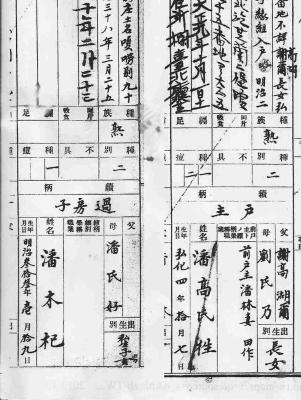
Feb. 9 to Feb.15 Growing up in the 1980s, Pan Wen-li (潘文立) was repeatedly told in elementary school that his family could not have originated in Taipei. At the time, there was a lack of understanding of Pingpu (plains Indigenous) peoples, who had mostly assimilated to Han-Taiwanese society and had no official recognition. Students were required to list their ancestral homes then, and when Pan wrote “Taipei,” his teacher rejected it as impossible. His father, an elder of the Ketagalan-founded Independence Presbyterian Church in Xinbeitou (自立長老會新北投教會), insisted that their family had always lived in the area. But under postwar
In 2012, the US Department of Justice (DOJ) heroically seized residences belonging to the family of former president Chen Shui-bian (陳水扁), “purchased with the proceeds of alleged bribes,” the DOJ announcement said. “Alleged” was enough. Strangely, the DOJ remains unmoved by the any of the extensive illegality of the two Leninist authoritarian parties that held power in the People’s Republic of China (PRC) and Taiwan. If only Chen had run a one-party state that imprisoned, tortured and murdered its opponents, his property would have been completely safe from DOJ action. I must also note two things in the interests of completeness.
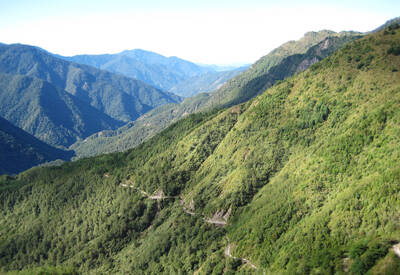
Taiwan is especially vulnerable to climate change. The surrounding seas are rising at twice the global rate, extreme heat is becoming a serious problem in the country’s cities, and typhoons are growing less frequent (resulting in droughts) but more destructive. Yet young Taiwanese, according to interviewees who often discuss such issues with this demographic, seldom show signs of climate anxiety, despite their teachers being convinced that humanity has a great deal to worry about. Climate anxiety or eco-anxiety isn’t a psychological disorder recognized by diagnostic manuals, but that doesn’t make it any less real to those who have a chronic and
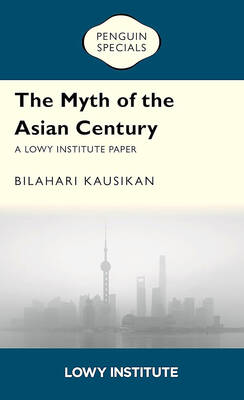
When Bilahari Kausikan defines Singapore as a small country “whose ability to influence events outside its borders is always limited but never completely non-existent,” we wish we could say the same about Taiwan. In a little book called The Myth of the Asian Century, he demolishes a number of preconceived ideas that shackle Taiwan’s self-confidence in its own agency. Kausikan worked for almost 40 years at Singapore’s Ministry of Foreign Affairs, reaching the position of permanent secretary: saying that he knows what he is talking about is an understatement. He was in charge of foreign affairs in a pivotal place in


 RSS
RSS