


Danny Tsai (蔡明智), who works in IT and his wife, Rebeca Chuang (莊淑芬), an accountant, love their dogs. They, like many other dog owners in Taiwan, regard their mutts as part of the family and are loath to part with them when they travel overseas. One and a half years ago, they decided to do something about it and established Pet Tour (信華事業). Since then, they have led three tours to different parts of Japan. Pet Tour also handles the shipment of pets to countries around the world. “It started out from a personal need,” Tsai said, “but then it grew from there.”
Moving pets across international borders has long been problematic, primarily due to a lack of uniform international guidelines. Every country has different entry requirements for pets as do international airlines — some enforcing blanket bans on pets, others allowing small animals to accompany their owners in the cabin.
“It is necessary to do a lot of homework before you can even contemplate taking pets overseas,” Tsai said, “and there is little margin for error.” In many cases, if difficulties arise over paperwork when entering a country, the animal may face immediate deportation, extended quarantine or destruction by the authorities, options that would be traumatic for any pet owner on vacation.
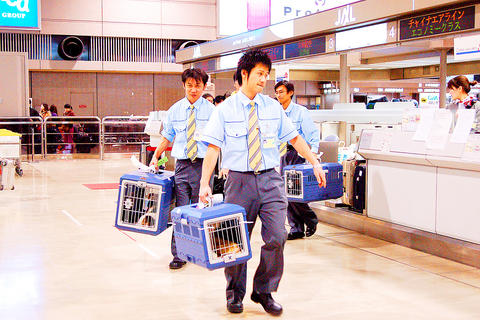
PHOTO: COURTESY OF PET TOUR
In the UK, the Pet Travel Scheme (PETS) was introduced in February 2000 to allow pet dogs, cats and ferrets from certain countries to enter the UK without going through quarantine. It also allows pets to visit EU nations and return to the UK without undergoing quarantine, as long as they meet a list of detailed requirements. The program has been gradually extended and in December 2002 the mainland US and Canada joined. This scheme has helped those animal lovers in the UK who want to take their pets with them on holiday.
getting past the red tape
There is, as yet, no such help for pet owners in Taiwan. Daniel Cheng (鄭烜), a Taiwanese national who took his two long-haired dachshunds with him when relocating to Japan, said the local authorities were generally very helpful, but required owners to coordinate paperwork from numerous agencies in Taiwan and at the destination.
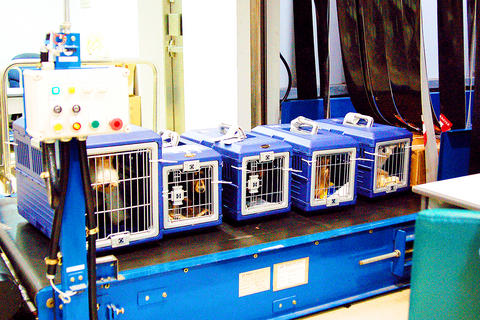
PHOTO: COURTESY OF PET TOUR
The whole process needs to start long before the scheduled travel dates. In the case of dogs, proof of immunization and a chip that meets the requirements of the destination country are basic requirement.
After this, there follows a lengthy process of health checks, validation of these health checks by the authorities in the destination country and the issuing of an import permit. In the case of visiting Japan, the process for ensuring a smooth journey must begin at least 40 days before departure. “It is definitely not something you can do on the spur of the moment,” Tsai said, adding that Pet Tour trips to Japan close bookings two months before the departure date.
Nevertheless, improved procedures and a growing belief that pets are part of the family have seen a huge increase in the number of animals passing through Taiwan’s Bureau of Animal and Plant Health Inspection and Quarantine (動植物防疫檢疫局), Council of Agriculture (農委會). Dog exports have increased from 1,711 in 2003 to 4,363 last year. Cat exports have increased from 340 to 530 over the same period of time.
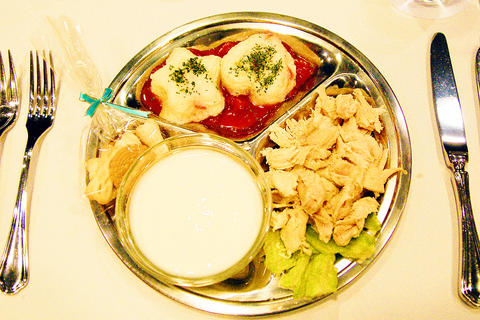
PHOTO: COURTESY OF PET TOUR
“It’s not just the dogs that need to be sorted out,” Tsai said about organizing tours. “Owners also have to be educated. They need to know that traveling with a pet is a very different experience from simply looking after their dog at home. Most people only spend a couple of hours a day together with their pet — they need to go to work and so on. But when traveling together, they are with their pet 24 hours a day for the whole duration of the holiday.” In the case of Pet Tours, these trips are usually about four to five days.
“On the first tour we organized, we had two young women who brought four dachshunds. By the third day they were exhausted and couldn’t go on. ... We now always recommend no more than one pet per person, or even better, one dog between two, so you can share the work of caring for the dog,” Chuang said.
best behavior
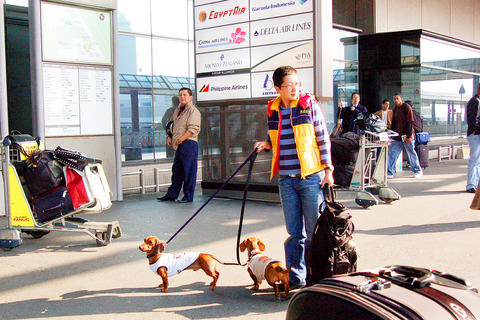
PHOTO: COURTESY OF PET TOUR
It is also important to ensure a reasonably good dynamic between the dogs and to monitor the ability of their owners. “Badly behaved dogs will be refused admission to hotels or play areas,” Cheung said.
“We simply cannot afford to accept any applicant to join the tour,” Tsai said. “If the owner cannot control their dog, we have no choice but to reject them. After all, you only need one dog who cannot be controlled, whether it is biting other dogs or barking uncontrollably, to create difficulties for everyone,” he added.
Pet Tour is the only tourism outfit in Taiwan offering foreign travel for owners and their pets, mostly dogs. Some travel agents do offer domestic travel to destinations such as Hualien or Kenting, were pets can take advantage of big open spaces or experience the delights of the ocean. An increasing number of Taiwanese guesthouses accept pets, or provide some basic services, but Tsai emphasized that these services are usually incidental to their services for humans. “In Japan, hotels which accept dogs are meticulously planned to cater to canine comfort and owner convenience.”
International airlines present a confusing array of regulations governing when and how animals can be transported. “The treatment and attitude toward carrying dogs also varies considerably from carrier to carrier,” Tsai said. Most domestic transport carriers are inclined to treat dogs as cargo, with little regard for the comfort and well-being of a much-pampered companion.
Tsai, who has led group tours of around 10 dogs and their owners to Tokyo, Okinawa and Osaka, said that Japan is considerably more advanced than Taiwan in their handling and treatment of pets. This is part of the reason he decided to establish Pet Tour. “It is not mainly about the tours, which are relatively expensive and for which the market remains small,” he said. “It is a chance to show people how other countries treat their pets, and in the long-term, perhaps raise the level for Taiwan’s treatment of dogs.”
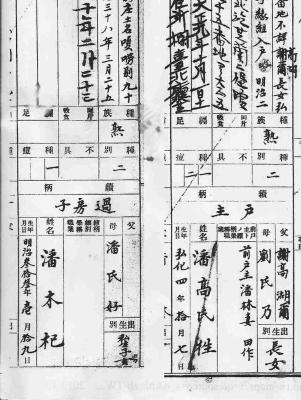
Feb. 9 to Feb.15 Growing up in the 1980s, Pan Wen-li (潘文立) was repeatedly told in elementary school that his family could not have originated in Taipei. At the time, there was a lack of understanding of Pingpu (plains Indigenous) peoples, who had mostly assimilated to Han-Taiwanese society and had no official recognition. Students were required to list their ancestral homes then, and when Pan wrote “Taipei,” his teacher rejected it as impossible. His father, an elder of the Ketagalan-founded Independence Presbyterian Church in Xinbeitou (自立長老會新北投教會), insisted that their family had always lived in the area. But under postwar
In 2012, the US Department of Justice (DOJ) heroically seized residences belonging to the family of former president Chen Shui-bian (陳水扁), “purchased with the proceeds of alleged bribes,” the DOJ announcement said. “Alleged” was enough. Strangely, the DOJ remains unmoved by the any of the extensive illegality of the two Leninist authoritarian parties that held power in the People’s Republic of China (PRC) and Taiwan. If only Chen had run a one-party state that imprisoned, tortured and murdered its opponents, his property would have been completely safe from DOJ action. I must also note two things in the interests of completeness.

Taiwan is especially vulnerable to climate change. The surrounding seas are rising at twice the global rate, extreme heat is becoming a serious problem in the country’s cities, and typhoons are growing less frequent (resulting in droughts) but more destructive. Yet young Taiwanese, according to interviewees who often discuss such issues with this demographic, seldom show signs of climate anxiety, despite their teachers being convinced that humanity has a great deal to worry about. Climate anxiety or eco-anxiety isn’t a psychological disorder recognized by diagnostic manuals, but that doesn’t make it any less real to those who have a chronic and
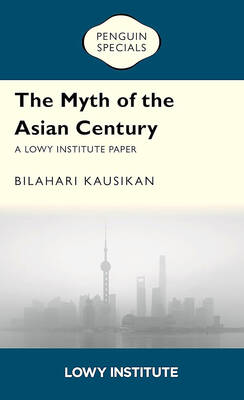
When Bilahari Kausikan defines Singapore as a small country “whose ability to influence events outside its borders is always limited but never completely non-existent,” we wish we could say the same about Taiwan. In a little book called The Myth of the Asian Century, he demolishes a number of preconceived ideas that shackle Taiwan’s self-confidence in its own agency. Kausikan worked for almost 40 years at Singapore’s Ministry of Foreign Affairs, reaching the position of permanent secretary: saying that he knows what he is talking about is an understatement. He was in charge of foreign affairs in a pivotal place in


 RSS
RSS