


In Woodcock, a self-help author named John Farley (Seann William Scott) returns to his Nebraska hometown and learns that his long-widowed mother, Beverly (Susan Sarandon), is dating the title character, a coach who made John's life hell.
Woodcock, played with icy panache by Billy Bob Thornton, is a smirking bully who turns gym class into boot camp, flaunts his intimacy with John's mom and talks in hard-boiled aphorisms. ("I'm already past my past. That's why I call it my past.") Horrified, John tries to break up the affair, leading to wacky misunderstandings and much hugging and learning.
Between Thornton's wry performance and Tami Reiker's nuanced wide-screen photography, you half-expect Woodcock to deliver more than formulaic laughs. When John meets Woodcock's dad (Bill Macy) - a hateful coot - the film threatens to show that Woodcock is not just an emblem of the jock bully mentality, but also one of its damaged products.

PHOTO: COURTESY OF ARM
But such an approach would complicate John's hatred of Woodcock, and the film's screenwriters, Michael Carnes and Josh Gilbert, and its director, Craig Gillespie, won't have it. They instead endorse the idea that Woodcock's abuse made John a better, stronger person. It's The Great Santini remade as a sitcom.
Mr. WOODCOCK
DIRECTED BY: Craig Gillespie
STARRING:
Billy Bob Thornton (Woodcock), Seann William Scott
(John Farley), Susan Sarandon (Beverly), Amy Poehler
(Maggie), Ethan Suplee (Nedderman)
RUNNING TIME: 87 MINUTES
Taiwan Release: Today
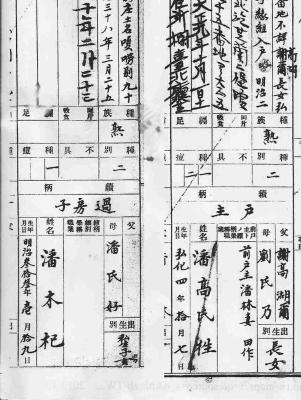
Feb. 9 to Feb.15 Growing up in the 1980s, Pan Wen-li (潘文立) was repeatedly told in elementary school that his family could not have originated in Taipei. At the time, there was a lack of understanding of Pingpu (plains Indigenous) peoples, who had mostly assimilated to Han-Taiwanese society and had no official recognition. Students were required to list their ancestral homes then, and when Pan wrote “Taipei,” his teacher rejected it as impossible. His father, an elder of the Ketagalan-founded Independence Presbyterian Church in Xinbeitou (自立長老會新北投教會), insisted that their family had always lived in the area. But under postwar
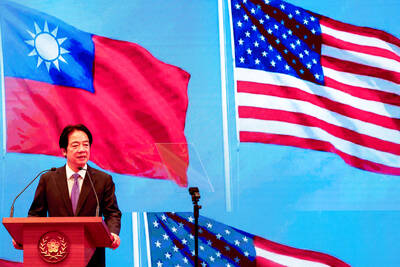
In 2012, the US Department of Justice (DOJ) heroically seized residences belonging to the family of former president Chen Shui-bian (陳水扁), “purchased with the proceeds of alleged bribes,” the DOJ announcement said. “Alleged” was enough. Strangely, the DOJ remains unmoved by the any of the extensive illegality of the two Leninist authoritarian parties that held power in the People’s Republic of China (PRC) and Taiwan. If only Chen had run a one-party state that imprisoned, tortured and murdered its opponents, his property would have been completely safe from DOJ action. I must also note two things in the interests of completeness.
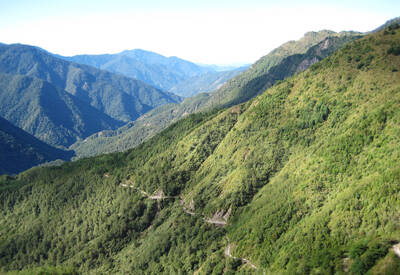
Taiwan is especially vulnerable to climate change. The surrounding seas are rising at twice the global rate, extreme heat is becoming a serious problem in the country’s cities, and typhoons are growing less frequent (resulting in droughts) but more destructive. Yet young Taiwanese, according to interviewees who often discuss such issues with this demographic, seldom show signs of climate anxiety, despite their teachers being convinced that humanity has a great deal to worry about. Climate anxiety or eco-anxiety isn’t a psychological disorder recognized by diagnostic manuals, but that doesn’t make it any less real to those who have a chronic and
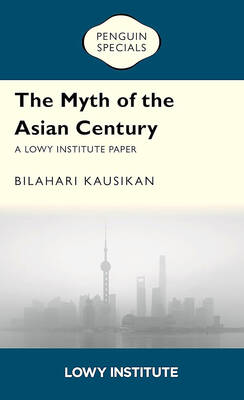
When Bilahari Kausikan defines Singapore as a small country “whose ability to influence events outside its borders is always limited but never completely non-existent,” we wish we could say the same about Taiwan. In a little book called The Myth of the Asian Century, he demolishes a number of preconceived ideas that shackle Taiwan’s self-confidence in its own agency. Kausikan worked for almost 40 years at Singapore’s Ministry of Foreign Affairs, reaching the position of permanent secretary: saying that he knows what he is talking about is an understatement. He was in charge of foreign affairs in a pivotal place in


 RSS
RSS