


The Taipei Film Festival is Taiwan's most democratic high-profile cinematic showcase. In some cases that's a good thing; in others it's not.
Unlike the older Golden Horse Film Festival (金馬影展), which only features high-profile works from around the world, the Taipei Film Festival (台北電影節) has become a platform for more diverse international and local productions. The emphasis is on encouraging young Taiwanese directors, and its national competition section, the Taipei Awards, welcomes works made in all types of formats. Prizes worth NT$1 million are handed out in each of four categories - narrative, documentary, experimental and animation - offering a comprehensive panorama of Taiwanese cinema.
This year's Taipei Awards once again sees a troupe of noted local productions, including box office success Island Etude (練習曲) by En Chen (陳懷恩), Berlinale winner Spider Lilies (刺青) and Tsai Ming-liang's (蔡明亮) I Don't Want to Sleep Alone (黑眼圈). Other films by both young and experienced filmmakers will make their world premieres here. And there will be an abundance of talent scouts and foreign festival curators looking for the new faces of Taiwanese cinema.

PHOTOS: COURTESY OF TAIPEI FILM FESTIVAL
One of the festival's opening films and a strong contender in both the Taipei Awards and the International New Talent Competition section is The Most Distant Course (最遙遠的距離). Director Lin Jing-jie's (林靖傑) feature debut tells the story of three Taipei residents escape to picturesque eastern Taiwan. Technically proficient, the film unfolds with a visually exuberant contrast between the cold, blue urban landscapes and the warm, golden-hued countryside as the protagonists travel great distances to find themselves.
Then there's The Wall Passer (穿牆人) by celebrated poet, theater director and filmmaker Hung Hung (鴻鴻). Possibly the most imaginative work Taiwan cinema has seen in the past year, it ingeniously blends science fiction with a romantic coming-of-age story about teenager who uses a magic stone to travel between two worlds. Taking a surrealistic approach to the material, the director's creativity doesn't stop with his film's glossy, stylish cinematography. This is a philosophical reflection that relates the increasing blurred boundaries between the real world and virtual reality with the ancient philosopher Zhuang Zi's (莊子) famous butterfly dream.
The documentary category also sees a diversity of issues and interests. A rare personal account of left-wing activists who suffered under the Chinese Nationalist Party's White Terror is documented in If I Have to Die 1,000 Times (如果我必須死一千次-台灣左翼紀事), while The Forgotten Corner (遺忘的國度-樂生療養院紀錄片) takes a sober look at the recent controversy over the Losheng (Happy Life) Sanatorium by recording the personal histories of its aging residents.

Film critic Mai Jo-yu (麥若愚) said TFF is a fair showcase for local productions that, for the most part, miss out on the Hong Kong- and China-dominated Golden Horse Awards (金馬獎). And TFF's Global Chinese Cinerama section gives Taiwan's filmmakers a chance to learn from the best Chinese filmmakers.
"I think the works of the sixth generation of directors in China in this year's Chinese cinema section serve as great examples for Taiwan's young filmmakers, in that they eloquently demonstrate how art-house cinema can also tell a good story that can be enjoyed by members of the general public," Mai said.
The festival's platform for Taiwanese cinema has quickly gained international visibility, this year attracting curators and film professionals from South Korea, Japan and Singapore to the Netherlands and Canada.
But as its reputation increases, TFF faces a bureaucratic quandary. As an event organized under the auspices of the Taipei City Government, the festival is subject to regulations that prevent it from having a permanent executive body.
The rules were designed to prevent abuses of power, but they are damaging the vitality of the film festival since, unlike other government-funded film festivals throughout the world, TFF's organizers have to put things together in a shorter period of time and cannot plan for the future.
This year's festival director Jane Yu (游惠貞) said the problem started when the law was promulgated in 2000. An improvement was made after then-Taipei City Bureau of Cultural Affairs head Lung Ying-tai (龍應台) consulted with curators and professionals and found a way to allow teams to work for two consecutive years. But lingering uncertainty and budget cuts caused the previous organizer to withdraw last year.
"Sustainability is the most important element in a cultural undertaking. With the managerial uncertainty, long-term planning is out of the question, let alone the accumulation of learning, experience, contacts and training [that is] essential to cultural events like film festivals," Yu said.
A more viable solution is to establish a permanent executive body and a term system that would allow a festival director to hold the position for a longer period of time.
Despite these problems, TFF's current director maintains a can-do spirit. "There are far too many defects is the system, but we have to keep working and try to solve problems along the way," Yu said.
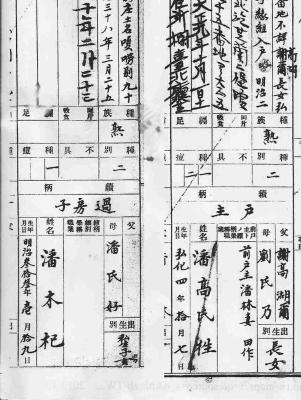
Feb. 9 to Feb.15 Growing up in the 1980s, Pan Wen-li (潘文立) was repeatedly told in elementary school that his family could not have originated in Taipei. At the time, there was a lack of understanding of Pingpu (plains Indigenous) peoples, who had mostly assimilated to Han-Taiwanese society and had no official recognition. Students were required to list their ancestral homes then, and when Pan wrote “Taipei,” his teacher rejected it as impossible. His father, an elder of the Ketagalan-founded Independence Presbyterian Church in Xinbeitou (自立長老會新北投教會), insisted that their family had always lived in the area. But under postwar

In 2012, the US Department of Justice (DOJ) heroically seized residences belonging to the family of former president Chen Shui-bian (陳水扁), “purchased with the proceeds of alleged bribes,” the DOJ announcement said. “Alleged” was enough. Strangely, the DOJ remains unmoved by the any of the extensive illegality of the two Leninist authoritarian parties that held power in the People’s Republic of China (PRC) and Taiwan. If only Chen had run a one-party state that imprisoned, tortured and murdered its opponents, his property would have been completely safe from DOJ action. I must also note two things in the interests of completeness.
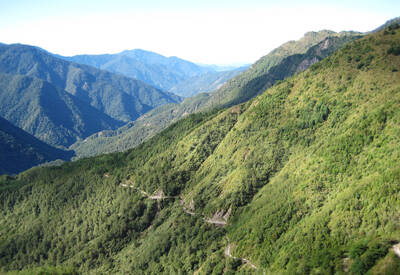
Taiwan is especially vulnerable to climate change. The surrounding seas are rising at twice the global rate, extreme heat is becoming a serious problem in the country’s cities, and typhoons are growing less frequent (resulting in droughts) but more destructive. Yet young Taiwanese, according to interviewees who often discuss such issues with this demographic, seldom show signs of climate anxiety, despite their teachers being convinced that humanity has a great deal to worry about. Climate anxiety or eco-anxiety isn’t a psychological disorder recognized by diagnostic manuals, but that doesn’t make it any less real to those who have a chronic and
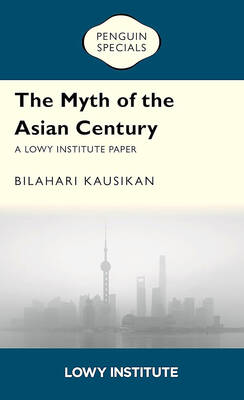
When Bilahari Kausikan defines Singapore as a small country “whose ability to influence events outside its borders is always limited but never completely non-existent,” we wish we could say the same about Taiwan. In a little book called The Myth of the Asian Century, he demolishes a number of preconceived ideas that shackle Taiwan’s self-confidence in its own agency. Kausikan worked for almost 40 years at Singapore’s Ministry of Foreign Affairs, reaching the position of permanent secretary: saying that he knows what he is talking about is an understatement. He was in charge of foreign affairs in a pivotal place in


 RSS
RSS