


Jay-Z, aka Sean Carter, is CEO of Roc-A-Fella Records, aka the ROC. Saturday night he performed in the other ROC, the Republic of China. What happened when the two ROCs collided? An explosion of good music, hot effects and world-class showmanship.
Rolling up to the Taipei Arena, the size of the line immediately shocked the wary concert-goer. Hundreds stretched from the back to the front of the Taipei Arena. Dozens hung out in front of the Arena's 7-Eleven, drinking beer, scalping tickets and chatting. Human white noise filled the air.
Inside, the packed ground floor was even louder. The huge Taipei Arena dwarfed everyone with its domed roof. So many people, happy and excited, in one space.
“Yeah! I'm having an awesome time!” said a jubilant MC Johnny Suffa, member of Taiwan's leading hip-hop group, Machi. “There aren't enough people here, though. Not for Jay-Z!”
Mr. Suffa, though, had high standards. Yes, the middle sections, from the left 2B to the right 2B were sparsely populated, but both the ground floors and cheap seats were filled with hip hop kids, foreigners, and club girls. Jerseys, trucker hats, booty shorts, and New Era baseball caps were seen everywhere bobbing up and down to DJ Craze's up-tempo hip hop.
At 10pm, the big dog of Taiwanese hip-hop, MC Hotdog, dropped a short set, delaying Jay Z's performance. The crowd waited in the dark, searching for Sean Carter.
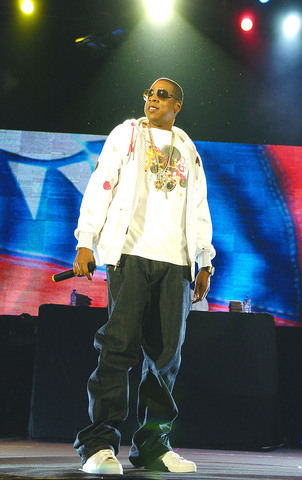
Then, suddenly, with a blast of fireworks and a shot from the three huge LED screens, there Jay stood in all his glory: White hoody, aviator glasses, platinum, and gold chains. With a cocky look twisted on his face, Jay was ready to rock. The nine-thousand strong crowd poised their hands in Jay's signature diamond sign. Cheers erupted from every sector of the Arena.
Joined later by longtime protege Memphis Bleek, Jay rolled through his hits. Dirt Off Your Shoulder, Izzo (H.O.V.A.), Jigga What, Jigga Who, Can I get A...?, Change Clothes, and Girls, Girls, Girls were all performed in a raucous, rowdy fashion. Crowd response checks, well-timed freestyles and hand-waving exercises whipped the crowd into a frenzy.
Above, the LED screens were a montage of Jay Z's music videos, effects, and live footage. The ROC flag even briefly appeared during the sets' second song to great response. The videos also helped Jay hold a vigil at the church of hip hop. Tupac, Biggie Smalls, Left Eye, Aaliyah, and Jam Master Jay, fallen hip-hop warriors, were all remembered on screen.
The biggest crowd pleaser, though, was Jay's verse on Beyonce's Crazy in Love. When introduced by their duet, '03 Bonnie and Clyde, the crowd roared in anticipation of an appearance from the princess of R&B pop. They were sorely disappointed.
No worries, the encore whisked away any negativity. Confetti fell from the sky for the bounce of Big Pimpin' while rapturous applause welcomed the final track, Encore.
“Jay tore the place town” said local hip hop DJ and promoter Marcus Aurelius, “My diamond is still in the sky.”
George Trivino, True Color Music group's main organizer, agreed. “Jay knew that he was coming to a country with a language barrier [so he] used the music, his body language, and mind to communicate with the crowd. The audience and Jay-Z fed off one another and it just got better and better. Taiwan showed how we treat our guests.”
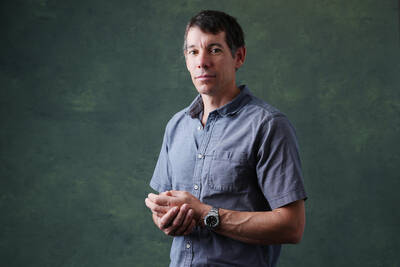
Towering high above Taiwan’s capital city at 508 meters, Taipei 101 dominates the skyline. The earthquake-proof skyscraper of steel and glass has captured the imagination of professional rock climber Alex Honnold for more than a decade. Tomorrow morning, he will climb it in his signature free solo style — without ropes or protective equipment. And Netflix will broadcast it — live. The event’s announcement has drawn both excitement and trepidation, as well as some concerns over the ethical implications of attempting such a high-risk endeavor on live broadcast. Many have questioned Honnold’s desire to continues his free-solo climbs now that he’s a
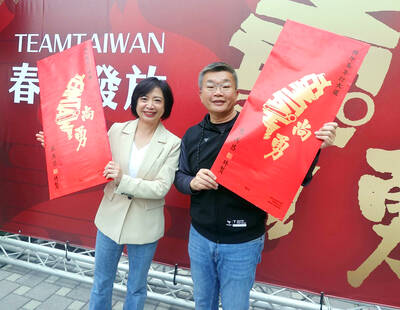
As Taiwan’s second most populous city, Taichung looms large in the electoral map. Taiwanese political commentators describe it — along with neighboring Changhua County — as Taiwan’s “swing states” (搖擺州), which is a curious direct borrowing from American election terminology. In the early post-Martial Law era, Taichung was referred to as a “desert of democracy” because while the Democratic Progressive Party (DPP) was winning elections in the north and south, Taichung remained staunchly loyal to the Chinese Nationalist Party (KMT). That changed over time, but in both Changhua and Taichung, the DPP still suffers from a “one-term curse,” with the
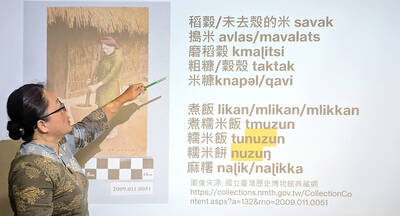
Jan. 26 to Feb. 1 Nearly 90 years after it was last recorded, the Basay language was taught in a classroom for the first time in September last year. Over the following three months, students learned its sounds along with the customs and folktales of the Ketagalan people, who once spoke it across northern Taiwan. Although each Ketagalan settlement had its own language, Basay functioned as a common trade language. By the late 19th century, it had largely fallen out of daily use as speakers shifted to Hoklo (commonly known as Taiwanese), surviving only in fragments remembered by the elderly. In
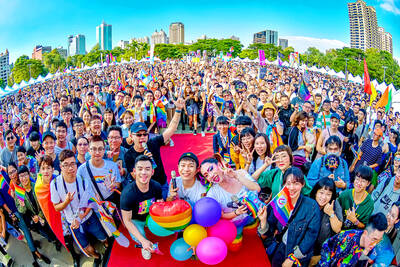
William Liu (劉家君) moved to Kaohsiung from Nantou to live with his boyfriend Reg Hong (洪嘉佑). “In Nantou, people do not support gay rights at all and never even talk about it. Living here made me optimistic and made me realize how much I can express myself,” Liu tells the Taipei Times. Hong and his friend Cony Hsieh (謝昀希) are both active in several LGBT groups and organizations in Kaohsiung. They were among the people behind the city’s 16th Pride event in November last year, which gathered over 35,000 people. Along with others, they clearly see Kaohsiung as the nexus of LGBT rights.


 RSS
RSS