


Given that metropolitan Taipei is home to a sizeable tribe of metrosexuals, one would think that grooming and health services which cater to men would be booming. But when it comes to having a 90-minute treatment at a spa dedicated to men, reactions are mixed and tailor-made packages are few and far between. “Me, at a spa slathered in oil and mud? No, that’s too girly for a guy like me,” said a 30-year-old salesman who goes by the name Hsiao Yang (小楊) and whose girlfriend frequents spas for facials on a monthly basis.
Traditionally a women’s domain, day spas have long been seen by most males as no-go zones, an affront to masculinity, where naked, silken-skinned females are covered in green mud and daubed with essential oils. Yet, the female spa market is saturated and the men’s gradually changing consuming habits have spurred spa owners to turn their attention to male grooming.
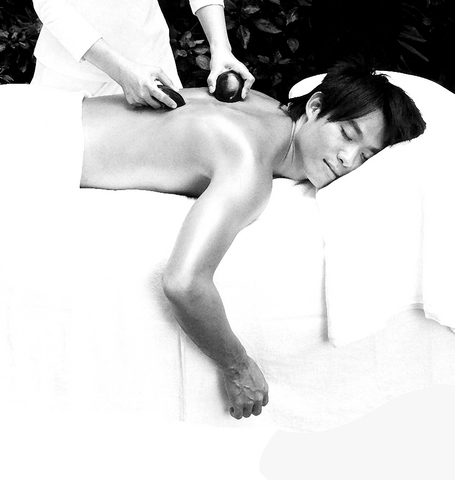
While men-only spas are still in short supply, high-end establishments are adding treatments for men to their services. These establishments offer the spa-going male services ranging from aromatherapy and body scrubs to hot stone massage. Not much different than services specifically tailored for females.
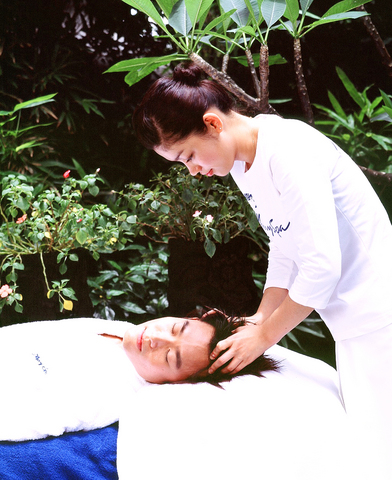
PHOTOS COURTESY OF MERRY SPA
But as a 60-minute to 90-minute treatment usually comes with a premium price tag ranging from NT$3,000 to NT$6,000 at the more luxurious urban retreats, male customers are entitled to treatments exclusively designed for their bodies and well-being.
To adapt to their new customers’ needs, some spas have focused on more male-friendly treatments. Well-established spas like Orient Retreat (登琪爾spa) and Being Spa pamper their clients with sports massage to relieve muscular tension and fancy treatments to combat the stresses and strains of modern living.
Among the establishments that have expanded services, Merry Spa (活髮美塑館) is one of the leading players in the market. Founded in 2001 when male spas were virtually nonexistent, the company was the first of its kind to develop special treatments for stressed-out males and introduce treatment rooms for men separate from other spa facilities frequented by women.
“Men now account for 30 percent to 40 percent of our customers, and the number is increasing. Most of our male clients are corporate managers and professionals who are under lots of stress and can hardly find time in their busy schedules to exercise,” said Karen Liu (劉凱倫), a therapist at Merry Spa’s flagship store on Dunhua South Road.
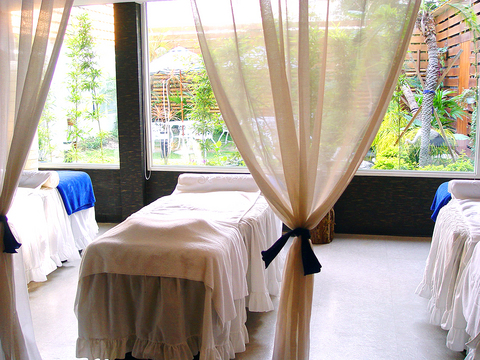
In the warmly-lit, scented space filled with high-tech gadgets, male customers are first subjected to a body composition and scalp analysis so licensed therapists and masseuses can arrange customized treatments.
Essential oils are mixed and used to protect the scalp and combat hair loss and dandruff. The spa’s highlight hair therapy is an holistic head-to-toe treatment that combines the stimulation of pressure points with hot stone and essential oil massages. Specially trained massagers are on hand to alleviate constipation and other gastrointestinal problems and there is a state-of-the-art massage water bed.
Many men first enter a spa at the behest of their partner, but are bewildered by the dazzling array of beautifying options available to females. “Most of our male customers are brought here by their wives or girlfriends. Once they understand how relaxing the spa experience can be, they are no longer afraid to return on their own,” Liu said.
For those who do frequent spas on their own, the stress relieving, scalp and digestion treatments are the mainstream choices, whereas only the most adventurous venture into the realm of manicures, pedicures and facials.
While the big spa chains still have a lot to do to emulate the comprehensive masculine experience offered by some of their European and US counterparts, a few men-only spas of a relatively moderate scale have quietly entered the nascent industry.
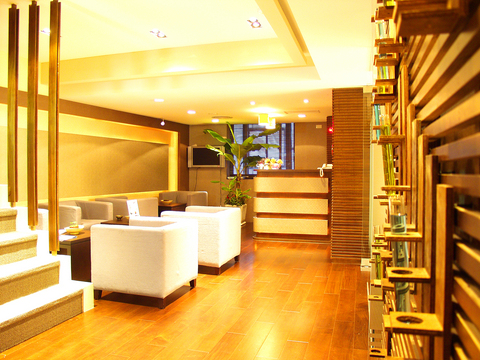
Opened last year in Ximending, So Young Men Spa (水漾甦活概念館) is a small spa that provides an intimate environment and services by masseurs.
So Young is masculine and appeals to men who are put off by the feminine decor and services offered by crossover spas. Simple, straightforward treatments are the order of the day.
“Over half of our customers are tourists, Japanese and Singaporean on business trips, and foreigners living in Taipei who are more open to the idea of men’s spas,” said spa manager Lin Hsu-yu (林旭裕). “Most of our local clients are white-collar workers aged 30 to 40.”
A large portion of patrons are deskbound workers who suffer from aches and pains caused by poor posture; body massage with essential oils is the most well-received option to relieve tension in the neck, shoulders or back. Customers can also pick up skin and body care products without feeling their masculinity is under siege.
The market potential, Lin said, is vast. But before men stampede to be pummeled and pampered, ingrained stereotypes and misperceptions about spa treatments need to be dispelled.
Merry Spa’s flagship store is located at B1/1F, 86 Dunhua S Rd Sec 1, Taipei (台北市敦化南路一段86號B1-1樓). Call 0800-026-588, toll-free, for other Merry spa locations and services. For more information on the spa services and treatments at So Young men spa visit www.soyoungmenspa.com.tw.
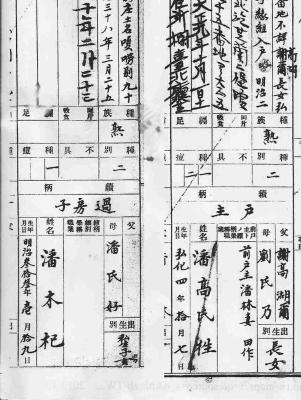
Feb. 9 to Feb.15 Growing up in the 1980s, Pan Wen-li (潘文立) was repeatedly told in elementary school that his family could not have originated in Taipei. At the time, there was a lack of understanding of Pingpu (plains Indigenous) peoples, who had mostly assimilated to Han-Taiwanese society and had no official recognition. Students were required to list their ancestral homes then, and when Pan wrote “Taipei,” his teacher rejected it as impossible. His father, an elder of the Ketagalan-founded Independence Presbyterian Church in Xinbeitou (自立長老會新北投教會), insisted that their family had always lived in the area. But under postwar
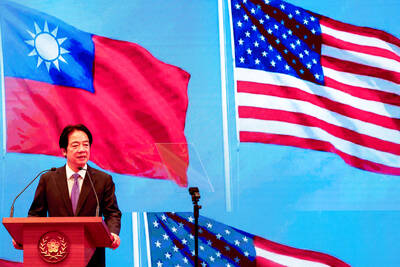
In 2012, the US Department of Justice (DOJ) heroically seized residences belonging to the family of former president Chen Shui-bian (陳水扁), “purchased with the proceeds of alleged bribes,” the DOJ announcement said. “Alleged” was enough. Strangely, the DOJ remains unmoved by the any of the extensive illegality of the two Leninist authoritarian parties that held power in the People’s Republic of China (PRC) and Taiwan. If only Chen had run a one-party state that imprisoned, tortured and murdered its opponents, his property would have been completely safe from DOJ action. I must also note two things in the interests of completeness.
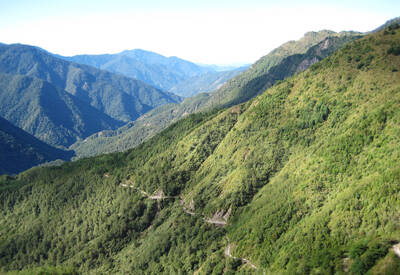
Taiwan is especially vulnerable to climate change. The surrounding seas are rising at twice the global rate, extreme heat is becoming a serious problem in the country’s cities, and typhoons are growing less frequent (resulting in droughts) but more destructive. Yet young Taiwanese, according to interviewees who often discuss such issues with this demographic, seldom show signs of climate anxiety, despite their teachers being convinced that humanity has a great deal to worry about. Climate anxiety or eco-anxiety isn’t a psychological disorder recognized by diagnostic manuals, but that doesn’t make it any less real to those who have a chronic and
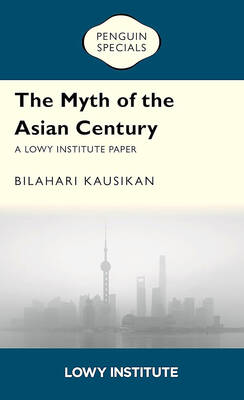
When Bilahari Kausikan defines Singapore as a small country “whose ability to influence events outside its borders is always limited but never completely non-existent,” we wish we could say the same about Taiwan. In a little book called The Myth of the Asian Century, he demolishes a number of preconceived ideas that shackle Taiwan’s self-confidence in its own agency. Kausikan worked for almost 40 years at Singapore’s Ministry of Foreign Affairs, reaching the position of permanent secretary: saying that he knows what he is talking about is an understatement. He was in charge of foreign affairs in a pivotal place in


 RSS
RSS