


When Mackay Memorial hospital genetics researcher Lin Ma-li (林媽利) said the results of a series of blood tests proved that Taiwan's population was genetically linked to Polynesians rather that Han Chinese, in August, it reopened a long running debate about an obscure version of Taiwan's history.
Mainstream evolutionary thought has long revolved around two contrasting hypotheses: Taiwan was settled by peoples who came from China roughly 1,700 years ago; or Taiwan had its own indigenous culture long before the Chinese ever set foot on Taiwan.
If Lin's claims are to be taken seriously, however, then the nation's history could be more similar to a third version that is being propagated by members of the fringe historical society, the Taiwan Paleo-Civilization Research Center
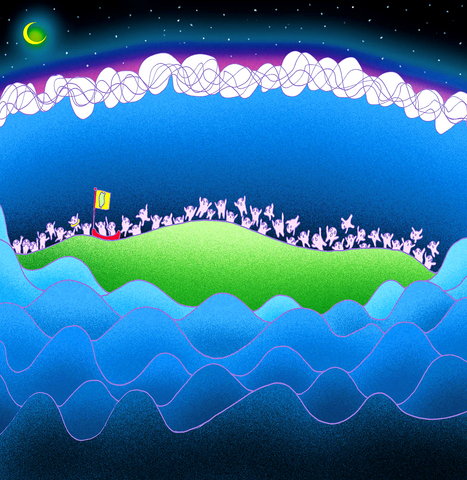
ILLUSTRATION: MOUNTAIN PEOPLE
"There is plenty of evidence that links Taiwan to the Pacific islands. Huge stone megaliths in the form of faces for example can be found throughout the region and there are similarities between Taiwanese Aboriginal folklore and that of the Polynesians," said Peter Hsui
The blood tests, which involved 640 people from nine of Taiwan's 13 tribes and looked at variations in mitochondrial DNA, found that three specific mutations are shared by Taiwanese, Polynesians and Melanesians -- but are not found amongst other Asians.
For the Taiwan Paleo-Civilization Research Center's Ho Hsien-jung
"It's obvious when you look at the facts. Taiwan is one of the very few places in the Pacific Rim that has such a long, unexplained and diverse history," Ho said. "The parallels between [Taiwanese] and other Pacific races are too much alike to be coincidental. They must have come from somewhere and I believe that that somewhere was Taiwan."
Needless to say, Ho's assertions are not taken very seriously in academic circles. The idea that Taiwan's Aborigines and Pacific Rim races are interconnected is by no means new, however. Linguists have long been aware that the spoken languages of Taiwan's tribes belong to a group known as Austronesian.
Unrelated to Chinese, be it Mandarin or Cantonese, the group includes Polynesian tongues and accounts for nine of the 10 Austronesian linguistic sub-families. Also, many of Taiwan's tribal legends, especially those of the Ami tribe, tell of the tribe "returning" rather than "coming" to Taiwan.
In 2002, Ho's publication Taiwan -- The Cradle of Civilization
Unlike these previous accounts, which placed Mu in the center of the Pacific, Ho and his fellow alternative historians believe that Mu and Taiwan are one and the same.
"I don't think there was a mysterious landmass that just vanished. I think that some of it was possibly submerged at the end of the last Ice Age," he said. "Underwater cities near Penghu and Okinawa prove that some kind of land mass existed. I believe that Taiwan is the only surviving part of this lost continent."
Mention of a mythical place called Mu first appeared in texts penned by the French antiquarian traveler and writer Augustus le Plongeon in the mid-1800s. Further popularization of the idea took place in the 1930s when British occult writer James Churchward published his The Lost Continent of Mu. Both le Plongeon and Churchward's ideas were dismissed by most serious scholars.
This did not deter Turkey's independence leader Ataturk, however, who went to great lengths to gather information about Mu in the hope of finding the missing link between Turkic civilization and that of the Uyghurs and Indians.
"I have to agree that the similarities between Taiwan Aborigines and Polynesians do prove that they are somehow
related, but as for lost continents, well, that's highly debatable," said Wen Chan-hua (溫振華) of the Taiwan Normal University's Graduate Institute of Taiwan History (國立台灣師範大學臺灣史研究所). "Most cultures tell of lost lands inhabited by mysterious people and Mu is just one such place."
The conclusions of Taiwan -- The Cradle of Civilization may have been frowned upon by local academics, but in September Ho was invited to South Korea to participate in the Third Asian Conference on Asian and Pacific Coastlines.
There he presented his latest research paper entitled Mega-Tsunami in Northeastern Taiwan At Least 12,000 Years Ago and for the first time brought his argument about Taiwan being the land from which Pacific Rim civilization was born to a global audience.
The paper put forward the notion that intense volcanic activity in what is now the Snow Mountain Range
According to Ho, the arch in Taiwan's northeast coastline, that runs from, what is today Maoao (
In the aftermath of this event and following intense seismic shocks those who were living in Taiwan were forced to emigrate.
"I believe that the old capital of Mu was near what is today Suao. Evidence suggests that the Langyang River once ran into the sea through this area and as such it would have been the perfect natural harbor and location for a major settlement," he said.
Ho based his thesis on data collected from a multinational Ocean Drilling Program (ODP) that took place in 2001, which took core samples from 410m below the seabed from an area referred to as Site 1202.
The Texas A & M University program was designed to examine the turbid current, Kuroshio, that flows from the Yellow Sea down through the Okinawa Trough, along Taiwan's eastern seaboard and south towards the Philippine Sea. Located on the southern slope of the Okinawa Trough approximately 100km east of Ilan
According to test results the turbidite, or sediment collected from Site 1202, was dated from over 10,000 years ago and was of the same density as that found in the Snow Mountain region today. According to Ho's paper this sediment originated in the Snow Mountain area and after the
landslide settled around Site 1202.
While respected academics like Professor Wei Kuo-yen
"I wouldn't go as far as to call the idea total rubbish, but there are certain problems with the way in which the date has been interpreted. Turbidite can form almost anywhere, where any volcanic or seismic activity has taken place. And we know that it doesn't take thousands of years to form in such density," he said. "The question is what caused it to form to such a density at Site 1202. And this remains something that we're not really sure about."
Doubt may exist as to the validity of the way in which members of the Taiwan Paleo-Civilization Research Center have reached their conclusions in regards to the relationship between the turbidite from Site 1202 and that found in Taiwan, but Ho's assumptions that a tsunami caused widespread devastation throughout the Pacific Rim are slightly more concrete.
This thesis he based on archeological discoveries unearthed on Okinawa and local Aboriginal legends. And, although skeptical of the existence of a legendary continent, the Taiwan Normal University professor concurs that something like this could well have taken place.
"Mass migrations many thousands of years ago were certainly not uncommon and there is evidence to suggest that Taiwan's indigenous peoples did travel," Wei said. "But whether such vast numbers of people left Taiwan as part of some kind of mass exodus is doubtful."
Records indicate that the first people to appear in what is now Japan were the Minatokawajin peoples, who reportedly lived on Okinawa some 18,000 years ago. Remnants indicate that human activity ceased to exist on Okinawa an estimated 17,000 to 10,000 years ago and didn't return until 6,670 years ago.
"It's quite obvious from studying folklore of the Pacific Rim that a huge flood did occur and that strangers from far away lands appeared shortly thereafter," Hsui said. "Nobody knows where they came from, so we're left with theories and the most compelling one is that they came from Taiwan."
Whether or not Ho and like-minded fringe historians will one day be vindicated is debatable, but they certainly have a point.
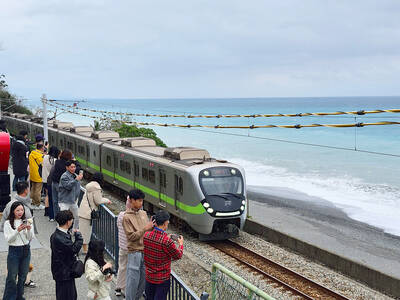
The small platform at Duoliang Train Station in Taitung County’s Taimali Township (太麻里) served villagers from 1992 to 2006, but was eventually shut down due to lack of use. Just 10 years later, the abandoned train station had become widely known as the most beautiful station in Taiwan, and visitors were so frequent that the village had to start restricting traffic. Nowadays, Duoliang Village (多良) is known as a bit of a tourist trap, with a mandatory, albeit modest, admission fee of NT$10 giving access to a crowded lane of vendors with a mediocre view of the ocean and the trains

For many people, Bilingual Nation 2030 begins and ends in the classroom. Since the policy was launched in 2018, the debate has centered on students, teachers and the pressure placed on schools. Yet the policy was never solely about English education. The government’s official plan also calls for bilingualization in Taiwan’s government services, laws and regulations, and living environment. The goal is to make Taiwan more inclusive and accessible to international enterprises and talent and better prepared for global economic and trade conditions. After eight years, that grand vision is due for a pulse check. RULES THAT CAN BE READ For Harper Chen (陳虹宇), an adviser
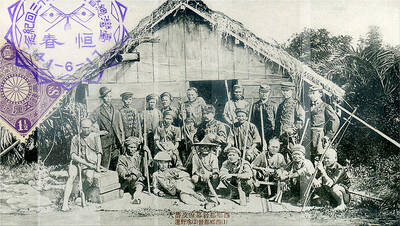
Traditionally, indigenous people in Taiwan’s mountains practice swidden cultivation, or “slash and burn” agriculture, a practice common in human history. According to a 2016 research article in the International Journal of Environmental Sustainability, among the Atayal people, this began with a search for suitable forested slopeland. The trees are burnt for fertilizer and the land cleared of stones. The stones and wood are then piled up to make fences, while both dead and standing trees are retained on the plot. The fences are used to grow climbing crops like squash and beans. The plot itself supports farming for three years.
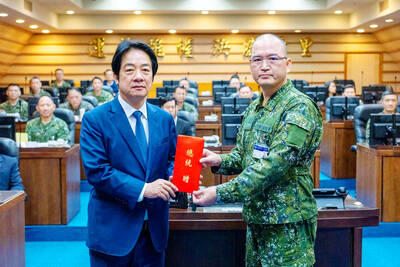
President William Lai (賴清德) on Nov. 25 last year announced in a Washington Post op-ed that “my government will introduce a historic US$40 billion supplementary defense budget, an investment that underscores our commitment to defending Taiwan’s democracy.” Lai promised “significant new arms acquisitions from the United States” and to “invest in cutting-edge technologies and expand Taiwan’s defense industrial base,” to “bolster deterrence by inserting greater costs and uncertainties into Beijing’s decision-making on the use of force.” Announcing it in the Washington Post was a strategic gamble, both geopolitically and domestically, with Taiwan’s international credibility at stake. But Lai’s message was exactly


 RSS
RSS