


Sanchih local government is trying to put the township on the cultural map by sponsoring a week-long festival (2005三芝鄉筊白筍暨水車文化節) that starts tomorrow.
The sword bamboo shoot festival will take place in and around the Hall of Fame, Putou Village, Sanchih, Taipei (
F 4 Girls, the female version of popular boy band F4, will perform. To get in the group, Amy, Stacy, Tiffany and Fanny had to pass some tough criteria, not least of which was that they had to have F-cup breasts.

PHOTO COURTESY OF THE ORIGINALS
Also appearing is blind crooner Lee Bing-hui
Lee and his partner, who died in 2002, stormed the Taiwanese music charts in 1997 with their Walking to Danshui album.
A new band on the local music scene will make its debut tomorrow. The Originals, formed six months ago, covers 1980s songs but with a twist. "Synthesizer pop and then imagine Axel Rose ate it," said Justin Robinet who goes by the name of Ken Tucky.
Other local groups slated to play include latin group Jam Jazz, rock outfit the Little Nurses
Between the band performances, members of the audience will have the opportunity to put questions to the musicians.
Belarussian model Margarita, once the object of Chang Fei's
Proceedings will begin tomorrow with a lion dance followed by cooking competitions, Aboriginal groups performing snake dances, speeches, a beauty contest and a magic show.
Locally brewed beer and other agricultural produce will be on sale.
The festivities start at 9am and end at 10pm with firework displays and laser shows.
For information on transport and event times call (02) 8635 3640.

Taiwan’s English education system is being pulled apart by three opposing forces. Bilingual Nation 2030 pulls students toward English and global communication. Artificial Intelligence (AI) readiness pulls them toward digital judgment, verification and AI-mediated work. But Taiwan’s old exam culture pulls them back toward memorization, grammar drills, timed reading and correct answers. If the education system keeps using old exams to define success, it risks producing graduates who are neither genuinely bilingual nor genuinely AI-ready, but trained for tasks machines can already perform. The first force is Bilingual Nation 2030. Launched in 2018, the policy aimed to “help Taiwan’s workforce connect
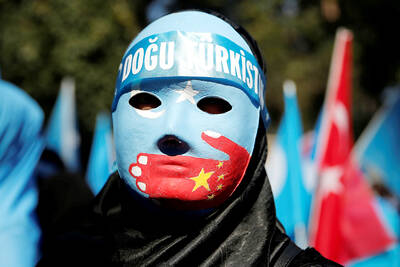
It seems every few days one bumps into one of those “real man” comments in which Taiwan is urged to “face reality” or similar, and “make a deal,” with the speaker implying that soon it will be too late. “Deal” advocates always present themselves as having a superior grip on reality, and the manly ability to make the “hard choice.” Their testosterone-laden language often echoes that of Taiwan sellout advocates. Note that such commentary always specifies a process (“make a deal, work with, make progress”), never the end state of what occupation by a violent authoritarian colonialist state will entail. In
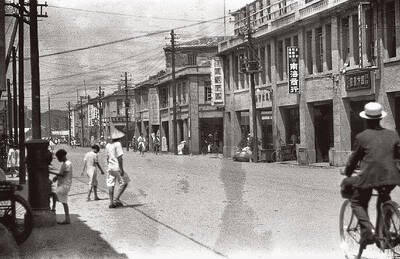
June 1 to June 7 "If all Taiwanese were as afraid of dying as you, then what would happen?” Physician Shih Chiang-nan (施江南) reportedly said this to his wife Chen Chiao-tung (陳焦桐) after she urged him to stop intervening on behalf of Taiwanese soldiers stranded overseas after serving in the Japanese Army during World War II. Shih had clashed with high-ranking officials over the issue, engaged in several heated arguments with Taiwan governor-general Chen Yi (陳儀) and allegedly shouted at general Ko Yuan-fen (柯遠芬), chief of staff of the Taiwan Garrison Command, over

“Taiwan’s Opposition Leader Comes to US With a Message Straight Out of Beijing” read a May 31 headline in the Wall Street Journal. Top US administration officials and members of Congress almost certainly read the WSJ, and if there was a bullet point takeaway that people in Washington should absorb ahead of Chinese Nationalist Party (KMT) Chair Cheng Li-wun’s (鄭麗文) arrival in DC on June 9, that headline is it. The last few columns have discussed this very topic, and the timing is not coincidental. While those top officials likely do not read the Taipei Times, judging by the number


 RSS
RSS