


They were not happy about the size of the stage, but the show must go on and the performers of Beijing People's Art Theater (北京人民藝術劇院) are in Taipei to stage Tea House (茶館) by Lao She (老舍), a classic of modern Chinese drama known for, among other things, the size of its cast.
"This is big theater," said Liang Guan-hua (梁冠華), one of the show's stars, waving his arm at the diminutive stage.
With over 50 named characters spanning three generations, Tea House is a big production, in many ways, and the tiny stage of the Sun Yat-sen Memorial Hall does cramp its style somewhat.
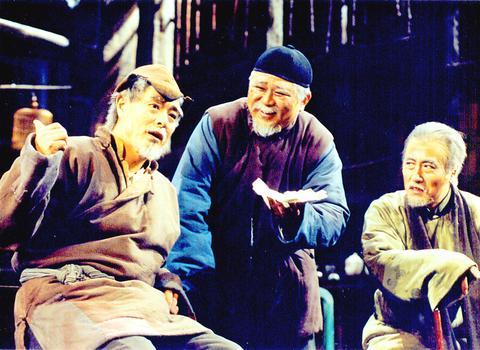
PHOTO COURTESY OF NEW ASPECT
During rehearsals there was talk of removing some of the elaborate props because of the lack of space. There were also some grumbles about the venue's notoriously poor lighting and sound system. Staff at the theater said they were trying to resolve the problems.
Tea House has been a hit in China where it been performed over 200 times, but its appeal in Taiwan is less certain. The play, which was written in 1958, is an established classic but it is also showing its age.
The style it was written in is heavily melodramatic and contemporary politics has also affected how we see the events depicted ? the last days of the Qing Empire, the Nationalist interlude and the rise of communism.
What saves it is Lao She's deep love for old Beijing, its language, its habits and most of all, its common people. These elements lift the
production. Not surprisingly, a lot of top class talent has been brought over from China by the troupe, not least the three lead actors Liang, Pu Chun-xin (
(
Overall, Tea House has an overwhelmingly nostalgic quality, intentionally so, for Lao She clearly loved the old world of Beijing's tea houses, though it was the communist revolution that made him famous which destroyed them.
Tea House in Taipei in 2004 is definitely something of an anachronism, but there is still plenty of charm and skill on display. It won't change the way you see things, but its does, for some brief moments bring back aspects of China that have all but disappeared.
Tea House, which opened yesterday, will run through to July 8 with performances at 7:30pm at the Sun Yat-sen Memorial Hall. Tickets are NT$1,000 to NT$3,000 and are available through ERA ticketing or from the venue.
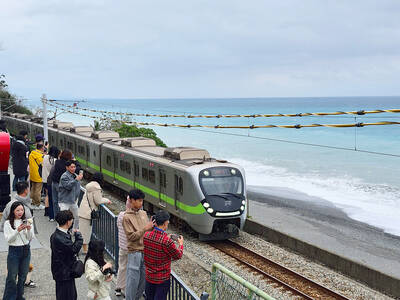
The small platform at Duoliang Train Station in Taitung County’s Taimali Township (太麻里) served villagers from 1992 to 2006, but was eventually shut down due to lack of use. Just 10 years later, the abandoned train station had become widely known as the most beautiful station in Taiwan, and visitors were so frequent that the village had to start restricting traffic. Nowadays, Duoliang Village (多良) is known as a bit of a tourist trap, with a mandatory, albeit modest, admission fee of NT$10 giving access to a crowded lane of vendors with a mediocre view of the ocean and the trains
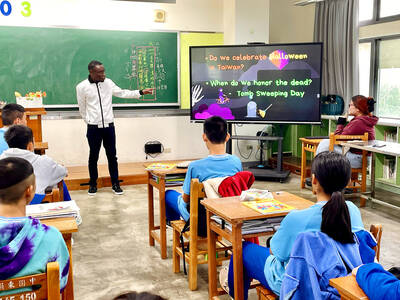
For many people, Bilingual Nation 2030 begins and ends in the classroom. Since the policy was launched in 2018, the debate has centered on students, teachers and the pressure placed on schools. Yet the policy was never solely about English education. The government’s official plan also calls for bilingualization in Taiwan’s government services, laws and regulations, and living environment. The goal is to make Taiwan more inclusive and accessible to international enterprises and talent and better prepared for global economic and trade conditions. After eight years, that grand vision is due for a pulse check. RULES THAT CAN BE READ For Harper Chen (陳虹宇), an adviser

Traditionally, indigenous people in Taiwan’s mountains practice swidden cultivation, or “slash and burn” agriculture, a practice common in human history. According to a 2016 research article in the International Journal of Environmental Sustainability, among the Atayal people, this began with a search for suitable forested slopeland. The trees are burnt for fertilizer and the land cleared of stones. The stones and wood are then piled up to make fences, while both dead and standing trees are retained on the plot. The fences are used to grow climbing crops like squash and beans. The plot itself supports farming for three years.
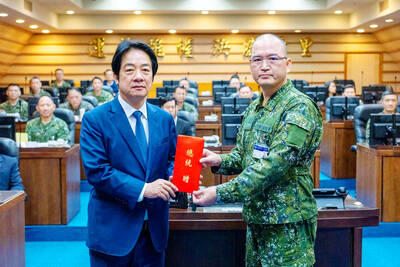
President William Lai (賴清德) on Nov. 25 last year announced in a Washington Post op-ed that “my government will introduce a historic US$40 billion supplementary defense budget, an investment that underscores our commitment to defending Taiwan’s democracy.” Lai promised “significant new arms acquisitions from the United States” and to “invest in cutting-edge technologies and expand Taiwan’s defense industrial base,” to “bolster deterrence by inserting greater costs and uncertainties into Beijing’s decision-making on the use of force.” Announcing it in the Washington Post was a strategic gamble, both geopolitically and domestically, with Taiwan’s international credibility at stake. But Lai’s message was exactly


 RSS
RSS