


Yo-yo Ma at Tanglewood
Yo-yo Ma (Cello) and Various Artists
SOny DVD SVD 46392
The cello makes a strong showing this month, with celebrities Yo-Yo Ma and Rostropovich starring on DVD, and the instrument also featuring prominently on the Master and Commander sound track with, as it happens, Yo-Yo Ma providing the solo cello for the same number that opens Rostropovich's pair of DVDs.
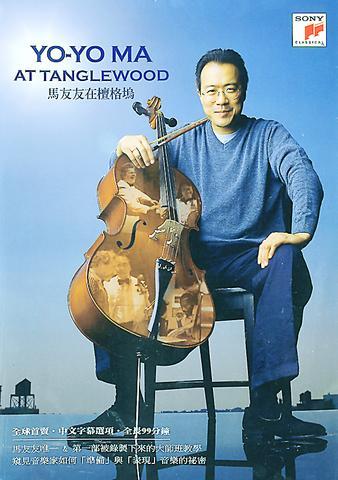
This is a magnificent DVD of youthful Yo-Yo Ma at the music summer school of Tanglewood in Massachusetts 15 years ago. You watch him playing in small groups, rehearsing, coaching students, and then performing complete Beethoven's Sonata for Cello and Piano in G Minor Op.5, No:2 with Emanuel Ax. The DVD ends with part of the premiere of the 1989 Cello Concerto by H.K.Gruber, with the composer in attendance.
Ma points out at one stage that psychologists have argued that people are happiest when they feel special but are also part of a group, and says these conditions are satisfied when playing chamber music. And indeed his own happiness and enthusiasm are truly infectious. There's also an extraordinary scene where Bobby McFerrin suddenly appears and prepares to conduct Beethoven's Seventh Symphony, explaining that his background was in the classics and his father a classical musician. This long DVD (99 minutes) is of outstanding quality, most enjoyable, and in addition excellent value for money. Yo Yo Ma's personality is so sunny that it can equally well be watched for personal pleasure and considered for use in musical education. Classical music has few more persuasive ambassadors than Ma, and this DVD shows him to particular advantage.
Bach Cello Suites
Mstislav Rostropovich (Cello), 2 DVDS
EMI 5 99156 9
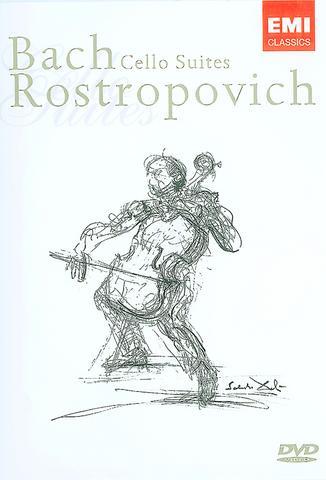
These DVDs show Rostropovich playing all six Bach suites for solo cello in a church in France. This is valuable enough in itself, but what is most memorable are the passages, often quite long, where Rostropovich introduces the music in fireside chats, with illustrations on the piano. There's a general introduction, and then sections where he talks about each suite in turn, each introductory explanation inserted immediately before the performance. The general introduction and the first few sets of specific comment take place in what is clearly one of his homes, but later on you see him at the organ of the church itself. His last introduction, recorded on a cold winter night in the church, is most moving. Here he discusses the Allemande of the last suite, and the time Bach allows before each harmonic change, timing them with a stop-watch. This, says Rostropovich, is like our allotted time between birth and death, and then he goes on to, as it were, thank the great Creator in whom both he and Bach clearly so fervently believe for this benign arrangement. The church setting, needless to say, could hardly be more appropriate.
Argento / Rochberg
Two World Premiere Recordings Taipei Symphony Orchestra, Conductor Felix Chiu-sen Chen
BRAVO 20125
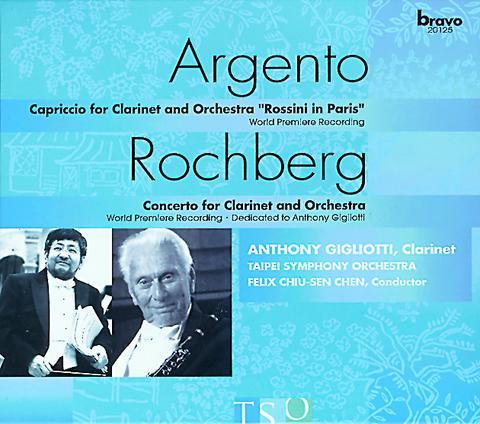
How nice it is to find our own Taipei Symphony Orchestra making the first ever recordings of two modern works! Both are clarinet pieces and feature clarinetist Anthony Gigliotti, with Felix Chiu-sen Chen, sadly no longer in charge of the TSO, conducting. They are attractive works, though neither necessarily reveal their charm on first hearing. The most important of the pieces is US composer George Rochberg's Clarinet Concerto, first performed with this same soloist by the Philadelphia Orchestra in 1996 under Wolfgang Sawallisch, though they didn't record it. Capriccio for Clarinet and Orchestra by another American, Dominick Argento, completes the CD. This 24 BIT digital recording was made by multiple Grammy Award-winner Da-Hong Seetoo, who not long ago won the coveted Best Classical Album of the Year award.
Beau Soir
Emmanuel Pahud (Flute), Mariko Anraku (Harp)
EMI Classics 5 57739 2 0
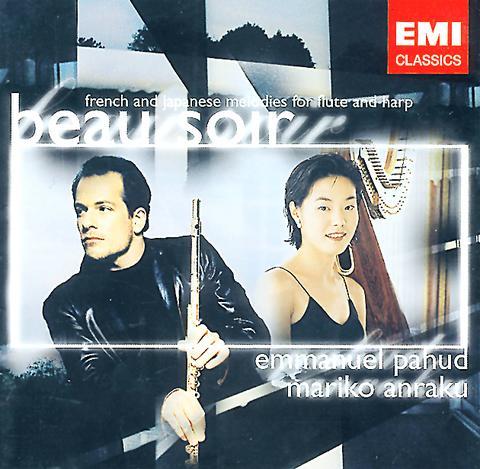
Listening to this CD, you feel it's no coincidence that Mozart wrote his Concerto for Flute and Harp in Paris. The particular combination of instruments feels distinctly French, a sense certainly derived from the music of Debussy, but perhaps going back much further. Be that as it may, this attractive CD is devoted to French and Japanese music for the two instruments. It's beautifully recorded, and if you listen to it while eating dinner you may well enjoy the illusion that you are some minor Central Asian potentate of yore being entertained in his carpeted tent by a private duo, ready to bow out at the wave of a princely hand. Many of the items inevitably have been adapted from pieces written for different instruments.
Master and Commander
Original Sound Track
Decca 475 398-2
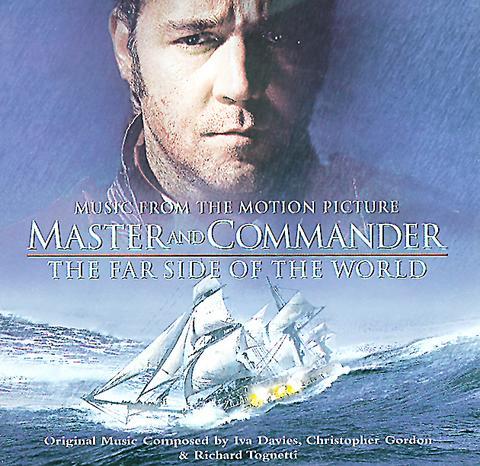
There's quite a lot of classical and traditional Irish music on this evocative Original Sound Track, as those who remember Russel Crowe and Paul Bettany miming playing duets in the captain's cabin in the film will expect. Irish fiddle, pipe and drum numbers also feature prominently, with Richard Tognetti, one of the score's composers, himself on violin on these occasions. The film was strong on using music that was current in the Napoleonic Wars era, together with specially composed atmospheric material. Consequently you have short extracts from Bach, Corelli and Mozart. The extraordinary thing, though, is that the most catchy tune of all, and the one that in the event was used to end the movie, was not a specially composed item but an arrangement of a Spanish-style piece by the 18th century composer Luigi Boccherini (track 14).
This is, all in all, a very attractive product.
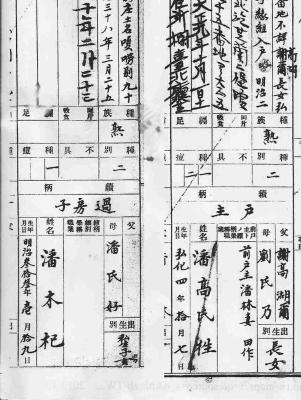
Feb. 9 to Feb.15 Growing up in the 1980s, Pan Wen-li (潘文立) was repeatedly told in elementary school that his family could not have originated in Taipei. At the time, there was a lack of understanding of Pingpu (plains Indigenous) peoples, who had mostly assimilated to Han-Taiwanese society and had no official recognition. Students were required to list their ancestral homes then, and when Pan wrote “Taipei,” his teacher rejected it as impossible. His father, an elder of the Ketagalan-founded Independence Presbyterian Church in Xinbeitou (自立長老會新北投教會), insisted that their family had always lived in the area. But under postwar
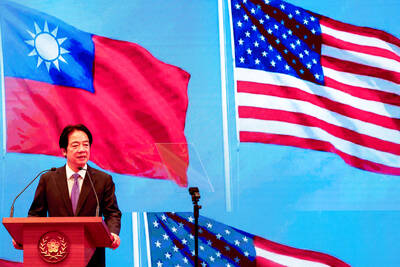
In 2012, the US Department of Justice (DOJ) heroically seized residences belonging to the family of former president Chen Shui-bian (陳水扁), “purchased with the proceeds of alleged bribes,” the DOJ announcement said. “Alleged” was enough. Strangely, the DOJ remains unmoved by the any of the extensive illegality of the two Leninist authoritarian parties that held power in the People’s Republic of China (PRC) and Taiwan. If only Chen had run a one-party state that imprisoned, tortured and murdered its opponents, his property would have been completely safe from DOJ action. I must also note two things in the interests of completeness.
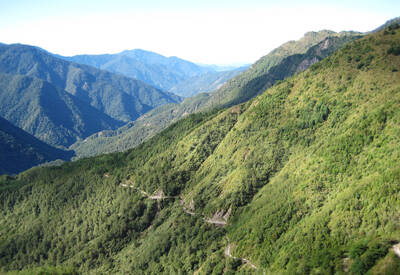
Taiwan is especially vulnerable to climate change. The surrounding seas are rising at twice the global rate, extreme heat is becoming a serious problem in the country’s cities, and typhoons are growing less frequent (resulting in droughts) but more destructive. Yet young Taiwanese, according to interviewees who often discuss such issues with this demographic, seldom show signs of climate anxiety, despite their teachers being convinced that humanity has a great deal to worry about. Climate anxiety or eco-anxiety isn’t a psychological disorder recognized by diagnostic manuals, but that doesn’t make it any less real to those who have a chronic and
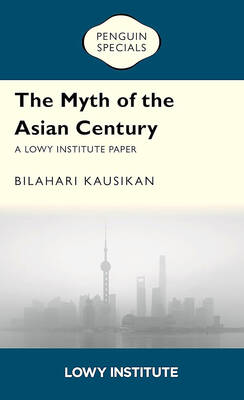
When Bilahari Kausikan defines Singapore as a small country “whose ability to influence events outside its borders is always limited but never completely non-existent,” we wish we could say the same about Taiwan. In a little book called The Myth of the Asian Century, he demolishes a number of preconceived ideas that shackle Taiwan’s self-confidence in its own agency. Kausikan worked for almost 40 years at Singapore’s Ministry of Foreign Affairs, reaching the position of permanent secretary: saying that he knows what he is talking about is an understatement. He was in charge of foreign affairs in a pivotal place in


 RSS
RSS