


Wasabi is actually two different restaurants located next door to one another in the Taipei 101 Mall, a dining bar and a buffet. This review regards the buffet. While the two share the same kitchen and staff and even several dishes, they are distinct dining experiences. The dining bar is a straightforward restaurant, but the buffet is billed as a "Japanese food festival." It's an appropriate billing.
The Formosa Regent Hotel, which owns and operates Wasabi, has essentially brought a Japanese night market indoors and made it upscale. That is, as upscale as a buffet can be made. There is a kind of wide-eyed ravenousness among all buffet-goers, and even the highbrow mall patrons who perambulate into Wasabi quickly start salivating and circling the buffet areas. The fact that they're in a sleek interior of dark woods and vertical louver walls and carrying elegant flatware makes them look no less like a pack of dogs. It's not surprising, given all that's on offer.
The first buffet area is a fisherman's haul of shrimp, sushi, sashimi and fish-egg rolls prepared fresh on the other side of the counter and laid in individual wicker baskets.
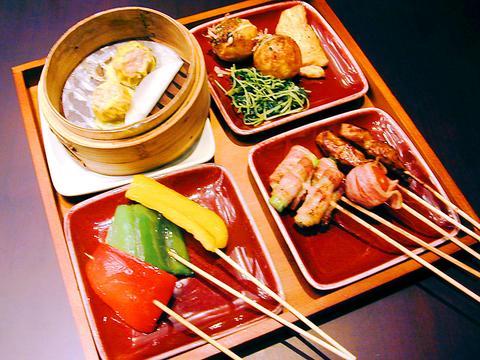
PHOTO: DAVID MOMPHARD, TAIPEI TIMES
But plan accordingly; there are four other buffets. One includes large fried octopus balls and all manner of grilled things. Of note are the bacon-wrapped cherry tomatoes and asparagus, but be sure to ask for items fresh from the grill. Another area offers a variety of noodles too numerous to name and another offers dim sum, several bite-sized desserts and fruit, including mangosteens with the tops cut off. I forgot a spoon but was quickly brought one by a staffer who noticed me trying to suck my mangosteen's insides out.
Since you're already feeding from the trough, go ahead and be a pig. Dish up a bowl of Movenpick ice cream and choose your topping. Don't forget a coffee or cappuccino available at the push of a button.
There are, by most accounts, too many items here to sample in one sitting. But the bottom line is whether a buffet -- even one this good -- is worth NT$800. If you're hungry and in the mood to spend a couple hours sampling everything from soba noodles to candy-coated shrimp -- or if you're a fan of sushi and sashimi -- it's worth it (at least it feels so afterward). If you're not in the "food festival" mood, save yourself a bit of cash and step next door.


Taiwan’s English education system is being pulled apart by three opposing forces. Bilingual Nation 2030 pulls students toward English and global communication. Artificial Intelligence (AI) readiness pulls them toward digital judgment, verification and AI-mediated work. But Taiwan’s old exam culture pulls them back toward memorization, grammar drills, timed reading and correct answers. If the education system keeps using old exams to define success, it risks producing graduates who are neither genuinely bilingual nor genuinely AI-ready, but trained for tasks machines can already perform. The first force is Bilingual Nation 2030. Launched in 2018, the policy aimed to “help Taiwan’s workforce connect

“Taiwan’s Opposition Leader Comes to US With a Message Straight Out of Beijing” read a May 31 headline in the Wall Street Journal. Top US administration officials and members of Congress almost certainly read the WSJ, and if there was a bullet point takeaway that people in Washington should absorb ahead of Chinese Nationalist Party (KMT) Chair Cheng Li-wun’s (鄭麗文) arrival in DC on June 9, that headline is it. The last few columns have discussed this very topic, and the timing is not coincidental. While those top officials likely do not read the Taipei Times, judging by the number
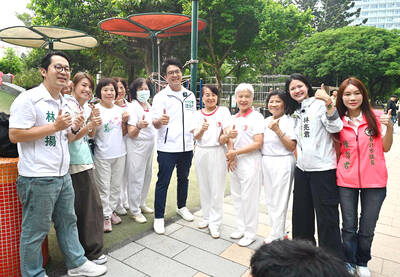
With weighty, anxiety-inducing geopolitical topics dominating the headlines, checking in on the wild and weird state of local politics can take some of the edge off. This November’s elections will determine who will be in charge of fixing potholes in your neighborhood, not the potholes in Taiwan’s complicated geopolitical space. Recently, after an online interview with a Taipei-based journalist, I commented that Taipei journalists never go further than the MRT can take them. He laughed and agreed. Naturally, the Taipei mayoral race is eating up much of the press attention. TAIPEI CITY Democratic Progressive Party (DPP) candidate Puma Shen (沈伯洋) has
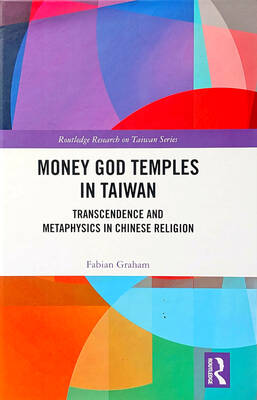
As someone who normally steers clear of books with “transcendence” or “metaphysics” in their subtitles, this reviewer — a casual observer of local belief systems since the 1990s — found Fabian Graham’s Money God Temples in Taiwan a challenging read. Those who’ve only dipped their toes into temple culture will likely need to parse several sections with special care if they’re to keep up with the author, a British ethnographic researcher whose previous books have investigated religious practices among ethnic Chinese in Southeast Asia. This scholarly volume examines a facet of Taiwan’s religious landscape that didn’t exist a century ago, and


 RSS
RSS