


The Lord of the Rings: The Return of the King won five trophies, including best film, at the Orange British Academy of Film and Television Arts Awards on Sunday, continuing the fantasy epic's seemingly unstoppable march toward Oscar victory at the end of the month.
In accepting the top prize, an exultant Peter Jackson, The Lord of the Rings' New Zealand-born director, honored the movie's British source in novelist J.R.R. Tolkien.
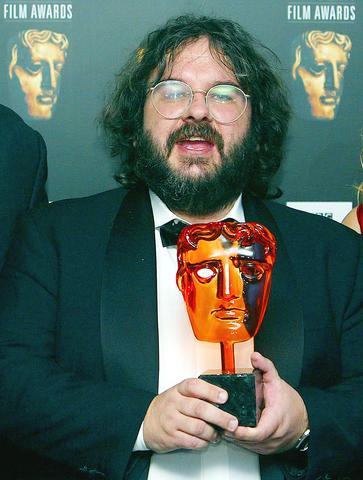
PHOTO: REUTERS
"We were a bunch of Kiwis and some Australians" who brought to the screen "one of Britain's most beloved books -- a fantastic property," Jackson said.
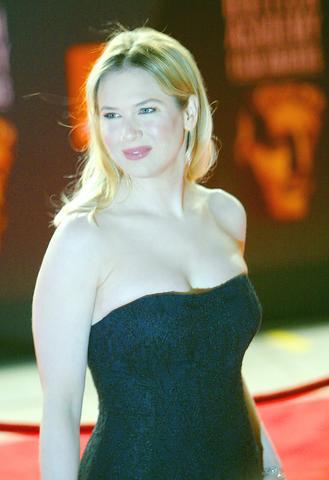
PHOTO: AFP
Return of the King was nominated for 12 of the awards, known as BAFTAs; it also won best cinematography, adapted screenplay and special effects, as well as the film of the year award, voted by members of the public.
It beat Anthony Minghella's Civil War saga Cold Mountain, Sofia Coppola's quirky Lost In Translation, Tim Burton's whimsical Big Fish and Peter Weir's seafaring saga Master and Commander: The Far Side of the World to take the best-film prize.
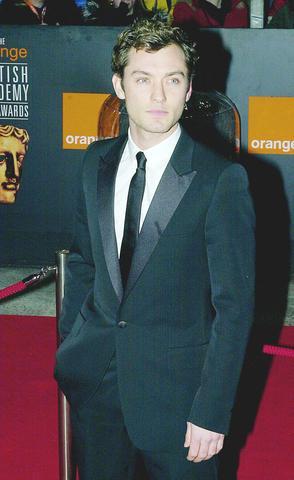
PHOTO: AFP
Master and Commander won four trophies, including best director for its Australian director, Weir.
Adding to the internationalism of a ceremony that is often seen to favor British nominees, best actor and actress went to the two American stars of Lost In Translation: Bill Murray, who is up for an Oscar for the same performance on Feb. 29, and Scarlett Johansson.
Johansson thanked the British Academy "for acknowledging ... a 19-year-old American actress." She went on to thank her mother, Melanie, for "taking me to auditions and buying me hot dogs afterwards."
Murray was one of several major winners who were not present to accept their awards. Murray's faxed acceptance speech was read out by writer-director Coppola, who blushed visibly at the glowing tributes paid to her.
Oscar frontrunner Renee Zellweger was named best supporting actress for her role as farmhand Ruby in Cold Mountain, which won a second award for its music -- its only prizes from 13 nominations.
Among the more popular winners was Englishman Bill Nighy, named best supporting actor for his amiably dissolute rock star in Love Actually.
"You've made an old rocker very happy," Nighy told the black-tie audience at a movie theater in London's Leicester Square. "I can't wait to tell the band."
As usual, the awards were a mixture of the predictable and the utterly surprising. Among the latter was American writer-director Tom McCarthy, who won best original screenplay for the little-seen independent American film "The Station Agent."
"I'm beyond stunned," said McCarthy. "Our movie doesn't even open (in Britain) until March."
The British awards have become an essential pre-Oscars stop since they were moved in 2000 from April to a February date preceding the Academy Awards.
But although many regard the BAFTAs as an Oscar bellwether, it's hard to make that claim in a year in which several BAFTA winners -- including Johansson, McCarthy and Lord of the Rings cinematographer Andrew Lesnie -- are not up for Oscars.
The prize for best British film went to Touching the Void, Kevin Macdonald's powerful film about an ill-fated mountaineering expedition. It was the first time this prize has gone to a documentary.
The award for best film not in the English language went to English director Michael Winterbottom's In This World, the wrenching story of two Afghan refugees and their harrowing attempt to make it across Asia and Europe into England.
Emily Young, writer-director of Kiss of Life, won a special achievement award for a first-time filmmaker.
The Fellowship of the Academy, a special award and BAFTA's highest honor, went to John Boorman, the director of Deliverance, Point Blank, and Hope and Glory. Boorman received the night's sole standing ovation.
The ceremony was hosted by Stephen Fry, the erudite English actor/writer/director who made a few gentle jabs at the fact that his own film, the Evelyn Waugh adaptation Bright Young Things, was overlooked in the BAFTA nominations.
Kicking things off, he joked that it was "a record year for the colon" with the appearance of The Lord of the Rings: The Return of the King, Master and Commander: The Far Side of the World, and Pirates of the Caribbean: The Curse of the Black Pearl, among the 2003 releases.
The ceremony was sprinkled with Hollywood stars, including Zellweger, Johansson, Holly Hunter and Johnny Depp, who arrived late and made a last-minute dash up the red carpet.
The awards are sponsored by the cell phone company Orange.

After Jurassic Park premiered in 1993, people began to ask if scientists could really bring long-lost species back from extinction, just like in the hit movie. The idea has triggered “de-extinction” debates in several countries, including Taiwan, where the focus has been on the Formosan clouded leopard (designated after 1917 as Neofelis nebulosa brachyura). National Taiwan Museum’s (NTM) Web site describes the Formosan clouded leopard as “a subspecies endemic to Taiwan…it reaches a body length of 0.6m to 1.2m and tail length of 0.7m to 0.9m and weighs between 15kg and 30kg. It is entirely covered with beautiful cloud-like spots

Just after 6am, I walked up to the ticket gate at Taipei Main Station and entered the Taiwan Railway platform without scanning any ticket; instead, I flashed the Sanrio Fun Rail pass on my phone to the gate worker and was admitted. I found my train and prepared to board. My destination? This very same station. I was embarking on a 13-hour journey on one of two round-the-island trains operated by ezTravel. They run each day, one counterclockwise around the island and one clockwise. They differ in a number of ways from an ordinary Taiwan Railway train and can make for
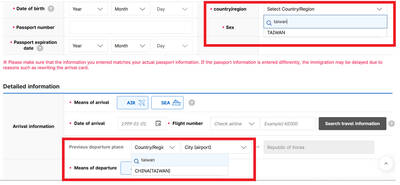
Jason Han says that the e-arrival card spat between South Korea and Taiwan shows that Seoul is signaling adherence to its “one-China” policy, while Taiwan’s response reflects a reciprocal approach. “Attempts to alter the diplomatic status quo often lead to tit-for-tat responses,” the analyst on international affairs tells the
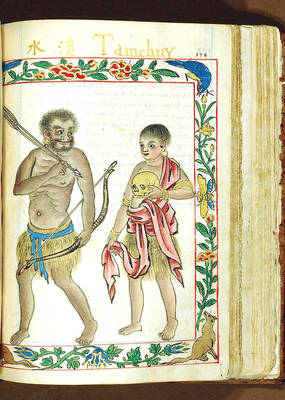
The Portuguese never established a presence on Taiwan, but they must have traded with the indigenous people because later traders reported that the locals referred to parts of deer using Portuguese words. What goods might the Portuguese have offered their indigenous trade partners? Among them must have been slaves, for the Portuguese dealt slaves across Asia. Though we often speak of “Portuguese” ships, imagining them as picturesque vessels manned by pointy-bearded Iberians, in Asia Portuguese shipping between local destinations was crewed by Asian seamen, with a handful of white or Eurasian officers. “Even the great carracks of 1,000-2,000 tons which plied


 RSS
RSS