


The finished design for the World Trade Center memorial site will build on the original concept of twin voids marking the location and outlines of the twin towers, but add lusher landscaping, create an underground center that will house artifacts from the attack and establish a cultural center at the recreated intersection of Fulton and Greenwich streets.
State and city officials unveiled the design yesterday to a public that has waited anxiously and eagerly for the architectural gesture that might help bind the wounds of Sept. 11, 2001, in the place where they run deepest.
Both the tree-filled landscape and the voids, with pools and cascading water, were crucial elements in winning over the 13-member jury last week, after a nine-month international competition that drew 5,201 entries. But the winning design has since been elaborated upon by Michael Arad, the original architect; Peter Walker, the newly arrived landscape architect; and Daniel Libeskind, the master planner working for the Lower Manhattan Development Corp.
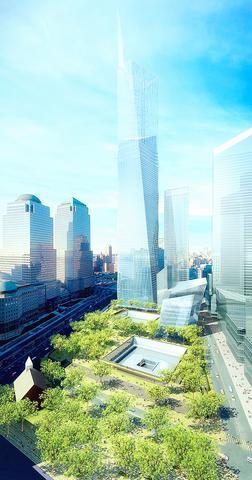
PHOTO: NY TIMES
They have proposed an underground space called the Memorial Center, perhaps 0.8 hectares or more in extent, according to those who have seen the design. It is there that the twisted, resilient, evocative vestiges of the attack -- fire trucks, steel columns, maybe even Fritz Koenig's sculpture Sphere for Plaza Fountain -- can finally return.
Visitors to this center will enter by walking down a ramp that will take them past exposed remnants of the slurry wall, almost as if they were departing the bustle of Lower Manhattan and piercing time. This journey into memory would begin where the World Trade Center ended, at the rugged slurry wall that defined and preserved the towers' foundations.
At the end of the long descent will be an underground space some 9m high. Twelve meters deeper below ground, at the bottom of the building foundation where the north tower stood -- and open to the sky through the void above -- will be a stone container to hold the unidentified remains of victims of the attack.
The effort to refine all the elements and to produce models and renderings that would reflect the final intent of the jurors and the memorial designers has taken the architects from one coast (Walker's office is in Berkeley, California) to the other (Libeskind's office is three blocks from ground zero).
Perhaps the most emotional moment in the weeklong redesign occurred last Friday when Arad arrived at Kennedy International Airport on a flight from San Francisco and was taken to Hangar 17, where trade center artifacts are kept by the Port Authority of New York and New Jersey. Several of the people who accompanied the young architect on this visit said he was deeply moved.
The question of how such objects -- including police cars, fire trucks, steel columns and parts of the television antenna -- might meaningfully be incorporated into a memorial was unresolved in Arad's original design, which centered on two square voids, 9m deep, marking the outline and location of the twin towers.
It remains to be seen whether the public will embrace the solution of an underground Memorial Center at the southwest corner of the memorial site, bounded by West and Liberty streets. The plan also calls for additional cultural space above ground, at the northeast corner of the site, Fulton and Greenwich streets.
Although the development corporation made no announcement on Tuesday, renderings of the finished design were obtained by news organizations after they were mistakenly sent out by the European Pressphoto Agency, based in Frankfurt, Germany.
The agency's New York bureau chief, Matt Campbell, said an editor in Frankfurt sent them out in error. A warning to clients not to publish the pictures immediately, known as an embargo, was not contained with the information accompanying the images. He said the agency tried to retract the images but that it was too late to do so once they were in wide circulation.
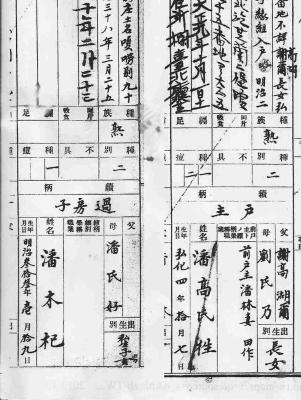
Feb. 9 to Feb.15 Growing up in the 1980s, Pan Wen-li (潘文立) was repeatedly told in elementary school that his family could not have originated in Taipei. At the time, there was a lack of understanding of Pingpu (plains Indigenous) peoples, who had mostly assimilated to Han-Taiwanese society and had no official recognition. Students were required to list their ancestral homes then, and when Pan wrote “Taipei,” his teacher rejected it as impossible. His father, an elder of the Ketagalan-founded Independence Presbyterian Church in Xinbeitou (自立長老會新北投教會), insisted that their family had always lived in the area. But under postwar
In 2012, the US Department of Justice (DOJ) heroically seized residences belonging to the family of former president Chen Shui-bian (陳水扁), “purchased with the proceeds of alleged bribes,” the DOJ announcement said. “Alleged” was enough. Strangely, the DOJ remains unmoved by the any of the extensive illegality of the two Leninist authoritarian parties that held power in the People’s Republic of China (PRC) and Taiwan. If only Chen had run a one-party state that imprisoned, tortured and murdered its opponents, his property would have been completely safe from DOJ action. I must also note two things in the interests of completeness.
Taiwan is especially vulnerable to climate change. The surrounding seas are rising at twice the global rate, extreme heat is becoming a serious problem in the country’s cities, and typhoons are growing less frequent (resulting in droughts) but more destructive. Yet young Taiwanese, according to interviewees who often discuss such issues with this demographic, seldom show signs of climate anxiety, despite their teachers being convinced that humanity has a great deal to worry about. Climate anxiety or eco-anxiety isn’t a psychological disorder recognized by diagnostic manuals, but that doesn’t make it any less real to those who have a chronic and
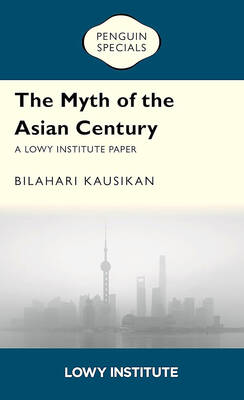
When Bilahari Kausikan defines Singapore as a small country “whose ability to influence events outside its borders is always limited but never completely non-existent,” we wish we could say the same about Taiwan. In a little book called The Myth of the Asian Century, he demolishes a number of preconceived ideas that shackle Taiwan’s self-confidence in its own agency. Kausikan worked for almost 40 years at Singapore’s Ministry of Foreign Affairs, reaching the position of permanent secretary: saying that he knows what he is talking about is an understatement. He was in charge of foreign affairs in a pivotal place in


 RSS
RSS