


Legend loves this patch of the Great Hungarian Plain where some believe Attila the Hun was buried in the fifth century.
Arguably the world's greatest race horse, a mare called Kincsem who won every race she ran, was born here in 1874 and more recently a rumor spread that the ground radiates energy that heals anything from headaches to heartbreak.
Janos Kocsi bought 1,000 hectares of land here after the fall of communism to breed race horses.
The sturdily-built eighth-generation butcher says he is good friends with God and never had faith in so-called new age teachings.
But he also says that he became aware of the strange power in the soil over lunch with his family in February 2000.
"I felt something pour out from my hand and my sister suddenly complained that her hand felt hot and heavy. I could lift her hand" without touching it, he remembers.
The next day he drove to Budapest, went to the market and worked the same trick on his friends.
"I tried 40 butchers and every one had the same experience. We felt stupid. So I called an expert on strange phenomena at the Hungarian science institute and he told me there was a very strong energy in the soil here.
"People started to tell stories that I had healing powers."
The sick and the stressed started coming, followed rapidly by the sceptics.
The Pest County tourism center said last year 350,000 people visited Tapioszentmarton, a few streets surrounded by unfenced fields, many of them to sit on a slight hill on Kocsi's land.
They look like statues against the low winter sky. Some are wrapped in blankets, others half asleep on the benches.
"It is our third visit since last year, it helps for everything, tension, blood pressure. It makes you feel better," said a pensioner from Hamburg.
Ari Kormi, a Finnish businessman, was pacing up and down, following invisible lines.
"I had a heart attack 10 days ago. And now I come every day for an hour and a half to see if this can help. There has to be something, they say when planes fly over here some of their instruments go haywire," he said.
According to Kocsi energy fields run like "a spider's web" around the small mound Hungarians call Attila's Hill and he walked for weeks, hand outstretched, to find them. His wife and daughters thought he had gone mad.
"Three years ago an old man was brought here by his two doctor sons, he had been sick for six years. He suffered from headaches and if he turned his head to the right too quickly he would faint."
The man recovered and soon afterwards a young girl's myopia disappeared after she came here, Kocsi claims.
Though most people come simply to absorb whatever the earth has to offer, others make appointments to see him.
His hands are huge, cuffed with a gold Rolex and bracelet, and when he moves two fingers for a few minutes, visitors feel a faint shock in their hands, spreading down to their feet.
Tibor Legat, a journalist from the Hungarian weekly politics magazine, Magyar Narancs, came to uncover a hoax but he too fell under the spell.
"I thought it was very funny that people came here to recharge themselves with energy, but when he lifted up my hand I just started laughing, I felt completely euphoric," he said.
"Everybody wanted to prove that it was a joke, a bad way of stealing money from the poor," said Kocsi, who is wealthy and charges visitors 500 forint (two euros) to come onto his property, whether they come for healing or to see the horses.
Gyorgy Egerly, a Hungarian scientist, said: "It is very hard to tell what is happening here because there have been no double blind experiments. But there are places all over the world where people feel different and really get healthier."
"There are many elements missing from our textbooks. It is possible that the rotating matter under the soil is stronger here, it could be an explanation."
Kocsi will not try to explain it, and has no idea whether his powers desert him when he leaves Hungary because his fear of flying keeps him near home.
"I will die a butcher. What do I know of these other things, if I tried to tell you, I would lie, pretend."
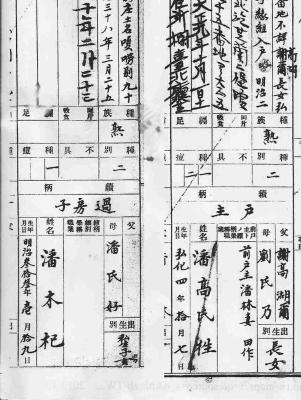
Feb. 9 to Feb.15 Growing up in the 1980s, Pan Wen-li (潘文立) was repeatedly told in elementary school that his family could not have originated in Taipei. At the time, there was a lack of understanding of Pingpu (plains Indigenous) peoples, who had mostly assimilated to Han-Taiwanese society and had no official recognition. Students were required to list their ancestral homes then, and when Pan wrote “Taipei,” his teacher rejected it as impossible. His father, an elder of the Ketagalan-founded Independence Presbyterian Church in Xinbeitou (自立長老會新北投教會), insisted that their family had always lived in the area. But under postwar

In 2012, the US Department of Justice (DOJ) heroically seized residences belonging to the family of former president Chen Shui-bian (陳水扁), “purchased with the proceeds of alleged bribes,” the DOJ announcement said. “Alleged” was enough. Strangely, the DOJ remains unmoved by the any of the extensive illegality of the two Leninist authoritarian parties that held power in the People’s Republic of China (PRC) and Taiwan. If only Chen had run a one-party state that imprisoned, tortured and murdered its opponents, his property would have been completely safe from DOJ action. I must also note two things in the interests of completeness.
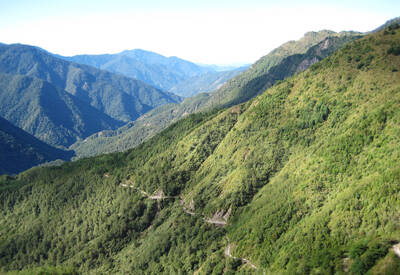
Taiwan is especially vulnerable to climate change. The surrounding seas are rising at twice the global rate, extreme heat is becoming a serious problem in the country’s cities, and typhoons are growing less frequent (resulting in droughts) but more destructive. Yet young Taiwanese, according to interviewees who often discuss such issues with this demographic, seldom show signs of climate anxiety, despite their teachers being convinced that humanity has a great deal to worry about. Climate anxiety or eco-anxiety isn’t a psychological disorder recognized by diagnostic manuals, but that doesn’t make it any less real to those who have a chronic and
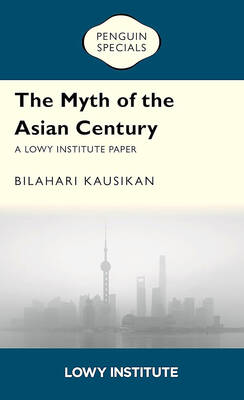
When Bilahari Kausikan defines Singapore as a small country “whose ability to influence events outside its borders is always limited but never completely non-existent,” we wish we could say the same about Taiwan. In a little book called The Myth of the Asian Century, he demolishes a number of preconceived ideas that shackle Taiwan’s self-confidence in its own agency. Kausikan worked for almost 40 years at Singapore’s Ministry of Foreign Affairs, reaching the position of permanent secretary: saying that he knows what he is talking about is an understatement. He was in charge of foreign affairs in a pivotal place in


 RSS
RSS