

Local heavy metal label, Rock Empire (
While the popular heavy metal label's previous master class -- which was hosted by Neil Zaza, a touring representative for guitar manufacturing giant Peavey -- was not as successful as organizers had hoped, tickets for Friedman's are selling well and the gigs are expected to be sellouts.
Better known for his work with thrash-metal combo, Megadeth, Friedman has, in fact, been on the cutting edge of the shred-guitar music scene since the 1980s, releasing his first solo effort, Dragon's Kiss, in 1988.
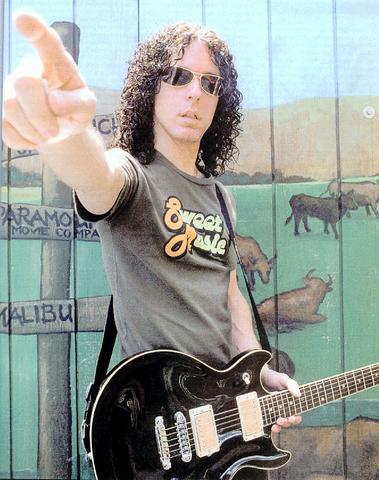
PHOTO COURTESY OF ROCK EMPIRE MUSIC
Friedman first cut his teeth in the world of shred-guitar in 1987, when, clad in tight leather pants and bedecked in a bandanna and other such kitsch 1980s attire, he teamed up with Jason Becker to form the neo-classical-metal combo, Cacophony. Following the release of the band's debut album, Speed Metal Symphony -- an album packed with warp-speed riffs and edge-of-the-seat solos -- Friedman quickly became an air-guitarists' wet dream and an icon for the speed-metal hardcore.
Cacophony imploded in 1989, and while Becker went on to replace Steve Vai in David Lee Roth's backup band, Friedman went on to join thrash-metal quartet Megadeth, where he remained for 10 years.
His 1990 debut album with the band, Rust in Peace was to prove Friedman's crowning moment. The album is still regarded by many as one of the most technically accomplished thrash-metal albums of all time. Friedman stunned heavy/thrash-metal fans in 1992 when he teamed up with Japanese star Kitaro for the dreamy, Asian-tinged instrumental album Scenes. After 10 years and six albums Friedman parted company with Megadeth in 2000 in order to pursue his solo career.
Earlier this year Friedman released his fifth and first pre-Megadeth solo effort, Music for Speeding, a fiery instrumental rock album on which Friedman shreds his guitar through what one popular UK music magazine dubbed "rock 'yer ass off straight shootin' no bullshit rock."
Shred guitarists who can't make Friedman's gigs need not worry, as Rock Empire's master classes will continue in mid-December, when Reign of Terror's Joe Stump will be bringing his own brand of neo-classical heavy metal to Taipei and Taichung.
Marty Friedman will be appearing in Taipei at 7:30pm tonight at the The Youth Cultural and Artistic Center (
7:30pm. On Sunday, Friedman will be performing at Blue Fantasy's Wufu branch (
Tickets for all shows cost NT$500 and are available at the door. For further information call (02) 3765 1861.
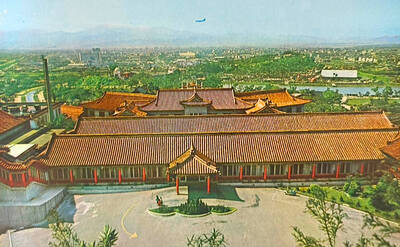
Sept. 21 to Sept. 27 When the Shah of Iran became the Grand Hotel’s (圓山大飯店) first head-of-state guest in 1958, it was hardly the landmark it is known as today. A Chinese-style, two-story structure with just 36 rooms built on the former site of the Taipei Shinto Shrine, the hotel was still referred to as its original name, the Taiwan Hotel (台灣大飯店), in an official newsreel detailing Mohammad Reza Pahlavi’s visit. The video lavished praise on the hotel, pointing out its “beautiful architecture and magnificent appearance” and noting that it had just been renovated. After being greeted personally by then-president
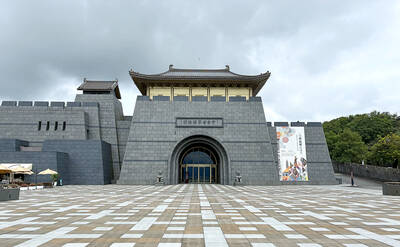
The one-day trip begins at the geographical center of Taiwan: Puli Township’s (埔里) Hutou Mountain Geographic Center of Taiwan Monument (臺灣地理中心碑), embedded at the foot of Nantou County’s dense forested slopes. It sits entrenched in forest vegetation amid the tall, spindly bodies and spiky heads of the betel nut trees; the air is cool, and its surroundings are mostly silent save the sounds of late-season cicadas. Roughly two minutes from the first destination, and after a bend in Yongfeng Road (永豐路), there’s a glimpse of a resplendent golden dome on the horizon. It’s the cap of the 135m-tall main building of the
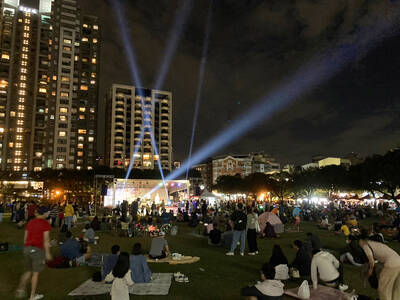
Two years ago, the music came to an abrupt halt at one of Taiwan’s largest independent music festivals. The problem: a single noise complaint. The DJ’s high-energy tunes had exceeded the allowed sound limit. As per regulation, the performance took a several-minute pause and then continued, this time at a slightly lower decibel. And then last year, the same event, Compass Taichung International Food and Music Festival, was unexpectedly canceled due to sponsorship issues. Such are the woes of trying to organize outdoor music festivals these days. “It makes it so much harder to put on a festival,” said Courtney Donovan Smith, co-publisher
Focus Taiwan reported on the Kuai Kuai land sale, with a narrative centered on the famed snack factory’s workers. But buried in it was a glimpse of the way Taiwan’s land markets are being relentlessly reshaped by the multiple pressures of sagging traditional industry fortunes and surging AI and related electronics industries. Kuai Kuai’s owner, the San-ti Group, sold the factory and the land it sits on in Taoyuan’s Zhongli District (中壢). According to Taoyuan Confederation of Trade Unions Secretary-General Tracy Sun (孫語謙), who was quoted in the piece, rising land prices, especially for industrial land, tempt factory owners to sell


 RSS
RSS