


Even as Allied troops were liberating France in the summer of 1944, General Charles de Gaulle was constructing the myth that the French had heroically resisted German occupation. It was to prove a hardy myth, one that helped France bury the humiliation of its recent past and face the future with some unity. Yet when the myth began crumbling in the 1970s, it was gradually replaced by a no less simplistic version of history: that France was a nation of collaborators who stood by indifferently as tens of thousands of Jews were deported to Nazi death camps.
To those trapped in the perennial resistance-versus-collaboration debate, Robert Gildea has done a great service in his new book, Marianne in Chains: Daily Life in the Heart of France During the German Occupation. Instead of looking at wartime France top-down, he has focused on grass-roots experiences in a tranche of western France stretching from Tours along the Loire Valley to the Atlantic port of St.-Nazaire. And he has done so by studying departmental, municipal and parish records, perusing private journals and listening to aged survivors.
Gildea's considerable achievement is to blur the debate.
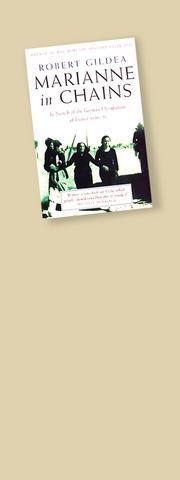
"What is most striking about the French under the occupation is not how heroic or villainous they were but how imaginative, creative and resourceful they were in pursuit of a better life," he writes. In other words, recognizing that alone they could not drive out the Germans, they tried to survive as best they could. This meant holding on to jobs, finding food, helping relatives and, where possible, having some fun. It also meant coexisting with the occupiers, for which informal rules were drawn up.
"Socially, it was acceptable to drink with a German in a bar but not to invite him home," Gildea writes. "If a German was billeted on a family, it was not thought proper that he should dine at the family table. Flirting with Germans was normal and to have sex with them for money was not a crime, particularly as the German military was very worried about its men catching V.D. Exaggerated merrymaking by French women and German soldiers was frowned on, however, while affairs with Germans by married women such as wives of POWs was beyond the pale on every count."
At first, French officials, from prefects and subprefects to mayors and municipal councilors, served as buffers between the German military and the population at large. Further, since many had held office in the late 1930s, they provided continuity. Outside cities like Tours, Angers and Nantes, the region's mood was traditionally conservative. And this led many French to share the view of Marshal Henri Philippe Petain, the head of the collaborationist Vichy regime, that communism posed a greater threat to France than Germany. Unsurprisingly, the Resistance, dominated by communists until late 1943, made little headway in the zone.
Gildea, a professor of modern European history at Oxford University, skillfully details the constant give-and-take between occupier and occupied. For instance, Germany did not ban labor unions and it even tolerated strikes over wages, but it insisted on sending skilled Frenchmen to work in Germany. Similarly, it permitted steamy movies (which Vichy considered immoral), but it punished heckling during pro-Nazi newsreels. On the French side, opposition took the form of graffiti or painted "V" signs or wreaths laid with a message, but nothing more daring.
By mid-1942, however, as the Gestapo began replacing German military administrators, French officialdom's room for maneuver disappeared. Already in July 1942, French police in the region took part in the arrest of hundreds of Jews, who were sent to the Drancy transit camp near Paris. Gildea quotes a police report warning that "many are not hiding their sympathy for those who appear to be victims of persecution." But others, Gildea adds, moved quickly to take over property abandoned by local Jews. Soon, though, not only "Judeo-Bolshevik demons" but anyone suspected of opposition was liable to arrest and deportation.
Just as Gildea tracks how local politicians adjusted to the occupation, he again follows them preparing for the liberation. Many mayors, for example, resigned their jobs. Other officials began making discreet contact with Resistance groups in France and abroad. "Officials who wanted to survive needed to play a double game, giving the appearance of loyalty while working in the dark to protect French interests," Gildea notes. The French response to Allied bombing of industrial zones was also ambivalent: lamented, but not opposed.
Once the region was freed in August 1944, de Gaulle's envoys quickly ratified all but the most detested officials in their posts as a way of forestalling any communist grab for power. Some summary justice took place -- a few lynchings and many women's heads shaven for "horizontal collaboration" with the enemy -- but amid food shortages, day-to-day survival soon took priority. And in Gildea's view, the general response to liberation was one of disappointment. Life for returning prisoners of war and deportees (and a few Jews who had survived in hiding) proved particularly difficult.
In fact, as Marianne in Chains so powerfully demonstrates, little was quite as it was remembered five decades later. "Franco-German relations under the occupation were not always as brutal or even one-sided as they have often been portrayed," Gildea writes. Nor was the Vichy regime as authoritarian or reactionary as many recall. But a different official memory soon took shape.
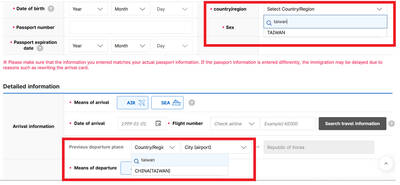
Jason Han says that the e-arrival card spat between South Korea and Taiwan shows that Seoul is signaling adherence to its “one-China” policy, while Taiwan’s response reflects a reciprocal approach. “Attempts to alter the diplomatic status quo often lead to tit-for-tat responses,” the analyst on international affairs tells the Taipei Times, adding that Taiwan may become more cautious in its dealings with South Korea going forward. Taipei has called on Seoul to correct its electronic entry system, which currently lists Taiwan as “China (Taiwan),” warning that reciprocal measures may follow if the wording is not changed before March 31. As of yesterday,
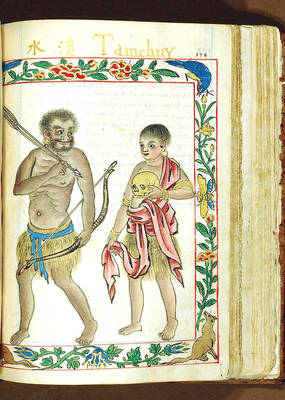
The Portuguese never established a presence on Taiwan, but they must have traded with the indigenous people because later traders reported that the locals referred to parts of deer using Portuguese words. What goods might the Portuguese have offered their indigenous trade partners? Among them must have been slaves, for the Portuguese dealt slaves across Asia. Though we often speak of “Portuguese” ships, imagining them as picturesque vessels manned by pointy-bearded Iberians, in Asia Portuguese shipping between local destinations was crewed by Asian seamen, with a handful of white or Eurasian officers. “Even the great carracks of 1,000-2,000 tons which plied

It’s only half the size of its more famous counterpart in Taipei, but the Botanical Garden of the National Museum of Nature Science (NMNS, 國立自然科學博物館植物園) is surely one of urban Taiwan’s most inviting green spaces. Covering 4.5 hectares immediately northeast of the government-run museum in Taichung’s North District (北區), the garden features more than 700 plant species, many of which are labeled in Chinese but not in English. Since its establishment in 1999, the site’s managers have done their best to replicate a number of native ecosystems, dividing the site into eight areas. The name of the Coral Atoll Zone might
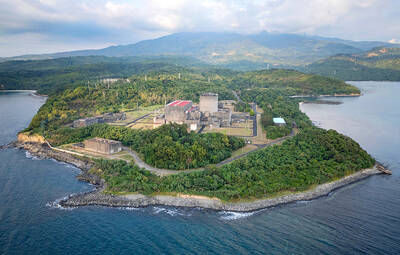
Nuclear power is getting a second look in Southeast Asia as countries prepare to meet surging energy demand as they vie for artificial intelligence-focused data centers. Several Southeast Asian nations are reviving mothballed nuclear plans and setting ambitious targets and nearly half of the region could, if they pursue those goals, have nuclear energy in the 2030s. Even countries without current plans have signaled their interest. Southeast Asia has never produced a single watt of nuclear energy, despite long-held atomic ambitions. But that may soon change as pressure mounts to reduce emissions that contribute to climate change, while meeting growing power needs. The


 RSS
RSS