


The study of photography has been expanding its boundaries lately. Too long confined to the discourse of art history and the continents of Europe and North America, the discipline is at last yielding substantial books and exhibitions devoted to the photography of Japan, Africa, Latin America and India, and to the distinctive photographies that have grown out of medicine, the criminal justice system, the family, anthropology and so on.
These new histories have focused attention on previously ignored genres and have also posed the challenge of how to write about images and practices that don't lend themselves to analysis as art or that fall outside familiar Western traditions.

Photography's Other Histories, an anthology of 12 essays edited by the anthropologists Christopher Pinney and Nicolas Peterson, is an instructive contribution to this continuing effort to revise our understanding of photography. Its core is a group of papers delivered to a 1997 conference in Brisbane, Australia, to which previously published essays by Stephen Sprague, Deborah Poole and Hulleah Tsinhnahjinnie have been added.
This disparate collection of voices is given a singular identity by a provocative title, an eye-catching cover image (by the Malian photographer Seydou Keita) and a broad introduction by Pinney that does its best to stitch the whole ensemble together into a coherent argument.
Pinney presents this argument through a reference to the title of Jacob Riis' 1890 book about the poor in New York City, How the Other Half Lives. Pinney writes that "the collection of essays in this volume was precipitated by the realization that photography itself is now in need of a similar revelation of its own other half, its own disavowed other history."
He's right. And by gathering essays on photographs made in Peru, Papua New Guinea, China, Kenya, India and Nigeria, together with commentaries on photographs of Australian Aborigines and of the Navajo in this country, this book demonstrates that photography is indeed a global practice and that it is fraught with many differences.
Some of these are visible, and some can be found only through a close examination of photography's reception and dissemination in specific places. But here is where Photography's Other Histories also runs into its first problem. In keeping with their anthropological perspective, this book's editors imagine that difference is only to be found outside our own culture, that photography's other history is to be fashioned from accounts of the medium's representations of non-Western peoples. Accordingly, the book is content to maintain the West's fascination with the exotic elsewhere, and to repeat the unequal exercise of power that enables us to name peoples as the "other."
If this criticism seems harsh, consider another decision made by the editors. In his own essay, Pinney stresses the specificity of particular photographic practices, their embeddedness in particular places, histories and cultural traditions. But when it came to placing the four essays about photographing Australia's Aborigines, it was decided not to gather them together but to scatter them throughout the volume, divided according to theme or method and mixed in with essays about American Indian, Chinese and Papuan subjects. The specific history lived by Aborigines in relation to photography ends up being conflated with a generic otherness, leaving us with an academic version of Barnum and Bailey's Great Ethnological Congress of the 1880s, in which native peoples from around the world were presented as a circus act of "type specimens."
In fact, this book is primarily about anthropology's history rather than photography's. In that context, many of its contributors do offer trenchant critiques of the ways the West has chosen to represent the victims of its colonial ambitions.
Roslyn Poignant, for example, provides a heartrending account of the portrayal of a group of nine Aborigines kidnapped from their homes and toured as sideshow attractions throughout the US and Europe in the 1880s. Poignant's nuanced "excavation" of their story continues right up to the present, leading her to condemn The Sunday Times of London for a 1998 report about the Aboriginal community of Palm Island, in which a 19th-century image was manipulated to make its subject look more "savage."
This type of violation is less likely to occur in Australia itself, where, as Peterson's essay documents, there is an increasing awareness of Aboriginal taboos about images, an awareness that has sometimes been reinforced by Aboriginal litigation.
One of this book's strongest elements is its investigation of what Pinney calls "vernacular modernism." A number of essays detail the complex ways that regional cultures have negotiated the European world view embodied in the photographic apparatus, adopting their own poses, subjects, camera angles, studio settings and ritual contexts to suit local demands and needs.
Poole's essay, for example, surveys the career of the Peruvian photographer Figueroa Aznar during the first decades of the 20th century. She argues that his allegiance to the indigenista movement in the city of Cusco resulted in photographs that were intended to reflect native Peruvian culture rather than the European influences of the capital, Lima, or the European avant-garde, which was seen as foreign and therefore
irrelevant.
The possibility of other modernisms and other attitudes toward the photograph is reinforced by the inclusion in this volume of the voices of both American Indian and Aboriginal authors, who all have a very personal stake in the meanings and potential uses of photographic archives.
Despite its flaws, then, this book serves as a timely reminder that there is a need for many histories of photography, just as there are still many photographies for which histories have yet to be written.
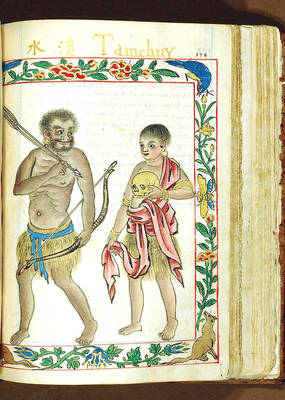
The Portuguese never established a presence on Taiwan, but they must have traded with the indigenous people because later traders reported that the locals referred to parts of deer using Portuguese words. What goods might the Portuguese have offered their indigenous trade partners? Among them must have been slaves, for the Portuguese dealt slaves across Asia. Though we often speak of “Portuguese” ships, imagining them as picturesque vessels manned by pointy-bearded Iberians, in Asia Portuguese shipping between local destinations was crewed by Asian seamen, with a handful of white or Eurasian officers. “Even the great carracks of 1,000-2,000 tons which plied
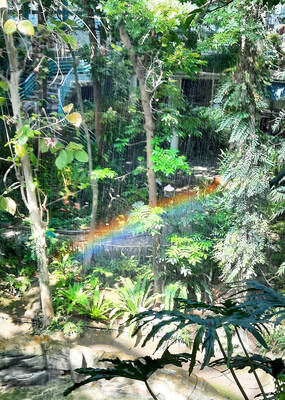
It’s only half the size of its more famous counterpart in Taipei, but the Botanical Garden of the National Museum of Nature Science (NMNS, 國立自然科學博物館植物園) is surely one of urban Taiwan’s most inviting green spaces. Covering 4.5 hectares immediately northeast of the government-run museum in Taichung’s North District (北區), the garden features more than 700 plant species, many of which are labeled in Chinese but not in English. Since its establishment in 1999, the site’s managers have done their best to replicate a number of native ecosystems, dividing the site into eight areas. The name of the Coral Atoll Zone might
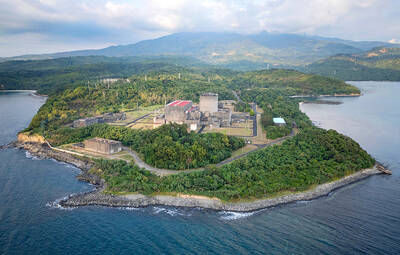
Nuclear power is getting a second look in Southeast Asia as countries prepare to meet surging energy demand as they vie for artificial intelligence-focused data centers. Several Southeast Asian nations are reviving mothballed nuclear plans and setting ambitious targets and nearly half of the region could, if they pursue those goals, have nuclear energy in the 2030s. Even countries without current plans have signaled their interest. Southeast Asia has never produced a single watt of nuclear energy, despite long-held atomic ambitions. But that may soon change as pressure mounts to reduce emissions that contribute to climate change, while meeting growing power needs. The

On Monday morning, in quick succession, the Chinese Communist Party (CCP) and the Chinese Nationalist Party (KMT) released statements announcing “that the Central Committee of the Communist Party of China and General Secretary Xi Jinping (習近平) have invited KMT Chairwoman Cheng Li-wun (鄭麗文) to lead a delegation on a visit to the mainland” as the KMT’s press release worded it. The KMT’s press release added “Chairwoman Cheng expressed her gratitude for the invitation and has gladly accepted it.” Beijing’s official Xinhua news release described Song Tao (宋濤), head of the Taiwan Work Office of the CCP Central Committee, as


 RSS
RSS