


John pores over the selection at the lunchtime buffet, picking a plateful of items and sliding his tray down the rail. "This. This. This," he says pointing to the aubergine, asparagus and a small fish. The woman behind the counter fills his order and hands him his plate with a question. "What did she say?" he turns to ask.
"Do you want soup?" I tell him.
"No. Thank you," he answers her in newly minted Chinese, the kind you'd expect from most anyone who has been in Taiwan only a couple of months.
Except John is Chinese -- or rather Chinese-American -- and though 23 years old, is only just starting to learn the language and culture of a country he left as an infant. He's part of a minority in Taiwan that isn't defined by ethnicity or skin color -- at a glance he looks every bit as native to Taiwan as the woman behind the counter -- but by a difference in upbringing that he feels will prevent him from ever fully assimilating into the country he now shares with aunts, uncles, cousins and a pair of grandparents with whom he's unable to communicate.
But John's situation is extreme. The majority of hua chiao (
"My parents could both speak English before we moved to the US, but I guess not so well. They wanted me to speak it fluently, without any accent, and to fit into American culture. So they only ever spoke English with me," he said. "Now they're embarrassed that I can't speak Chinese and think it's important for me to learn it and to learn about my heritage."
For the past two months, he's been living with an aunt and uncle and their two teenage children, teaching English and attending Chinese classes during the day. "I don't think they like me," he says of his relatives. "They love that their kids have a live-in English teacher, but there's a lot of distance between us. They keep me at arms-length."
Inheritance denied
His sentiments are shared to greater or lesser degrees by most everyone interviewed for this article. In talks with more than a dozen overseas Chinese -- and at least as many people born and raised in Taiwan -- the general consensus was that it is impossible for hua chiao to completely assimilate into local culture. The variables, most overseas Chinese suggested, are their degree of language proficiency and the amount of time they had spent away from Taiwan; the greater their fluency in Chinese, the more they are able to fit in, but the longer they'd been away, the harder it is to assimilate.
For their part, local Taiwanese often say they can spot an "ABC," or American-born Chinese, even before they speak. They claim that the way they dress, their hairstyle or make-up are telltale signs. "You can always tell an ABC by their shoes," one local girl claimed. "They're expensive and always match what they're wearing."
But the stereotypes go beyond appearances. "ABCs are all arrogant, spoiled rich kids," said another local man. Other frequently heard comments were that overseas Chinese steal all the good jobs and are cliquish, only spending time with other <
Many overseas Chinese acknowledge that the stereotypes aren't baseless.
"You do see a lot of ABCs driving around in Mercedes, living in million-dollar apartments. And it's true: They are arrogant," John said. "I've made friends with some of them."
Christine Hsu is one of the founders of Oriented.com, a popular Internet site for the Western and overseas Chinese communities in Taiwan, as well as the former chairperson of Chinese-American Professionals in Taiwan (CAPT).
As such, she is familiar with the stereotypes overseas Chinese face. "There's always a debate on [local Internet forums] about how Chinese-Americans get such privileges and get jobs easier," she said. "I honestly believe ? it depends on who you are. You could be Caucasian -- Caucasians [in Taiwan] get away with a lot in certain instances, but there are other situations they can't get through. Likewise, Chinese-Americans have the same thing. They are different battles, but there are an equal number of battles."
Are they battles against discrimination? Hsu and others stop short of saying they are.
"You'd hear snide comments about being ABC, being hua chiao ? it didn't really bother me," said Michael Lee, an attorney and CAPT's current chairperson. "I didn't feel any discrimination."
"My reception was wonderful," said Janet Hsieh of her initial months in Taiwan. Born and raised in Houston, Hsieh first came here as part of a student exchange program and, though she spoke no Mandarin at the time, was fluent in Taiwanese. "My co-workers would call me ah doh gah -- which basically means `foreigner' in Taiwanese -- but it was never in a negative manner or condescending. ? I've honestly never had a bad experience with the people I've interacted with."
Her friend, Elise Hu, stresses the importance of language in assimilating.
"I found that the degree to which you are discriminated against as a foreigner is inversely related to your mastery of the language," she said in an e-mail interview from the US, where she's studying journalism. "This isn't true for younger generations. ? Young Taiwanese were always very excited to meet foreigners and ABCs. While we were still viewed as ‘`different,' they were always very open-minded and willing to spend time with us, regardless of a language barrier."
Social stature
The lack of discrimination felt by overseas Chinese may be due in large part to the formidable role they've traditionally played in helping boost the local economy by serving as contacts for international trade and commerce.
The Overseas Chinese Affairs Commission (
Toward that last goal, the most effective -- and easily the most popular -- of measures the commission employed was the so-called Love Boat (
Whatever its success in getting the participants to love Taiwan, they were certainly loving each other. True to it's moniker, the Love Boat gained a reputation as the ultimate hook-up for young overseas Chinese interested in meeting other young overseas Chinese.
"You have 1,000 18 to 20-year-olds packed together for six weeks. Of course there's going to be a lot going on," CAPT's Lee said.
The Love Boat certainly had a large target market. The OCAC estimates that there were more than 350,000 hua chiao from Taiwan living overseas between 1972 and 2000, when the program stopped. Interestingly, the commission has no figures on the number of them that have "returned" to live and work in Taiwan because, as soon as they step foot in the country, they're considered local residents in the eyes of the commission. Once here, they are left to their own devices.
Their reasons for "returning" often indicate the level of difficult they have in fully assimilating to the local culture. Many cite their ability to work both in English and Chinese as a primary reason for coming to Taiwan.
But for others, like John, the reasons are far more personal and the difficulty assimilating far greater.
"They say if you want to know where you're going, you have to know where you've been," he explained. "I came here to regain my heritage, but I think that even if I become fluent with the language and completely understand the culture, I'll still be considered an outsider." He says he's slowly coming to realize that the reasons for that are more a product of his own biases than any local prejudice.
Caught between cultures
"The longer I'm in Taiwan, the more I realize how American I am," he said. "It's funny; in the US I was always considered `Chinese-American.' Now that I'm here, I'm first considered an American, then Chinese."
Many of those who've shared his experience can sympathize with him.
"Chinese-Americans are always caught in-between no matter where they are," Hsu said. "A lot of what defines ethnicity is more perception than it is reality."
"[Taiwan] isn't used to having a melting-pot culture," Lee said. "Chinese culture in general is you're either in or out."
John plans to continue on with his Chinese studies for now, and says he won't forget the word for "soup." But the irony of his situation has not been lost on him. "I was Chinese before I was even given a name. But here in Taiwan, I not even given a face. ? And I don't think I ever will be."
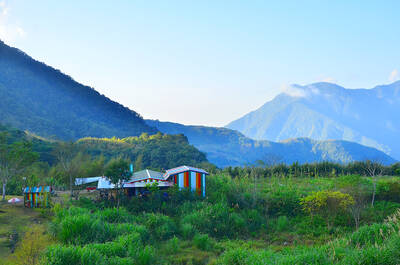
If one asks Taiwanese why house prices are so high or why the nation is so built up or why certain policies cannot be carried out, one common answer is that “Taiwan is too small.” This is actually true, though not in the way people think. The National Property Administration (NPA), responsible for tracking and managing the government’s real estate assets, maintains statistics on how much land the government owns. As of the end of last year, land for official use constituted 293,655 hectares, for public use 1,732,513 hectares, for non-public use 216,972 hectares and for state enterprises 34 hectares, yielding

The March/April volume of Foreign Affairs, long a purveyor of pro-China pablum, offered up another irksome Beijing-speak on the issues and solutions for the problems vexing the People’s Republic of China (PRC) and the US: “America and China at the Edge of Ruin: A Last Chance to Step Back From the Brink” rang the provocative title, by David M. Lampton and Wang Jisi (王緝思). If one ever wants to describe what went wrong with US-PRC relations, the career of Wang Jisi is a good place to start. Wang has extensive experience in the US and the West. He was a visiting

One of the challenges with the sheer availability of food in today’s world is that lots of us end up spending many of our waking hours eating. Whether it’s full meals, snacks or desserts, scientists have found that it’s not uncommon for us to be mindlessly grazing at some point during all of our 16 or so waking hours. The problem? As soon as this food hits the bloodstream in the form of glucose, it initiates the release of the hormone insulin. This in turn activates a switch present in every one of our cells, which is responsible for driving cell
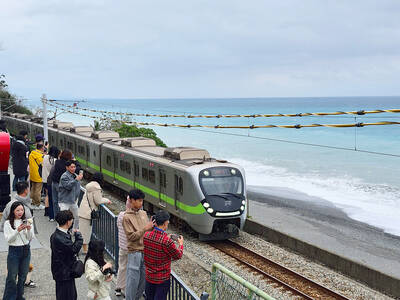
The small platform at Duoliang Train Station in Taitung County’s Taimali Township (太麻里) served villagers from 1992 to 2006, but was eventually shut down due to lack of use. Just 10 years later, the abandoned train station had become widely known as the most beautiful station in Taiwan, and visitors were so frequent that the village had to start restricting traffic. Nowadays, Duoliang Village (多良) is known as a bit of a tourist trap, with a mandatory, albeit modest, admission fee of NT$10 giving access to a crowded lane of vendors with a mediocre view of the ocean and the trains


 RSS
RSS