


If you took your history lessons from the street names and the names of bridges and buildings, rivers and towns, you would believe men, mostly white Protestants, did nearly everything that ever mattered. However, that is slowly changing: Our public landscape is undergoing a deep transformation — and it reflects the shift that is under way in our society, from Alaska to Florida. It is not enough or comprehensive or complete — but it is a beautiful start and a powerful foundation for more change to come.
Last spring, New York City removed a statue of racist gynecologist J. Marion Sims from Central Park, and in the fall, the city announced that a statue to Shirley Chisolm, the first black woman to serve in the US Congress, is to be erected in Brooklyn.
San Francisco in fall removed a much-loathed monument that showed a Native American man being dominated by a Spanish priest. A month later, the city renamed the international terminal at San Francisco International Airport after the Jewish gay rights leader Harvey Milk.
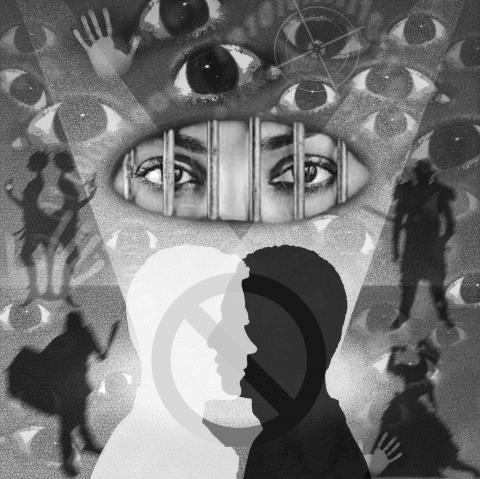
Illustration: Kevin Sheu
Confederate statues have been coming down in many states, too, and in their place we are seeing monuments that tell a different story. Last spring, a vast monument to victims of lynching opened in Montgomery, Alabama. Atlanta renamed Confederate Avenue in fall, and this year a private campaign completed fundraising for a Chicago statue of journalist and civil rights activist Ida B Wells , born in slavery in 1862.
When Baltimore took down Confederate statues over the summer, the city renamed one area the Harriet Tubman Grove, literally switching sides in the civil war, from pro-slavery Stonewall Jackson and Robert E Lee to the most famous heroine of the Underground Railroad.
Another Tubman statue is going up in Auburn, New York. Dallas took down a statue of Lee and New Orleans did the same the year before, removing four Confederate monuments in all amid controversy and threats.
I never expected to see what I did last spring: the breathtaking spectacle of the 5m column at the center of New Orleans’s Lee Circle without the 5m tall Confederate leader atop it.
What does this all mean? Statues and names are not in themselves human rights or equal access or a substitute for it, but they are crucial parts of the built environment, ones that tell us who matters, who decides, who will be remembered. They furnish our imaginations. They also shape the sense of the past that we call on when we decide what future to choose and who to value and listen to in the present. When we decide who “we” is. That this is all changing signifies several things.
Who “we” is is crucial to any place, and a monument that celebrates pioneers or Indian killers — as so many across the west do — classifies Native people as outsiders and enemies.
A place that honors only men defines women as nobodies. Colonizers often begin by renaming the places they have arrived in; victors erect statues to themselves and their version of history.
We often talk about such symbols as though their primary impact is on the people it mirrors — that the prime beneficiary of, say, a school named after Rosa Parks is black children and particularly black girls, but such representation also matters for those who are not black or female.
When you look at white men enraged and indignant at having to share the stage with others, you see the consequences of their formation in a world centered on white men. It is bad for them too. You can see what is going on in public squares and street names as a rough equivalent to #MeToo and #BlackLivesMatter and idle no more: a shift in whose voice is heard and whose life valued.
The changing nation is already evident in changing demographics and shifts in the distribution of power. The Democratic caucus in the US Congress is 39 percent nonwhite — 1 percent more than the general population — though the 51 percent of the population that is female is still grossly underrepresented there. The election of two Native women to Congress is a reminder how appalling it is that they are the first.
However, they will not be the last. And it was clear that Democratic candidates Andrew Gillum in Florida and Stacey Abrams in Georgia would have won their elections without significant voter suppression. The Republican Party, which willingly jettisoned nonwhite people with their politics of white grievance and overt racism, is now hemorrhaging even white women.
“We’ve got to address the suburban women problem, because it’s real,” Republican Senator Lindsey Graham said in the wake of November’s election.
New voices are rising up and ideas that emerged from the edges are taking their place at the center. Twenty-one young people are suing the federal government over climate change in a suit that should go forward next year, and a 15-year-old Swedish girl was one of the most compelling voices at the climate summit in Poland.
Alexandria Ocasio-Cortez’s victories were among this year’s beautiful surprises and she brings with her momentum for a Green New Deal that is, among other things, the capacity to imagine and embrace profound change (and, as a poll shows, is embraced by 80 percent of the population).
Though the far right matters, young people as a whole have more progressive positions on race and sexual orientation. A Gallup Poll last summer suggested that Americans aged 18 to 29 prefer socialism to capitalism and the shift “represents a 12-point decline in young adults’ positive views of capitalism in just the past two years”.
That this was a white Protestant nation was a given when I was growing up, but both the whiteness and the religiosity are in decline.
The New York Times reported in 2012 : “For the first time since researchers began tracking the religious identity of Americans, fewer than half said they were Protestants, a steep decline from 40 years ago when Protestant churches claimed the loyalty of more than two-thirds of the population.”
This month, a new report in Newsweek made the profundity of the shift clear: “The median age of white evangelicals is 55. Only 10 percent of Americans under 30 identify as white evangelicals. The exodus of youth is so swift that demographers now predict that evangelicals will likely cease being a major political force in presidential elections by 2024.”
You can see these changes in who and what is commemorated in public places a series of small victories for a more inclusive, egalitarian vision of society. And it is worth celebrating that these victories are happening even in the shadow of the Trump regime — which in this light is only a backlash against the inevitability of the end of this era of white male Protestant dominance.
Our electoral system is full of built-in advantages for them. The disproportionate clout of small rural states, the electoral college, gerrymandering, voter suppression keep this new America from expressing itself adequately electorally, though November’s blue wave swept over many of these obstacles — but these local changes announce who we are and shall become is not who we were.
You can see that it matters in the battles fought over these statues. A number of southern states have passed laws protecting them. And of course the white supremacist rally in Charlottesville last year had as one of its foci the planned removal of a Confederate statue.
“You will not replace us,” the mob howled, pretending that equality pushed them down rather than raised others up. But we will replace their statues and they can come along or, as the Maga slogan seems to promise, try to make us go backward. We can see the conflicts over representation as an unfinished civil war battle and perhaps a long-overdue defeat for the Confederacy.
It was not until my collaborators and I made a map of the New York City subway system with every stop renamed after a significant New York woman for our 2016 atlas of the city that I realized how profound the impact of our unequal imaginative landscape is. That the city has only five statues of historic women I knew.
However, the impact of naming nearly everything after men — a few Native men from Sequoia to Seattle, but mostly white — in most parts of the country on most scales from campus buildings to cities and even Washington state I assessed for the first time with that project.
Making the map, I realized how differently I might have experienced my self, my rights and possibilities, had I grown up in such a landscape, and how the same applies to anyone who’s not white, doubly to those who are neither white nor male.
Seeing this extraordinary transformation of the public landscape is seeing that the very ground we stand on, the streets we travel on and the people we honor are changing, and despite the egressive raging in the White House, this process is widespread and shows no sign of stopping.
Rebecca Solnit is a Guardian US columnist and author of Men Explain Things to Me and The Mother of All Questions.
The cancelation this week of President William Lai’s (賴清德) state visit to Eswatini, after the Seychelles, Madagascar and Mauritius revoked overflight permits under Chinese pressure, is one more measure of Taiwan’s shrinking executive diplomatic space. Another channel that deserves attention keeps growing while the first contracts. For several years now, Taipei has been one of Europe’s busiest legislative destinations. Where presidents and foreign ministers cannot land, parliamentarians do — and they do it in rising numbers. The Italian parliament opened the year with its largest bipartisan delegation to Taiwan to date: six Italian deputies and one senator, drawn from six
Recently, Taipei’s streets have been plagued by the bizarre sight of rats running rampant and the city government’s countermeasures have devolved into an anti-intellectual farce. The Taipei Parks and Street Lights Office has attempted to eradicate rats by filling their burrows with polyurethane foam, seeming to believe that rats could not simply dig another path out. Meanwhile, as the nation’s capital slowly deteriorates into a rat hive, the Taipei Department of Environmental Protection has proudly pointed to the increase in the number of poisoned rats reported in February and March as a sign of success. When confronted with public concerns over young
Taiwan and India are important partners, yet this reality is increasingly being overshadowed in current debates. At a time when Taiwan-India relations are at a crossroads, with clear potential for deeper engagement and cooperation, the labor agreement signed in February 2024 has become a source of friction. The proposal to bring in 1,000 migrant workers from India is already facing significant resistance, with a petition calling for its “indefinite suspension” garnering more than 40,000 signatures. What should have been a straightforward and practical step forward has instead become controversial. The agreement had the potential to serve as a milestone in

China has long given assurances that it would not interfere in free access to the global commons. As one Ministry of Defense spokesperson put it in 2024, “the Chinese side always respects the freedom of navigation and overflight entitled to countries under international law.” Although these reassurances have always been disingenuous, China’s recent actions display a blatant disregard for these principles. Countries that care about civilian air safety should take note. In April, President Lai Ching-te (賴清德) canceled a planned trip to Eswatini for the 40th anniversary of King Mswati III’s coronation and the 58th anniversary of bilateral diplomatic


 RSS
RSS