


It became the telephone call that was heard around the world; it was an earthquake that set off a world-class tsunami, and a change in atmospheric conditions that brought an unprecedented media hailstorm. Ironically, it was simply President Tsai Ing-wen (蔡英文) calling US president-elect Donald Trump to congratulate him on his victory.
However, there is much more. As the dust settles and the news wires slowly return to normal, what now becomes evident is that it is clearly time for the rest of the world to wake up and smell the coffee. Life has moved on since World War II. Taiwan has gone from a one-party state imposed by a fleeing diaspora and it now has democracy. Thus, it is time for the US and its allies to tell the Chinese emperor that as far as this democracy is concerned, he has no clothes.
This facade should have ended long ago. The only thing that kept it going was that China agreed to help foster globalization; it helped its own cause by being the manufacturing giant that most nations could count on for cheap labor and profit. It bought its way into the club, but now even that is changing as that juggernaut slows down.
The facts are there. If it walks like a duck and talks like a duck, it is a duck. Taiwan exists as an independent democratic nation (yes, I know there is that dreaded “I” word), but the reality remains despite what the Chinese emperor says.
Drag out your Montevideo standards and Taiwan fits the bill and then recall that the Chinese emperor liked to imagine that Mongolia was a part of China from time immemorial. Whereas on that issue, the flip side remains closer to the truth. Mongolia could claim that China is a part of Mongolia from time immemorial.
Other past realities remain. The Cairo Declaration was basically a press release to keep Chiang Kai-shek (蔣介石) in the war. The San Francisco Peace Treaty that officially ended the war was finally signed in 1951. It went into effect in 1952 and never stated to whom Taiwan would be given; it only stated that Japan would give up Taiwan. Could it fall to the Taiwanese? Why not?
What about the “one China” canard? Yes, that is there; the US and most nations have a “one China” policy, just like there is one France, one England, one Japan, one whatever. That is simple numerical reality. On the flip side, of course there is “one Taiwan,” although that part of the equation and its history has never quite been fully examined and remains unspoken.
The issue here is not that there is “one China,” but whether other nations agree with China’s definition of what fits into that “one China.” That is the unspoken reality.
Certainly China likes to imagine Taiwan is a part of it, but this does not mean other nations believe the same thing.
To simplify this, if China believed that the moon was part of “one China” because it was mentioned in a Tang Dynasty poem, other nations would agree that that is what China thinks and believes. It does not mean they think and believe it is true. It is time to leave the “one China” canard in the dustbin where it belongs.
The US has played its own game and contributed to the haze. Its position has been “undecided” for more than 70 years since the end of World War II. It is time for it to stop relying on that vagary to gain diplomatic space. So much has changed since then. Nations have been born and borders changed; Mongolia entered the UN. However, as far as Taiwan is concerned, most governments remain stuck in a time warp, bought off by China’s cheap manufacturing pledge. Thus they must jump through hoops in how to trade and deal with Taiwan, but pretend it does not exist.
This facade creates continuing outdated end-runs and back doors. Most nations that gave up their “embassies” in Taiwan now solve that by simply having a “trade office.”
The US went a big and more expensive step further; it created the American Institute in Taiwan. Mind you that is the American Institute in Taiwan, and not in the Republic of China (ROC), just as the US also has the Taiwan Relations Act, not the ROC Relations Act.
Look at all the bad effects that the facade continues to cause. When SARS hit the region, Taiwan was kept out of the loop. In solving international crime, a back door must be relied on. There is tremendous input that this mid-sized nation can give that is ignored.
Taiwan is a mid-sized nation; it ranks in the upper 15 percent of economies in the world and yet all still use the back door. The temporary solution at the end of World War II has become out of whack and outdated. The People’s Republic of China flag has never flown over Taiwan.
Taiwanese continue to strengthen their identity. Freed of the Stockholm syndrome of the one-party state that the Chinese Nationalist Party (KMT) created, this identity is increasing. With direct elections of the president since 1996, the trend toward Taiwanese identification is evident in the elections of 2014 and last year.
At the end of the day, a congratulatory telephone call was made from Taiwan’s president to the US president-elect. It highlighted how long the world has lived without telling the Chinese emperor that he had no clothes. Perhaps it was necessary that the new kid on the block — the democratic nation of Taiwan — would be the one to make the call and say let’s get real: There are much bigger problems in the world than this.
However, what about risking tension? Keep perspective. Why should China be the only one that can dictate the “status quo?” Who risked tension when China shot missiles over the Taiwan Strait before Taiwan’s 1996 presidential elections and as it builds islands in the South China Sea?
On the other side of the Pacific Ocean, Trump remains the same person who has used the system to avoid paying taxes; the man who lost the popular mandate for the presidency by 2.5 million votes, but was still able to win on a “rigged” system. He tweets in all directions to his moods. However, this tweet of his has hit the mark: “For too long the world has let China set the terms of the agreement and discourse. The time for cutting China too much slack is over. It is time for a new world order.”
In Taiwan, on the other hand, the irony is that while this tsunami seems to be engulfing the world outside of the nation, here things are quite normal for a democracy.
Yes, the government offices are getting their switchboards overloaded with incoming calls, about “the Tsai-Trump call,” but the public have other issues, such as lesbian, gay, bisexual and transgender rights, labor laws and pension reform, which are important in building their democracy. Let the world move on.
Jerome Keating is a commentator in Taipei.
KMT Chairwoman Cheng Li-wun’s (鄭麗文) recent visit to Beijing and her upcoming visit to Washington will serve as a high-level test of her diplomatic mettle. In Beijing, Cheng was received with symbolic gestures, a warm reception, and high-level access. In Washington, she will receive far less pomp and far sharper questions about the KMT’s vision for the future of Taiwan. Her challenge will be to persuade Washington that the KMT’s engagement with China can coexist with strong deterrence. Cheng’s April 7-12 visit to mainland China coincided with an intense period of conflict in Iran. Despite the strategic significance of Cheng’s trip,
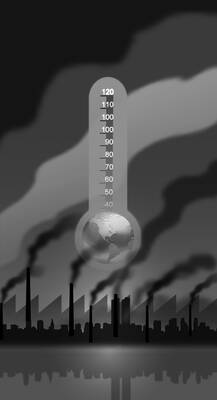
The closure of the Strait of Hormuz has sent the vast Asian chemicals industry into a tailspin. Deprived of the likes of Qatari natural gas and Saudi Arabian oil, the region’s fertilizer and plastics plants are slowing production or even shutting down. Everywhere except China, that is. In petrochemicals, China is unique. As well as a traditional industry that uses oil and gas as feedstock, it has parallel output that relies on its abundant domestic coal. Unsurprisingly, India and other regional powers want to copy and paste the Chinese method. This would not be easy — or climate friendly. The
Indonesian President Prabowo Subianto says he knows how to fix the problems facing Indonesia. Yet his economic mismanagement and authoritarian tendencies are steering the nation toward a familiar mix of currency instability and political chaos. The world’s fourth-most populous nation risks reversing the hard-won democratic and business reforms that came after the Asian Financial Crisis in 1997. At that time, the rupiah collapsed and the political upheaval that followed forced former president Haji Mohamed Suharto from power. Prabowo’s administration is ignoring similar warning signs. That disconnect was apparent in a national address on Wednesday, when Prabowo projected the swagger that has
“Of course you can choose not to be Taiwanese, just do not stay here,” chairwoman of Taipei 101 operator Taipei Financial Center Corp Janet Chia (賈永婕) said in an online interview with local entertainer Tai Chih-yuan (邰智源), triggering intense discussion on social media, with politicians across party lines weighing in. In the interview, which was aired on May 14, Chia and Tai’s discussion over a meal in Taipei 101 covered Chia’s career change from entertainer to chairwoman and US climber Alex Honnold’s free solo climb up the Taipei 101 building. During the interview, Chia said, “Being on this land, we


 RSS
RSS