


The strongest earthquake of the year, magnitude 6.3, struck on Monday and five aftershocks rocked the nation throughout the day. Fortunately, no major disaster occurred. This year has already seen three earthquakes of magnitude 6 or higher and the Central Weather Bureau has not excluded the possibility that further earthquakes of at least magnitude 6 will take place. It is a certainty that strong earthquakes will continue to hit Taiwan, so the question is: Are people prepared to deal with them?
When there is an earthquake, the first reaction is often to wonder if the nation’s nuclear power plants have been affected, as earthquakes can have disastrous effects on them. If an earthquake destroys a nuclear power plant, the consequences would be unfathomable. Taiwan’s three plants are all close to fault lines, which is completely out of line with international standards, which say that power stations should be built at least 8km from a fault. The Guosheng Nuclear Power Plant in New Taipei City’s Wanli District (萬里) is right on a seismogenic fault, and if a magnitude 7 or stronger earthquake were to occur there, the forces generated would far exceed the 0.4G peak ground acceleration that plant is designed to withstand.
The Ma-anshan Nuclear Power Plant in Pingtung County is right over two seismogenic faults that pass right under the plant’s main gate. The reactors at the plant are a mere 800m to 1km away from the fault, and their earthquake resistance abilities are questionable.
Magnitude 4 earthquakes have also occurred near Datun Mountain in Yangmingshan National Park, a volcanic area, and constant earthquakes occur in the Taipei basin. In addition, Jinshan Nuclear Power Plant in New Taipei City’s Shihmen District (石門) is close to the Jinshan fault and the Guosheng Nuclear Power Plant is close to the Kanjiao fault. On the nearby underwater Jinshan fault, there are two volcanoes, and there is another one on the Kanjiao fault.
The nation’s adverse geological environment leads to concerns over nuclear safety during earthquakes and over Taiwan’s negative record for managing its nuclear power stations.
Although chaos has not broken out yet, there are constant minor issues such as a security valve failure that tripped one of the water coolant pumps in the first reactor core at the Ma-anshan plant in December 2013.
Last year, three screws were found to have fallen out of an inspection instrument during an annual maintenance inspection at the Guosheng plant’s second reactor, one of which still has not been found. Such incidents are worrying.
Until the nuclear power plants have been decommissioned, the government must improve nuclear safety management, controls and procedures, as well as earthquake resistance at nuclear power plants. Construction has already been halted on the Fourth Nuclear Power Plant in New Taipei City’s Gongliao District (貢寮), and the other three plants must be decommissioned according to plan.
There is strong nationwide public support for the creation of a nuclear-free homeland, but that requires complementary measures, such as alternative energy sources, and complementary economic and environmental protection measures. Speeding up the development of alternative energy sources, such as shale oil, solar power, geothermal heating — along with the development of energy-saving measures — are necessary complementary measures.
There is only one Taiwan and it would not be able to withstand a nuclear disaster like the one that occurred at the Fukushima Dai-ichi nuclear power plant in Japan.
Minister of Labor Hung Sun-han (洪申翰) on April 9 said that the first group of Indian workers could arrive as early as this year as part of a memorandum of understanding (MOU) between the Taipei Economic and Cultural Center in India and the India Taipei Association. Signed in February 2024, the MOU stipulates that Taipei would decide the number of migrant workers and which industries would employ them, while New Delhi would manage recruitment and training. Employment would be governed by the laws of both countries. Months after its signing, the two sides agreed that 1,000 migrant workers from India would
In recent weeks, Taiwan has witnessed a surge of public anxiety over the possible introduction of Indian migrant workers. What began as a policy signal from the Ministry of Labor quickly escalated into a broader controversy. Petitions gathered thousands of signatures within days, political figures issued strong warnings, and social media became saturated with concerns about public safety and social stability. At first glance, this appears to be a straightforward policy question: Should Taiwan introduce Indian migrant workers or not? However, this framing is misleading. The current debate is not fundamentally about India. It is about Taiwan’s labor system, its
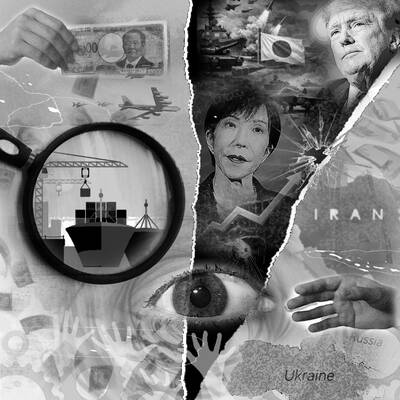
Japan’s imminent easing of arms export rules has sparked strong interest from Warsaw to Manila, Reuters reporting found, as US President Donald Trump wavers on security commitments to allies, and the wars in Iran and Ukraine strain US weapons supplies. Japanese Prime Minister Sanae Takaichi’s ruling party approved the changes this week as she tries to invigorate the pacifist country’s military industrial base. Her government would formally adopt the new rules as soon as this month, three Japanese government officials told Reuters. Despite largely isolating itself from global arms markets since World War II, Japan spends enough on its own
On March 31, the South Korean Ministry of Foreign Affairs released declassified diplomatic records from 1995 that drew wide domestic media attention. One revelation stood out: North Korea had once raised the possibility of diplomatic relations with Taiwan. In a meeting with visiting Chinese officials in May 1995, as then-Chinese president Jiang Zemin (江澤民) prepared for a visit to South Korea, North Korean officials objected to Beijing’s growing ties with Seoul and raised Taiwan directly. According to the newly released records, North Korean officials asked why Pyongyang should refrain from developing relations with Taiwan while China and South Korea were expanding high-level


 RSS
RSS