


China’s pragmatic handling of the Taipei-Shanghai City Forum affirms Taipei Mayor Ko Wen-je’s (柯文哲) creative ambiguity and good intentions. This is worth supporting as it leaves a bit of flexibility in cross-strait relations.
This new model for cross-strait interaction gives some space for cross-strait city exchanges and maintains a political baseline between Ko and China. At the same time, this new model reduces the political pressure for the Democratic Progressive Party (DPP) when faced with a premise of cross-strait exchanges, and has great significance for the DPP to change its cross-strait-related policies.
The future of the twin-city forum is closely tied with Ko accepting the so-called “1992 consensus” and the “one China” principle. However, when Ko did an exclusive interview with Chinese media, he did not acknowledge the “1992 consensus,” nor did he accept the “one China” principle.
During the interview, Ko stated that he did not know the content of the “1992 consensus,” and emphasized that the important thing in cross-strait dialogue is content, not symbolism.
Ko also said that in this day and age, no one in the world believes that there are “two Chinas,” so the idea of “one China” is not a problem.
The next day, several Chinese media outlets commented that Ko had already accepted the “1992 consensus” and even the “one China” principle. However, when being interviewed by Taiwanese media, Ko said that the Chinese reports quoted him out of context. He then emphasized that the focus of his argument was the content of “one China,” not the symbolism behind it. He also said that he had forewarned the Chinese media to not quote him out of context. Obviously, Ko has not accepted the “1992 consensus.”
In addition, Ko has not accepted the “one China” principle. The principle includes three parts: There is only “one China” in the world; Taiwan is part of that “one China”; and China’s sovereignty and territory is to not be infringed upon. Ko’s statement only addressed the first of these parts — which is a consensus around the world and largely accepted by the Chinese Nationalist Party (KMT) and the DPP.
The second and third parts are more complex: whether Taiwan is part of China, and who represents the sovereignty of this “one China.” However, Ko did not make any statement on these points as he feels that the wider issues of the term “one China” is a dispute between the two sides of the Taiwan Strait.
Ko did not acknowledge the “1992 consensus,” nor did he accept the “one China” principle. However, China believes that he made such claims and is willing to start exchanges between Taipei and cities in China.
The important point is that Ko’s discourse was all in good faith, but at the same time it offered political ambiguity, allowing China to make its own interpretation without forcing Ko to officially recognize the “1992 consensus” and the “one China” principle.
The fresh angle put forward by Ko — let’s call it the “2015 viewpoint” — has two components. The first part is to respect all previously signed cross-strait agreements and historical interactions on the existing political foundation, and to push for cross-strait city exchanges. This is the space where China can make its own interpretation and remain internally accountable. Ko did not refute that the “1992 consensus” is the political foundation of the twin-city forum, because the historical interaction of the Taipei-Shanghai Forum and the existing political foundation imply the existence of the “1992 consensus.”
The second part of Ko’s narrative on cross-strait relations was an expression of goodwill, and affirmed Chinese President Xi Jinping’s (習近平) Taiwan policy of upholding the spirit of a “cross-strait family” and promoting exchange and goodwill to encourage people on both sides of the Taiwan Strait to pursue a more pleasant shared future. This echoes Xi’s idea of cross-strait unification, which requires an agreement of faith between those on both sides of the Taiwan Strait.
Ko hopes that this new model of exchanges between Taipei and Chinese cities will break the current cross-strait deadlock. The KMT currently recognizes the “1992 consensus,” and developments in cross-strait relations have come to a halt — and maybe even deteriorated. If the DPP returns to power next year, it is possible that the deadlock in cross-strait relations could continue, as dialogue between Taiwan’s Straits Exchange Foundation and China’s Association for Relations Across the Taiwan Straits would likely be broken off.
Looking to Ko’s establishment of a new model of cross-strait interaction, the DPP and the Chinese Communist Party should respect each others’ core interests and political baselines, and try to create space for cross-strait political interaction and avoid provoking the other side. Both sides should demonstrate goodwill and mutual trust to build a political foundation for interactions and exchanges.
All in all, Ko’s “2015 viewpoint” and China’s pragmatic responses provide the future of cross-strait interactions with a new model, which could become known as the “2015 consensus.” This consensus is only related to exchanges on a local level, yet provides the DPP with a way to reflect on how to create a new win-win model for cross-strait interaction and eventually upgrade the “2015 consensus” to the “2016 consensus.
Tung Chen-yuan is a distinguished professor in the Graduate Institute of Development Studies at National Chengchi University.
Translated by Zane Kheir
Minister of Labor Hung Sun-han (洪申翰) on April 9 said that the first group of Indian workers could arrive as early as this year as part of a memorandum of understanding (MOU) between the Taipei Economic and Cultural Center in India and the India Taipei Association. Signed in February 2024, the MOU stipulates that Taipei would decide the number of migrant workers and which industries would employ them, while New Delhi would manage recruitment and training. Employment would be governed by the laws of both countries. Months after its signing, the two sides agreed that 1,000 migrant workers from India would
On March 31, the South Korean Ministry of Foreign Affairs released declassified diplomatic records from 1995 that drew wide domestic media attention. One revelation stood out: North Korea had once raised the possibility of diplomatic relations with Taiwan. In a meeting with visiting Chinese officials in May 1995, as then-Chinese president Jiang Zemin (江澤民) prepared for a visit to South Korea, North Korean officials objected to Beijing’s growing ties with Seoul and raised Taiwan directly. According to the newly released records, North Korean officials asked why Pyongyang should refrain from developing relations with Taiwan while China and South Korea were expanding high-level
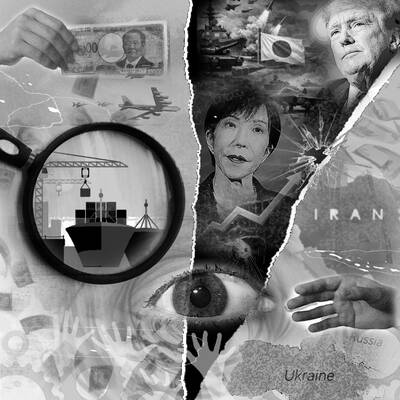
Japan’s imminent easing of arms export rules has sparked strong interest from Warsaw to Manila, Reuters reporting found, as US President Donald Trump wavers on security commitments to allies, and the wars in Iran and Ukraine strain US weapons supplies. Japanese Prime Minister Sanae Takaichi’s ruling party approved the changes this week as she tries to invigorate the pacifist country’s military industrial base. Her government would formally adopt the new rules as soon as this month, three Japanese government officials told Reuters. Despite largely isolating itself from global arms markets since World War II, Japan spends enough on its own
When 17,000 troops from the US, the Philippines, Australia, Japan, Canada, France and New Zealand spread across the Philippine archipelago for the Balikatan military exercise, running from tomorrow through May 8, the official language would be about interoperability, readiness and regional peace. However, the strategic subtext is becoming harder to ignore: The exercises are increasingly about the military geography around Taiwan. Balikatan has always carried political weight. This year, however, the exercise looks different in ways that matter not only to Manila and Washington, but also to Taipei. What began in 2023 as a shift toward a more serious deterrence posture


 RSS
RSS